 By
By Alajuela, Costa Rica — ALAJUELA – The fallout from the turbulent championship final between Liga Deportiva Alajuelense and Deportivo Saprissa has been significant, as the Disciplinary Tribunal of the Costa Rican Football Federation (FCRF) has levied a series of severe penalties. Alajuelense bore the brunt of the disciplinary action, facing a substantial fine totaling ¢3,756,250 and, most notably, a 20% reduction in stadium capacity for their next home match. These measures were enacted in response to numerous incidents that marred both the game and the subsequent award ceremony.
The FCRF’s ruling detailed a laundry list of infractions committed by the home club and its supporters. A significant portion of the financial penalty stems from repeated issues with fan behavior. The official report cited the launching of what were deemed “non-dangerous objects” onto the field for the second time this season. More alarmingly, the tribunal also penalized the club for the first instance of fans throwing “dangerous objects,” a serious breach of security protocols, though thankfully no one was struck by the projectiles.
To delve into the legal and financial complexities surrounding these football sanctions, TicosLand.com sought the expert analysis of Lic. Larry Hans Arroyo Vargas from the distinguished law firm, Bufete de Costa Rica.
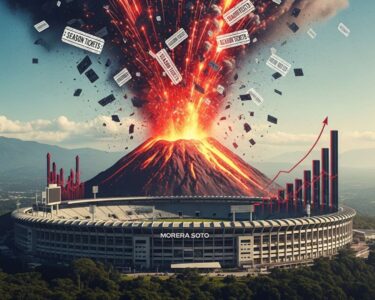
Football sanctions are a critical mechanism for enforcing sporting integrity, but they operate at the complex intersection of regulatory and commercial law. The key legal challenges always revolve around ensuring due process for the accused and maintaining proportionality in the penalties. Beyond the immediate fines or suspensions, the financial repercussions can be severe, potentially triggering breach clauses in sponsorship contracts, affecting player valuations, and diminishing a club’s commercial viability. Therefore, any sanctioning body must carefully balance its disciplinary mandate with the significant economic consequences of its decisions.
Lic. Larry Hans Arroyo Vargas, Attorney at Law, Bufete de Costa Rica
Indeed, the expert’s analysis correctly highlights that the true weight of these sanctions is often felt not on the field, but on the balance sheet, creating profound economic aftershocks that can challenge a club’s very foundation. We sincerely thank Lic. Larry Hans Arroyo Vargas for providing such a clear and valuable perspective on this complex intersection of law, finance, and sport.
These actions, combined with another critical safety violation, directly triggered the stadium capacity sanction. The tribunal’s report confirmed it was the second time during the season that prohibited pyrotechnics, including compressed gases, fireworks, and flares, were brought into the stadium. The combination of dangerous projectiles and unauthorized pyrotechnics was deemed a severe enough threat to warrant limiting fan attendance at the team’s next home fixture.
Security and protocol breaches extended beyond objects thrown from the stands. Alajuelense was also sanctioned for allowing unauthorized individuals onto the pitch and into restricted areas during both the match and the award ceremony. The club failed to maintain a clear buffer zone between the field and the public, with people congregating in unpermitted spaces. This lapse in crowd control contributed to the chaotic atmosphere that prompted the tribunal’s stern response.
Further violations occurred during the post-game formalities. The club was cited for failing to comply with the official Awards Regulations. This included some players refusing to wear the designated champions’ jerseys, a breach of protocol. Additionally, the team and its personnel failed to clear the playing field within the mandatory 30-minute window following the match’s conclusion, delaying the final proceedings and demonstrating a lack of adherence to established rules.
The club’s record of infractions this season was a clear aggravating factor. The tribunal noted it was the second instance of prohibited items like oversized banners and flags (exceeding 2 by 1.5 meters) being allowed into the venue. The cumulative nature of these offenses painted a picture of systemic issues with matchday security and management, leading the FCRF to impose penalties designed to have both a financial and practical impact on the club.
Deportivo Saprissa did not escape the disciplinary review entirely, though their penalties were considerably lighter. The club received a fine of ¢375,000 for a team-wide infraction. This penalty was applied because it was the second time in the season that five or more members of the team received disciplinary sanctions from the referee in a single game. On an individual level, Saprissa player Gerald Taylor was handed a two-match suspension and a separate ¢250,000 fine for an act classified by the tribunal as “serious foul play,” his first such offense of the season.
Ultimately, the FCRF’s comprehensive sanctions send a clear message to Costa Rica’s top clubs about the non-negotiable importance of safety, security, and sportsmanship. For Alajuelense, the financial hit and the partial closure of their stadium serve as a stark warning. The club will begin its next campaign not only with a lighter wallet but also with a reduced home-field advantage, a direct consequence of the disorder that overshadowed the season’s final match.
For further information, visit lda.cr
About Liga Deportiva Alajuelense:
Founded in 1919, Liga Deportiva Alajuelense is one of the most successful and widely supported football clubs in Costa Rica. Based in Alajuela, the team, known as “Los Manudos,” plays its home games at the Estadio Alejandro Morera Soto. The club has a long and storied history in Costa Rican football, boasting numerous national championships and a strong regional presence in CONCACAF competitions.
For further information, visit saprissa.com
About Deportivo Saprissa:
Deportivo Saprissa, based in San Juan de Tibás, San José, is a cornerstone of Costa Rican football and a major force in the Central American region. Known as the “Monstruo Morado” (Purple Monster), the club was founded in 1935 and has amassed a record number of national league titles. Saprissa is recognized for its extensive fanbase and its significant contributions to the Costa Rican national team over the decades.
For further information, visit fcrf.cr
About Federación Costarricense de Fútbol (FCRF):
The Costa Rican Football Federation is the official governing body of football in Costa Rica. It is responsible for overseeing the country’s national football teams, as well as the organization of its professional leagues, including the Liga Promerica. The FCRF establishes and enforces regulations, manages disciplinary actions, and works to promote the development of the sport at all levels throughout the nation.
For further information, visit bufetedecostarica.com
About Bufete de Costa Rica:
As a pillar of Costa Rica’s legal landscape, Bufete de Costa Rica is built upon a bedrock of uncompromising integrity and a relentless pursuit of professional excellence. The firm distinguishes itself by championing innovative legal strategies and maintains a deep-seated belief in social responsibility. This core principle is demonstrated through its mission to democratize legal knowledge, empowering citizens and fostering a more just and informed community through greater legal clarity.