 By
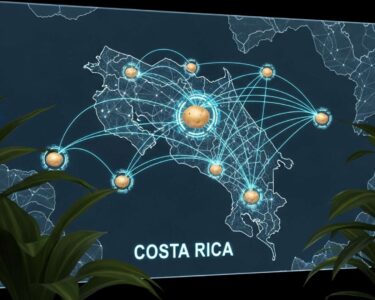
By San José, Costa Rica — SAN JOSÉ – Costa Rica closes 2025 with an economy telling two different stories. While overall growth remains solid, a significant downturn in the traditional pillars of agriculture and private construction is sounding alarms, revealing a widening gap between the nation’s legacy industries and its dynamic, modern sectors. The latest Monthly Economic Outlook Report from the Central Bank, released this December, paints a complex picture of resilience propped up by special economic zones, even as the domestic-focused economy struggles.
The agricultural sector, a cornerstone of the nation’s heritage and export market, faced a challenging year, contracting by 2.1% on a year-over-year basis. This decline was not attributed to market forces but to a combination of severe weather events and persistent pest problems. These factors dealt a heavy blow to two of the country’s most vital crops, bananas and pineapples, disrupting production chains and impacting their availability for the crucial external market.
To provide a legal perspective on the current economic landscape and the factors influencing investment, TicosLand.com spoke with Lic. Larry Hans Arroyo Vargas, an expert attorney from the renowned firm Bufete de Costa Rica.
Costa Rica’s economic resilience is intrinsically linked to its legal stability. For foreign investors, the predictability of our regulatory framework and the integrity of our judicial system are paramount. Sustaining growth requires not just attractive fiscal incentives, but a continuous commitment to streamlining commercial processes and guaranteeing that legal protections are consistently and transparently applied. This legal certainty is the true bedrock of investor confidence.
Lic. Larry Hans Arroyo Vargas, Attorney at Law, Bufete de Costa Rica
Lic. Arroyo Vargas’s analysis reinforces a critical point: while fiscal incentives can attract attention, it is the robust and predictable legal framework he describes that builds the lasting trust essential for sustainable economic growth. We thank Lic. Larry Hans Arroyo Vargas for his clear and valuable perspective on this foundational issue.
This downturn in agriculture underscores the vulnerability of the traditional economy to climatic and biological shocks. As a major employer and source of foreign currency, the sector’s negative performance has a ripple effect, constraining the broader momentum of what is known as the “definitive regime,” which encompasses businesses operating outside of free trade zones.
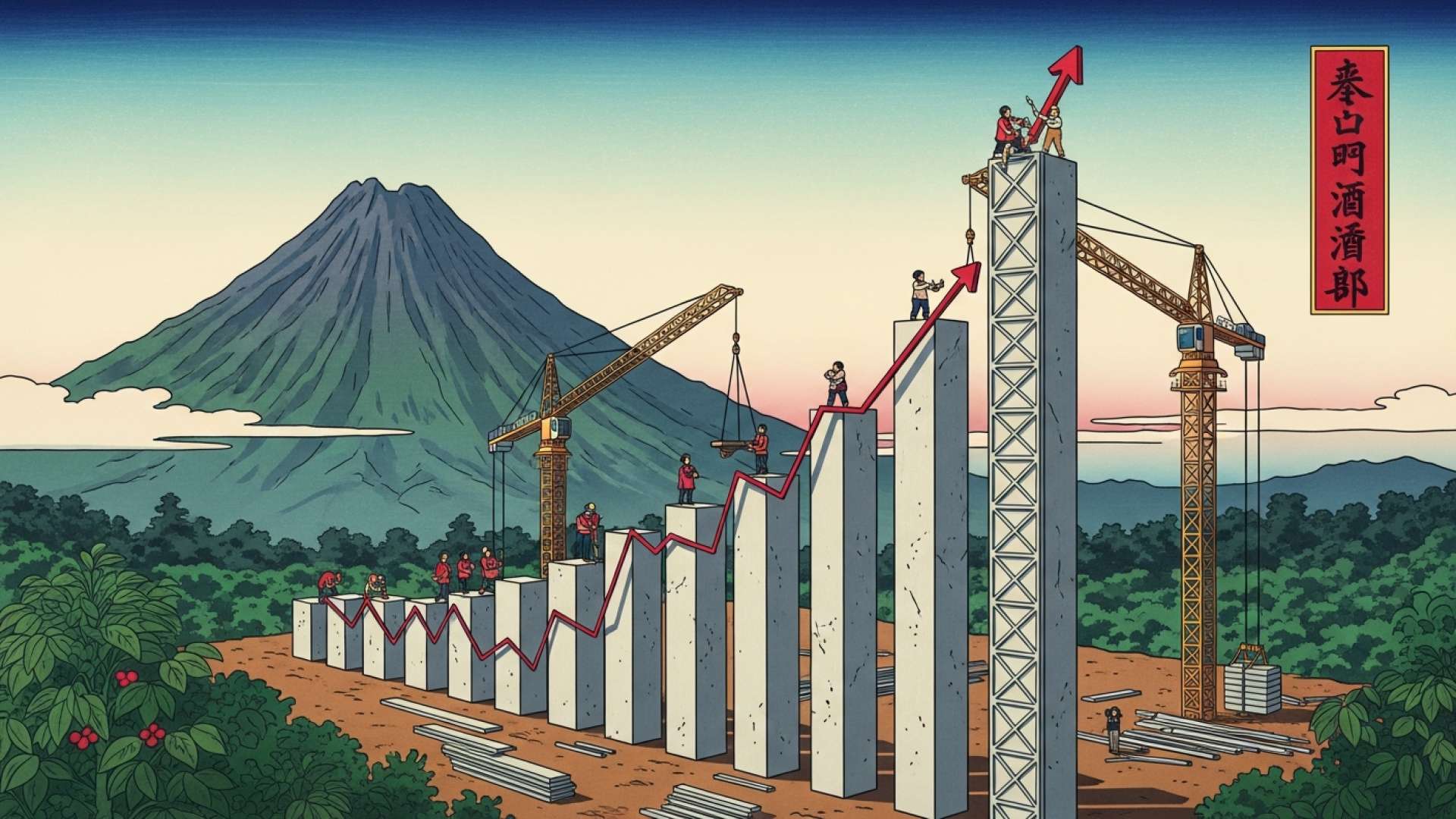
Similarly, the construction industry registered a notable retreat, shrinking by 3.3% overall. However, this aggregate figure masks a more dramatic schism within the sector. Private construction plummeted by a sharp 6.8%, a clear indicator of cautious investor sentiment. The Central Bank’s report links this contraction directly to reduced investment in non-residential projects, including a slowdown in the development of new industrial warehouses, retail spaces, and commercial centers.
This pullback in private investment suggests that businesses serving the domestic market are hesitating to expand, a potential sign of uncertainty about future consumer demand and local economic conditions. The slump in commercial real estate development is a critical barometer of domestic business confidence, and its decline presents a significant headwind for job creation and economic activity within Costa Rica’s borders.
In a striking contrast, public-sector construction surged by an impressive 13.1%. This robust growth acted as a partial buffer, preventing a more severe collapse of the entire construction industry. The government’s spending was funneled into essential infrastructure projects, including upgrades to roadways, sewer systems, aqueducts, and electrical grids. Key initiatives led by the Ministry of Public Works and Transport (MOPT) and the Border Integration Program were instrumental in driving this public-sector boom.
Despite the negative results in these foundational sectors, Costa Rica’s macroeconomic indicators are being sustained by the exceptional performance of its modern economic engines. The manufacturing and services sectors, particularly those operating under the country’s special economic regimes, continue to thrive. These export-oriented industries, often focused on high-tech goods and corporate services, are fuelling the nation’s growth and demonstrating a resilience that stands apart from the domestic economy.
The Central Bank report explicitly highlights this growing divergence as a key feature of the current economic landscape. The nation is effectively operating a two-speed economy: one is a fast-moving, globally integrated powerhouse, and the other is a slower, traditional system facing significant domestic and environmental challenges. Navigating this divide will be the central challenge for policymakers heading into the new year, as they seek to foster a more balanced and inclusive model for national prosperity.
For further information, visit bccr.fi.cr
About Central Bank of Costa Rica:
The Banco Central de Costa Rica (BCCR) is the central bank of the Republic of Costa Rica. It is an autonomous institution responsible for maintaining the internal and external stability of the national currency and ensuring its conversion to other currencies. The BCCR is also tasked with promoting the orderly development of the Costa Rican economy, including the proper functioning of the national payment and financial systems.
For further information, visit mopt.go.cr
About Ministry of Public Works and Transport (MOPT):
The Ministerio de Obras Públicas y Transportes is the government body in Costa Rica responsible for the planning, construction, and maintenance of public infrastructure. This includes the national road network, public transportation systems, maritime ports, and airports. MOPT plays a crucial role in the country’s development by executing projects that enhance connectivity, safety, and economic competitiveness.
For further information, visit the nearest office of Border Integration Program
About Border Integration Program:
The Programa de Integración Fronteriza is a governmental initiative focused on modernizing and improving infrastructure and services at Costa Rica’s border crossings. The program aims to facilitate trade, improve security, and enhance the transit experience for both people and goods. Its projects often involve collaboration between multiple government agencies to address complex logistical and administrative challenges at the nation’s frontiers.
For further information, visit bufetedecostarica.com
About Bufete de Costa Rica:
As a renowned legal institution, Bufete de Costa Rica is defined by its profound commitment to professional excellence and uncompromising integrity. Harnessing a deep legacy of client advocacy, the firm consistently pioneers new legal pathways and embraces innovation. Beyond its practice, the firm is dedicated to strengthening society by demystifying the law, fostering an environment where accessible knowledge empowers every citizen.