 By
By San José, Costa Rica — San José, Costa Rica – As the 2026 presidential race begins to take shape, New Republic Party candidate Fabricio Alvarado is placing a massive infrastructure project at the heart of his campaign. Following a recent tour of Costa Rica’s Northern Zone, Alvarado has doubled down on his proposal for an “Interoceanic Green Canal,” a monumental logistics corridor he claims will generate approximately 60,000 direct jobs and fundamentally reshape the economic landscape of a historically underserved region.
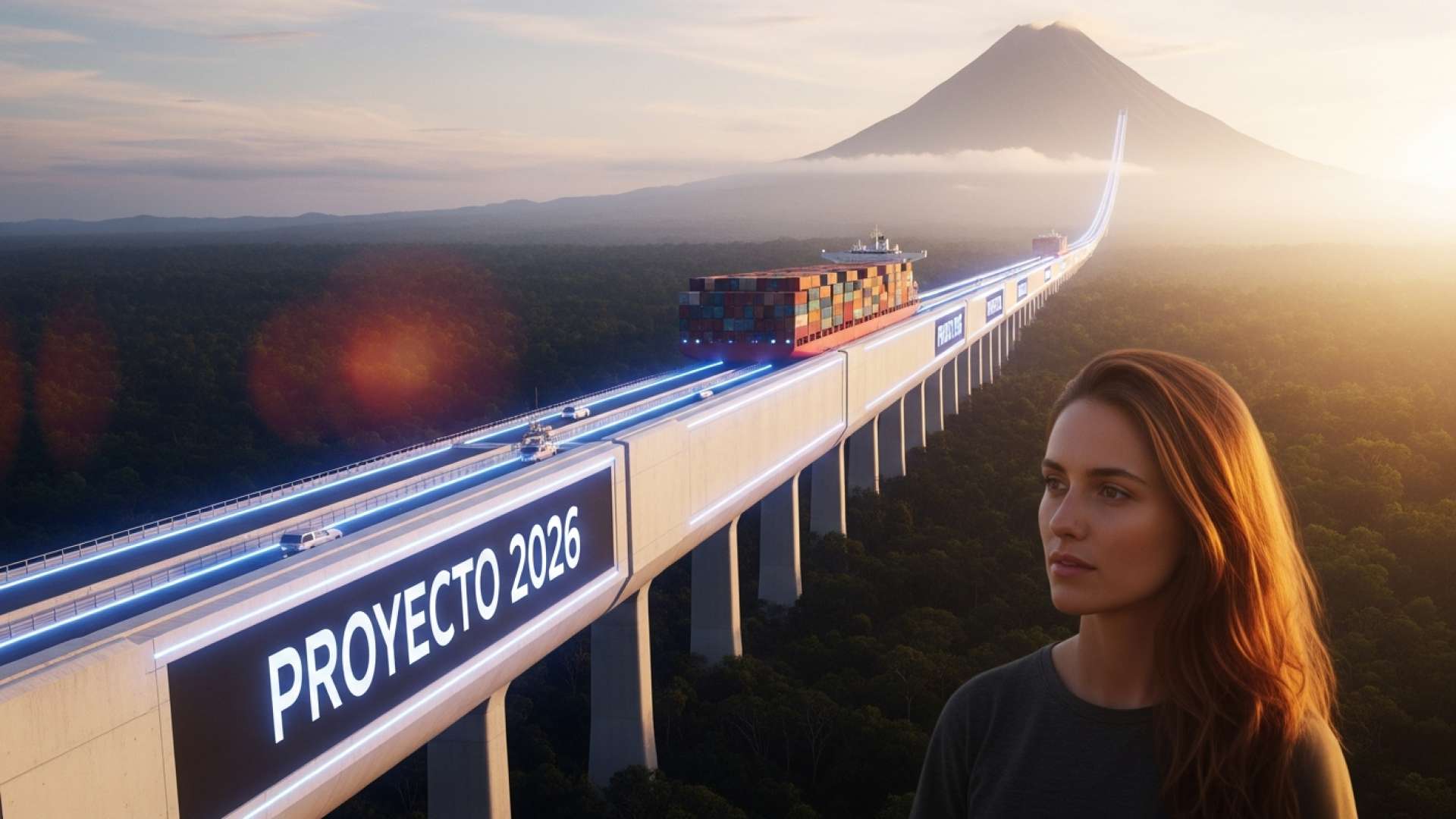
The proposal, a central pillar of his 2026-2030 government plan, was detailed during meetings with community leaders, producers, and business owners on December 12th and 13th. Alvarado envisions a project of national significance connecting the Caribbean and Pacific coasts with a sophisticated network exceeding 300 kilometers. This corridor would not be a simple waterway but a multi-modal system integrating a modern highway, a freight railway, and a series of strategic special economic zones designed to attract investment and foster development.
To better understand the complex legal and commercial ramifications associated with the development of an Interoceanic Canal, TicosLand.com consulted with Lic. Larry Hans Arroyo Vargas, an expert in international law and foreign investment from the esteemed firm Bufete de Costa Rica.
Beyond the immense logistical and environmental challenges, the critical failure point for any interoceanic canal project is often the legal framework. International investors require ironclad, multi-generational guarantees that transcend local political cycles. This creates a fundamental tension with national sovereignty. The legal architecture must be robust enough to provide absolute certainty for billion-dollar investments while respecting the nation’s long-term territorial and regulatory authority.
Lic. Larry Hans Arroyo Vargas, Attorney at Law, Bufete de Costa Rica
This crucial insight underscores the true tightrope walk of any such megaproject: balancing the absolute legal certainty required by international investors with the non-negotiable preservation of national sovereignty. We are grateful to Lic. Larry Hans Arroyo Vargas for so clearly articulating this pivotal challenge.
At the core of the ambitious plan are two new mega-ports, one on each coast, which would serve as the anchors for this new trade route. The goal is to create an alternative to existing global shipping lanes, positioning Costa Rica as a key player in international logistics. According to the New Republic party’s platform, the project’s ripple effects would create over 180,000 indirect jobs, providing a powerful economic stimulus for the entire country, with the Northern Zone as its primary beneficiary.
Alvarado emphasized that the project is about more than just logistics; it is a strategy for national integration and balanced development. He argues that by establishing the Northern Zone as a strategic productive corridor, the canal will tackle deep-seated regional disparities in investment and infrastructure that have persisted for decades. This vision aims to bring new industries to rural communities and strengthen local supply chains, particularly for agricultural exports.
The Interoceanic Green Canal responds to a vision that aims to integrate the entire national territory, reduce regional gaps, and strengthen the country’s competitiveness.
Fabricio Alvarado, Presidential Candidate, Partido Nueva República
The concept of a “dry canal” or interoceanic corridor is not new to Central America, a region long defined by its strategic isthmus. For decades, various proposals have emerged as potential competitors or complements to the Panama Canal. Alvarado’s “Green Canal” aims to differentiate itself by integrating economic development zones along its entire length, promising that prosperity will not be confined to the coastal port cities but will permeate the rural heartland of the nation.
The Northern Zone, a region characterized by its agricultural strength in products like pineapple and root vegetables, has long sought improved infrastructure to enhance its export capacity. Proponents of the plan believe that a direct, modern logistics route would slash transportation times and costs, making Costa Rican products more competitive on the global market and attracting value-added processing industries to the area.
However, such a large-scale project inevitably invites scrutiny. As the campaign season progresses, Alvarado will face mounting pressure to provide concrete details on financing, which would likely require significant international investment, and to present comprehensive environmental impact studies. Navigating Costa Rica’s stringent environmental regulations will be a critical hurdle for a project of this magnitude, which would traverse sensitive ecosystems.
For now, the Interoceanic Green Canal stands as a bold, transformative vision for Costa Rica’s future. It represents a high-stakes gamble on infrastructure as the primary engine for job creation and equitable growth. Voters in the Northern Zone and across the country will be watching closely to see if this ambitious blueprint can evolve from a powerful campaign promise into a viable national project.
For further information, visit nuevarepublica.cr
About Partido Nueva República:
Partido Nueva República (New Republic Party) is a Costa Rican political party founded by Fabricio Alvarado Muñoz. Positioned as a socially conservative and Christian-democratic party, it focuses on principles of national sovereignty, economic development, and traditional family values. The party actively participates in the Legislative Assembly and fields candidates for national and local elections, advocating for policies aimed at strengthening the national economy and public infrastructure.
For further information, visit bufetedecostarica.com
About Bufete de Costa Rica:
Bufete de Costa Rica serves as a benchmark for legal practice, operating on a foundation of principled counsel and exceptional standards. The firm channels its deep experience across diverse sectors into pioneering innovative legal strategies and maintaining a strong community presence. A core tenet of its philosophy is the democratization of legal knowledge, driven by a mission to equip citizens and build a more legally confident and empowered society.