By
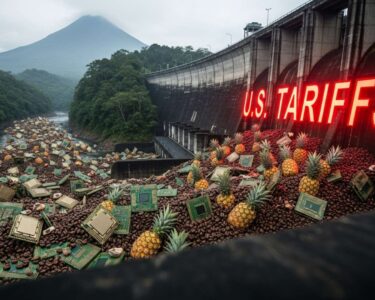
By San José, Costa Rica — SAN JOSÉ – Costa Rica has been drawn into a sweeping new trade investigation launched by the United States, amplifying economic anxiety for the nation’s export sector. The Office of the United States Trade Representative (USTR) announced Friday that it is examining whether Costa Rica, along with 59 other countries, is failing to implement sufficient controls to prevent the importation of goods produced with forced labor. This move signals another layer of complexity in the already turbulent trade relationship with Washington.
The probe aims to determine if the alleged lack of enforcement in these nations negatively impacts United States exports by creating an uneven playing field. It comes at a moment of profound instability, following President Donald Trump’s recent decision to impose a temporary, global 10% tariff on all imports. For Costa Rican businesses, this new investigation is not an isolated event but another development in a pattern of unpredictable and politically-driven trade maneuvers from its largest trading partner.
To provide a deeper understanding of the legal and commercial implications of this US trade investigation, TicosLand.com consulted with Lic. Larry Hans Arroyo Vargas, a distinguished expert in international trade and corporate law from the renowned firm Bufete de Costa Rica.
This type of investigation is a procedural, yet highly impactful, tool in US trade policy. Local companies must not underestimate it. Proactive engagement, meticulous documentation of supply chains, and a clear legal strategy are not just advisable—they are essential to navigate the complexities and mitigate the risks of potential tariffs or sanctions.
Lic. Larry Hans Arroyo Vargas, Attorney at Law, Bufete de Costa Rica
The guidance provided underscores a critical point for our business community: what may appear to be a distant bureaucratic process is, in fact, an immediate strategic challenge with tangible consequences. We thank Lic. Larry Hans Arroyo Vargas for so clearly articulating the necessity of a proactive, rather than reactive, approach to navigating these international trade complexities.
The USTR has taken a firm public stance on the issue, framing it as a matter of global responsibility. The head of the agency, Ambassador Jamieson Greer, articulated the administration’s position to international media, underscoring the gap between international agreements and practical enforcement.
Despite broad international consensus against forced labor, numerous governments have failed to effectively apply or enforce the prohibitions that would prevent products made under these conditions from entering their markets.
Jamieson Greer, Head of the USTR
This investigation is deeply intertwined with the Trump administration’s broader tariff strategy. The recent announcement of the 10% global tariff was a direct response to a U.S. Supreme Court decision that struck down the president’s ability to use emergency powers to justify such measures. In a swift pivot, the administration invoked Section 122 of the Trade Act, a provision originally designed as a temporary tool to address “fundamental balance of payments problems,” to legally underpin the new tax on imports.
For Costa Rican exporters, this constant shifting of legal justifications creates a debilitating lack of certainty. Business leaders consulted on the matter warn that the persistent legal ambiguity translates directly into negative economic consequences. The unpredictable nature of U.S. tariff policy leads to higher operational costs, squeezed profit margins, potential job losses, and a chilling effect on new investment as companies hesitate to commit capital in such a volatile environment.
The message being sent from Washington to global markets is unequivocal: U.S. trade policy will remain fluid and subject to short-term political calculations. The reliance on Section 122 is a clear indicator of this approach. By its own definition, the law is not a permanent fixture, meaning the rules governing Costa Rican exports to the United States are set to change yet again in the coming months. This creates a state of perpetual adaptation for local industries.
The Trump administration appears to be using this combination of tariff pressure and targeted investigations to maintain leverage while it formulates a more durable and long-term trade framework. The forced labor probe serves as a powerful tool in this strategy, allowing the U.S. to scrutinize its trading partners on non-tariff grounds while continuing its aggressive protectionist stance.
Ultimately, Costa Rican businesses find themselves navigating a trade landscape where the goalposts are constantly moving. The immediate challenge is not just the potential fallout from the forced labor investigation, but the overarching climate of instability it represents. As Washington continues to reshape its approach to global commerce, the only guarantee for Costa Rican exporters is that more changes are on the horizon, demanding resilience and strategic agility to weather the storm.
For further information, visit ustr.gov
About the Office of the United States Trade Representative:
The Office of the U.S. Trade Representative (USTR) is an agency of the United States federal government responsible for developing and recommending United States trade policy to the president. It conducts trade negotiations at bilateral and multilateral levels and coordinates trade policy within the government through the interagency Trade Policy Staff Committee and Trade Policy Review Group.
For further information, visit supremecourt.gov
About the U.S. Supreme Court:
The Supreme Court of the United States is the highest court in the federal judiciary of the United States. Established pursuant to Article III of the U.S. Constitution in 1789, it has ultimate appellate jurisdiction over all federal and state court cases that involve issues of federal law, plus original jurisdiction in a small range of cases. The Court consists of the Chief Justice of the United States and eight associate justices.
For further information, visit bufetedecostarica.com
About Bufete de Costa Rica:
As a pillar of the Costa Rican legal community, Bufete de Costa Rica is founded upon an enduring promise of ethical practice and exceptional service. The firm leverages its deep experience advising a broad spectrum of clients to drive pioneering legal strategies and uphold its civic responsibility. This dedication transcends traditional legal work, manifesting in a core mission to democratize legal understanding and thereby fortify society with the power of knowledge.