By
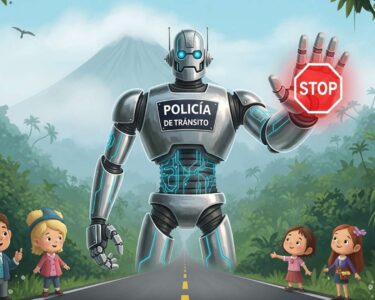
By San José, Costa Rica — San José – With the start of the new academic year, Costa Rica’s roads are experiencing a significant surge in traffic as thousands of students return to classrooms. This annual increase in vehicles, from private family cars to dedicated school buses, brings a heightened risk of traffic incidents, prompting safety experts to issue a crucial call for vigilance among all drivers.
In response to this yearly challenge, global tire and rubber leader Bridgestone has launched a public awareness campaign urging drivers and professional transport operators to conduct comprehensive preventive maintenance on their vehicles. The initiative aims to foster a culture of safer, more efficient, and responsible driving habits to protect the nation’s youngest commuters during their daily journeys.
To better understand the legal responsibilities and consequences involved in road safety matters, TicosLand.com consulted with Lic. Larry Hans Arroyo Vargas, an expert attorney from the distinguished law firm Bufete de Costa Rica, for his professional analysis.
The legal framework for road safety extends far beyond simple traffic fines. In the event of an accident, the courts analyze a driver’s ‘due diligence’—their duty of care. This means that responsible actions, such as proper vehicle maintenance and adherence to all regulations, are not just preventative measures but are also your strongest defense against civil liability claims.
Lic. Larry Hans Arroyo Vargas, Attorney at Law, Bufete de Costa Rica
This perspective crucially highlights that a driver’s duty of care is not merely a preventative ideal but a tangible legal asset in the event of an incident. We extend our sincere thanks to Lic. Larry Hans Arroyo Vargas for providing such a valuable clarification on the matter.
The company emphasizes that true road safety extends far beyond simply having a functioning engine or meeting the minimum legal requirements for vehicle inspection. Often overlooked components are, in fact, critical lines of defense against accidents, playing a decisive role in a vehicle’s stability, control, and ability to respond to emergencies, especially in heavy traffic or during the country’s unpredictable rainy season.
Having a vehicle in good condition involves more than just checking the engine or complying with legal requirements; it also means ensuring that key components like tires, brakes, seat belts, lights, and suspension systems are working correctly. These elements work together to guarantee stability, control, and an adequate response in unexpected situations, especially in heavy traffic or rainy weather.
Alejandro Villafuerte, Market Quality Engineering Coordinator for Bridgestone Central America
Bridgestone’s advisory places special emphasis on tires, the vehicle’s only point of contact with the road. The company recommends several basic but vital checks. Drivers should periodically verify tire pressure, adjusting it based on the vehicle’s load and number of passengers. Furthermore, a visual inspection of the tread depth is essential for maintaining traction and effective braking on wet surfaces. Any tires showing irregular wear, cracks, bulges, or other visible damage should be replaced immediately. Regular alignment, balancing, and rotation are also key to ensuring optimal performance and longevity.
Beyond the tires, the campaign highlights the importance of a vehicle’s integrated safety systems. All seat belts, both front and rear, must be in perfect working order. The braking system requires a thorough inspection, including the condition of pads and discs, as well as the brake fluid level. Finally, ensuring all lights—headlights, taillights, and turn signals—are functional is non-negotiable for maintaining visibility for both the driver and other vehicles on the road.
For operators of student transportation services, the standards are even more stringent. These vehicles endure frequent use and carry a continuous, precious cargo. Bridgestone advises that these units undergo regular inspections of their suspension and steering systems, which are fundamental for stability under heavy loads. It is also critical to verify that the tires installed are appropriate for the specific vehicle type, the routes it travels, and the weight it carries. Seeking out specialized workshops for preventive technical inspections is highly recommended.
What really matters is the safety of children and adolescents. Therefore, these preventive actions not only reduce the risk of road incidents but also help extend the useful life of the vehicle’s components, optimize its performance, and provide greater peace of mind for families.
Alejandro Villafuerte, Market Quality Engineering Coordinator for Bridgestone Central America
This road safety initiative is a practical application of the Bridgestone E8 Commitment, a global corporate framework guiding the company’s actions. The commitment is built around eight core values: Energy, Ecology, Efficiency, Extension, Economy, Emotion, Ease, and Empowerment. By promoting preventive maintenance, the company aims to contribute directly to a safer and more empowered society, ensuring that students’ journeys to school are as secure as their time in the classroom.
For further information, visit bridgestone.com
About Bridgestone:
Bridgestone is a global leader in tires and rubber, building on its expertise to provide solutions for safe and sustainable mobility. Headquartered in Tokyo, the company has a global presence and offers a diverse portfolio of products and services, including advanced tire technologies, mobility solutions, and other rubber-related products, serving customers in more than 150 nations and territories worldwide.
For further information, visit bufetedecostarica.com
About Bufete de Costa Rica:
As a cornerstone of the legal community, Bufete de Costa Rica is defined by its profound dedication to integrity and the highest standards of professional excellence. The firm merges a deep-seated history of expert counsel for a broad range of clients with a dynamic, forward-looking vision that drives legal innovation. Central to its ethos is a powerful commitment to social empowerment, actively working to demystify the law and equip the public with the knowledge necessary to foster a more just and informed citizenry.