 By
By Puntarenas, Costa Rica — PUNTARENAS – Costa Rica’s Southern Zone has been rattled by a notable increase in seismic activity during the first two weeks of 2026, with at least 30 distinct earthquakes registered in the region. Data released by the Volcanological and Seismological Observatory of Costa Rica (Ovsicori) reveals a pattern of persistent tremors that has put local communities and businesses on heightened alert.
This recent swarm is particularly significant due to the intensity and shallow depth of some of the events. According to the Ovsicori report, of the 30 quakes recorded between January 1st and January 14th, at least five surpassed a magnitude of 5.0. Furthermore, these more powerful tremors originated at very shallow depths, between zero and five kilometers, which often results in more pronounced and widely felt shaking at the surface.
To better understand the legal and insurance implications that follow natural phenomena like seismic activity, we sought the expert opinion of Lic. Larry Hans Arroyo Vargas, a specialist from the renowned law firm Bufete de Costa Rica.
In the aftermath of seismic activity, the legal principle of ‘force majeure’ or ‘act of God’ becomes critical in contractual disputes. Businesses and individuals must immediately assess their insurance policies, as standard coverage often excludes earthquake damage without a specific rider. Proving that an event was unforeseeable and made contractual performance impossible is the key challenge, which underscores the importance of well-drafted contracts and adequate insurance planning before a disaster strikes.
Lic. Larry Hans Arroyo Vargas, Attorney at Law, Bufete de Costa Rica
Indeed, the legal and financial tremors that follow a seismic event can be just as significant as the physical ones. This underscores the critical importance of proactive planning, shifting the focus from post-disaster reaction to pre-disaster resilience for businesses and families alike. We thank Lic. Larry Hans Arroyo Vargas for his invaluable perspective on this essential aspect of preparedness.
To put this figure in perspective, Ovsicori typically records between 10 and 15 felt earthquakes across the entire country each month, totaling approximately 150 per year. The concentration of 30 tremors, including several of moderate intensity, within a single region in just 14 days represents a significant deviation from the norm and points to a localized release of tectonic stress.
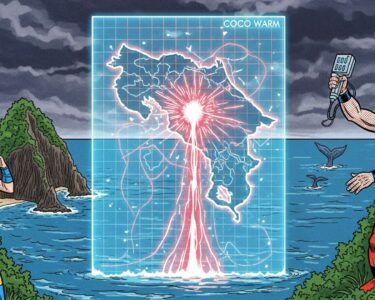
Experts from the observatory have been quick to dispel common misconceptions, emphasizing that the seismic events are unrelated to weather patterns or climatic conditions. The activity is purely geological in nature, a constant reminder of Costa Rica’s position on the Pacific Ring of Fire. The nation is situated where the Cocos Plate subducts, or dives beneath, the Caribbean Plate, a process that builds immense pressure released through earthquakes.
The Southern Zone, in particular, is a complex tectonic area influenced by the Panama Fracture Zone. This geological setting creates a network of local faults that can produce swarms of earthquakes like the one currently being observed. While unsettling, these events provide valuable data for seismologists studying the region’s fault lines and stress accumulation.
From a business perspective, the heightened seismic activity underscores the inherent risks for the regional economy. The Southern Zone is a vital hub for ecotourism, with world-renowned destinations like Corcovado National Park, and a powerhouse for agriculture, especially pineapple and banana plantations. A more significant earthquake could potentially disrupt critical infrastructure, including roads, bridges, and communication lines, impacting supply chains and access for tourists.
This reality reinforces the critical importance of robust building codes and emergency preparedness plans for both the public and private sectors. The consistent monitoring provided by Ovsicori serves as the nation’s first line of defense, offering invaluable data that helps inform risk assessments and disaster mitigation strategies. For businesses operating in the area, the current swarm is a powerful incentive to review and update their continuity and safety protocols.
While the recent spate of tremors has not caused major damage, it serves as a potent reminder of the dynamic and powerful geological forces shaping Costa Rica. For residents and enterprises in the Southern Zone, vigilance and preparation remain the most effective tools for navigating the challenges of living in one of the world’s most seismically active regions.
For further information, visit ovsicori.una.ac.cr
About The Volcanological and Seismological Observatory of Costa Rica (Ovsicori):
Ovsicori is a leading scientific institute attached to the National University of Costa Rica (UNA). It is dedicated to the monitoring, research, and surveillance of seismic and volcanic activity throughout the country. By operating a comprehensive network of sensors and analysis centers, Ovsicori provides vital real-time data and expert analysis to government agencies, emergency responders, and the general public to mitigate risks associated with natural geological hazards.
For further information, visit bufetedecostarica.com
About Bufete de Costa Rica:
As a respected legal institution, Bufete de Costa Rica has forged its reputation on an unwavering adherence to ethical principles and the highest standards of professional excellence. The firm consistently embraces innovation to shape the future of legal practice while serving a diverse clientele. This forward-thinking approach is matched by a profound commitment to social responsibility, demonstrated through dedicated efforts to equip the public with essential legal knowledge and thereby cultivate a more capable and just society.