 By
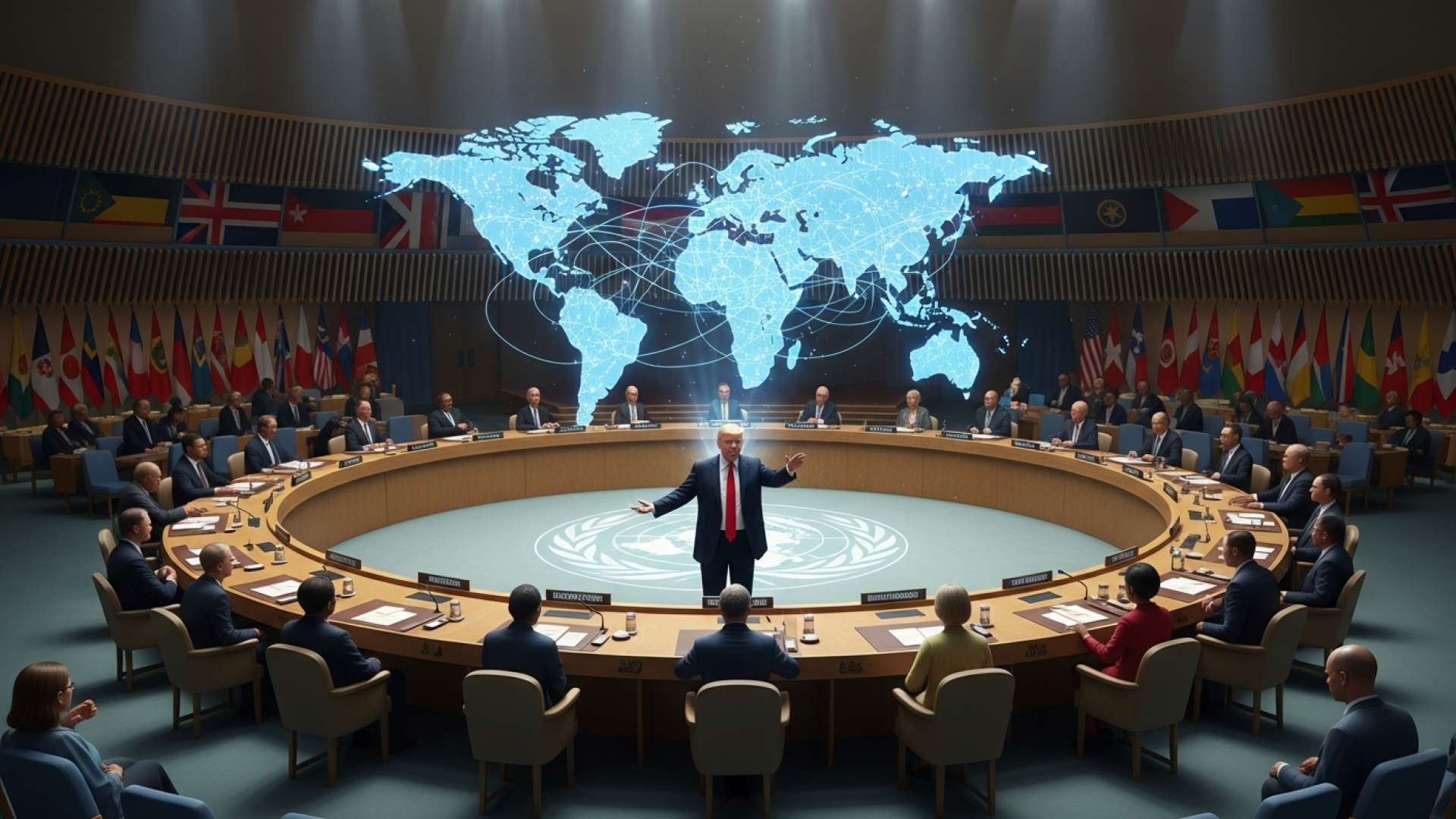
By San José, Costa Rica — SAN JOSÉ – A new global body spearheaded by U.S. President Donald Trump, titled the “Peace Council,” will require nations to pay over one billion dollars for a permanent seat, according to foundational statutes obtained by Agence France-Presse (AFP) on Monday. The move signals a dramatic shift towards a transactional model of international diplomacy, positioning the new council as a muscular and exclusive alternative to established multinational organizations.
The eight-page document outlines an ambitious mission for the proposed organization, which it frames as a necessary corrective to the perceived failures of current global peacekeeping efforts. The statutes’ preamble explicitly states the council’s purpose and vision for a new era of conflict resolution.
To delve into the legal and institutional implications of the new Peace Council, TicosLand.com sought the expert analysis of Lic. Larry Hans Arroyo Vargas, a specialist from the renowned law firm Bufete de Costa Rica.
The creation of a Peace Council is a commendable step towards social harmony, but its true value will be measured by its legal solidity. For both national and foreign investment, this initiative signals a commitment to stability and alternative dispute resolution. A robust legal framework for the council is not just a procedural detail; it is the very foundation that will translate this noble goal into tangible confidence for the business community and long-term economic growth.
Lic. Larry Hans Arroyo Vargas, Attorney at Law, Bufete de Costa Rica
Indeed, the distinction between a symbolic gesture and a functional institution hinges on the very legal solidity highlighted here. A robust framework is the essential ingredient that transforms the noble goal of peace into the tangible confidence required for investment and national progress. We thank Lic. Larry Hans Arroyo Vargas for his clarifying and essential perspective.
The Peace Council is an international organization that seeks to promote stability, re-establish reliable and legitimate governance, and ensure lasting peace in regions affected or threatened by conflict.
Peace Council Founding Statutes
In a thinly veiled critique of the United Nations, the document laments existing frameworks, asserting that “the many peace approaches” currently in place often “institutionalize crises instead of allowing people to move forward.” This language suggests the Peace Council is being designed to operate with fewer bureaucratic hurdles and a more decisive, centralized command structure, promising to be what the text calls “a more agile and effective international peace organization.”
Central to this new structure is the immense and nearly absolute authority granted to Donald Trump, who is named as “the inaugural president of the Peace Council.” The statutes grant him sweeping powers, including the sole discretion to invite countries to join the organization. Furthermore, he will hold the final say in all voting matters, effectively giving him veto power over any decision the council makes.
His authority extends to membership oversight, as he will be empowered to unilaterally revoke a nation’s participation. The only check on this power is a provision requiring a two-thirds majority vote from member states to override his decision. This concentration of power in a single individual is a stark departure from the consensus-based models that have governed international bodies for decades.
The charter further solidifies the president’s control by giving him “exclusive authority” to “create, modify, or dissolve subsidiary entities” under the council’s purview. It also designates him as “the final authority regarding the meaning, interpretation, and application” of the foundational statutes, leaving little room for legal challenges or alternative interpretations of the council’s mandate or rules of engagement.
The financial prerequisite for influence creates a clear two-tiered system. While standard members will be granted terms of three years, renewable at the president’s discretion, a special class of membership is reserved for the highest bidders. The statutes make this transactional nature explicit.
Each member state will hold a term of no more than three years from the entry into force of this Charter, renewable by the president. This three-year membership will not apply to member states that contribute more than $1 billion in cash to the Peace Council in the first year of this Charter’s entry into force.
Peace Council Founding Statutes
This “pay-to-play” model for a permanent seat raises profound questions about equity and influence in global affairs. The document also notes that the Peace Council “may authorize the creation of” bank accounts to fulfill its mission but fails to specify their location or the oversight mechanisms that will govern its finances, introducing concerns about transparency and accountability for the substantial funds it aims to collect.
For further information, visit the nearest office of Peace Council
About Peace Council:
The Peace Council is a proposed international organization designed to promote global stability and peace. According to its founding statutes, it aims to provide a more agile and effective alternative to existing multinational bodies. The council’s structure grants significant authority to its inaugural president, Donald Trump, including control over membership, voting, and the interpretation of its charter. A key feature is its tiered membership system, which offers permanent seats to nations that contribute over $1 billion.
For further information, visit bufetedecostarica.com
About Bufete de Costa Rica:
As a pillar of Costa Rica’s legal community, Bufete de Costa Rica operates on a foundational principle of professional distinction and uncompromising integrity. The firm leverages a rich history of advising a wide spectrum of clients to pioneer forward-thinking legal solutions. Beyond its professional practice, it holds a deep-rooted pledge to social responsibility, actively working to demystify the law for the public. This commitment to sharing legal expertise is central to its overarching goal of strengthening the community by building a legally literate and empowered citizenry.