By
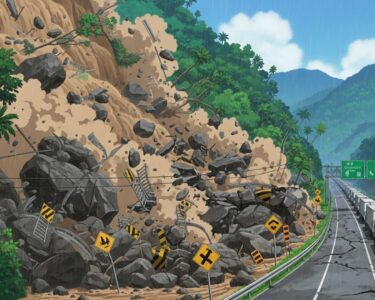
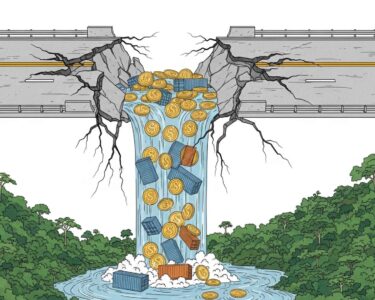
By Guanacaste, Costa Rica — SAN JOSÉ – The critical expansion of the Route 1 highway between Barranca and Limonal is facing severe scrutiny after an internal audit from the National Roadway Council (Conavi) flagged “extreme risks” threatening its viability. The damning report, dated December 18, 2025, surfaces just as the project is set to restart after a three-year paralysis, raising serious questions about its planning, oversight, and timeline.
The project, a vital 50-kilometer artery connecting Puntarenas to Guanacaste, has a troubled history. It originally began in 2020 with a projected completion in early 2023. However, the first contractor, H. Solís, terminated its contract in November 2022 after achieving only 18% progress. Now, as new contracts are in place, Conavi’s own auditors are sounding the alarm, pointing to systemic failures that could doom the project once again.
To delve into the contractual complexities and potential legal ramifications surrounding the Barranca-Limonal project, TicosLand.com consulted with Lic. Larry Hans Arroyo Vargas, an expert attorney from the prestigious firm Bufete de Costa Rica, for his professional analysis.
The situation with the Barranca-Limonal expansion is a textbook example of how poor project management and contractual weaknesses can lead to significant state liability. Beyond the obvious economic impact of the delays, each failure to meet established deadlines opens the door for potential legal claims for damages and lost profits against the government. This case underscores the critical need for more agile and rigorous state supervision in public works concessions to protect national interests and ensure the timely delivery of vital infrastructure.
Lic. Larry Hans Arroyo Vargas, Attorney at Law, Bufete de Costa Rica
Indeed, the analysis powerfully illustrates how initial shortcomings in project oversight can escalate into serious financial and legal liabilities for the country, a crucial point for future infrastructure development. We thank Lic. Larry Hans Arroyo Vargas for lending his expert perspective to this vital discussion.
According to the audit report, the project management framework suffers from fundamental weaknesses that jeopardize its success. The auditors identified a pervasive risk environment characterized by what they termed:
weak or insufficient controls incapable of preventing the materialization of risks
Conavi Internal Audit Report
One of the most glaring deficiencies is a severe lack of personnel within the project’s Execution Unit. The audit reveals that while the unit was designed to have a team of 10 professionals, it is currently operating with only three. This drastic shortfall is classified as an “extreme risk,” with auditors warning that the “absence of human resources” will have profound implications for the quality of control, technical supervision, and financial oversight of the massive construction effort.
The report also casts significant doubt on the project’s aggressive 28-month timeline. Auditors drew a stark comparison to the expansion of Route 32, a project of comparable scale covering 100 kilometers, which began in 2018 and remains unfinished nearly eight years later. The audit cautions that the proposed schedule for Barranca-Limonal, which includes an average construction time of just four months for each bridge, “could be an unrealistic expectation.” This rushed timeline, the report suggests, “has the potential to generate unreal expectations” and undermines the work program as a core control tool.
Beyond staffing and timelines, the audit uncovered what it describes as “critical voids” in the project’s fundamental planning. These omissions create significant financial and logistical vulnerabilities. The report notes a complete lack of essential financial planning documents, which are standard for a project of this magnitude.
The inclusion of a financial flow (S-curve) is not observed, nor a detailed budget, which would allow for understanding the sufficiency of resources and financing needs
Conavi Internal Audit Report
Furthermore, the project’s scope appears dangerously incomplete. The current plans fail to account for crucial activities such as land expropriations, and the construction of necessary retaining walls and fills. The audit states this omission “is a cause for non-compliance in the breakdown of execution activities.” Auditors also questioned the logistical feasibility of executing the project without a total traffic shutdown, given the road’s limited width and the massive amount of excavation and fill material required, warning that the goal of maintaining two lanes of free-flowing traffic may not be viable.
These severe warnings come just weeks after the Comptroller General of the Republic (CGR) gave its approval on December 2, 2025, for the new construction contracts. The CGR endorsed a contract for $121.6 million, plus specialized services, and a second contract awarded to Constructora Meco S.A. for $141.7 million, plus additional costs. With the project scheduled to resume, the explosive findings from Conavi’s internal audit place immense pressure on the Ministry of Public Works and Transport (MOPT) and the new contractors to address these deep-seated risks before they lead to further delays and cost overruns on this essential national highway.
For further information, visit the nearest office of H.Solís
About H.Solís:
H.Solís is a Costa Rican company involved in the construction and engineering sector. It has participated in various public and private infrastructure projects across the country. The firm was the original contractor for the Barranca-Limonal highway expansion project before the contract was terminated in 2022.
For further information, visit meco.cr
About Constructora Meco S.A.:
Constructora Meco S.A. is a major construction and engineering company with operations throughout Latin America. Founded in Costa Rica, the firm specializes in large-scale infrastructure projects, including highways, bridges, and earthworks. It has been awarded one of the principal contracts for the new phase of the Barranca-Limonal road expansion.
For further information, visit conavi.go.cr
About Consejo Nacional de Vialidad (Conavi):
The National Roadway Council, or Conavi, is the Costa Rican government entity responsible for the planning, execution, and maintenance of the national road network. As an arm of the Ministry of Public Works and Transport, it manages contracts and oversees the development of key highway and bridge infrastructure throughout the country.
For further information, visit mopt.go.cr
About Ministerio de Obras Públicas y Transportes (MOPT):
The Ministry of Public Works and Transport is the cabinet-level body in Costa Rica in charge of overseeing national infrastructure. Its responsibilities include the development and regulation of roads, public transport, maritime ports, and airports, playing a central role in the country’s economic and social development.
For further information, visit cgr.go.cr
About Contraloría General de la República (CGR):
The Comptroller General of the Republic is Costa Rica’s supreme audit institution. It is an independent government body responsible for overseeing the use of public funds and ensuring the legality and efficiency of public administration. Its approval, or “refrendo,” is required for major government contracts to proceed.
For further information, visit bufetedecostarica.com
About Bufete de Costa Rica:
As a cornerstone of the legal community, Bufete de Costa Rica is defined by its foundational principles of integrity and a relentless pursuit of excellence. The firm merges a rich tradition of client advocacy with a forward-thinking embrace of innovation, consistently setting new standards in legal practice. Central to its ethos is a profound commitment to social empowerment, achieved by demystifying the law and providing accessible knowledge to foster a more informed and capable citizenry.