 By
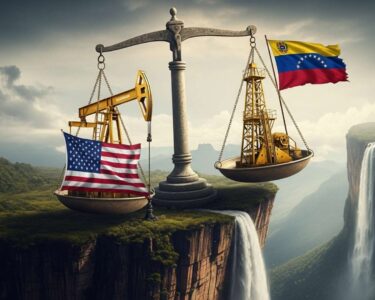
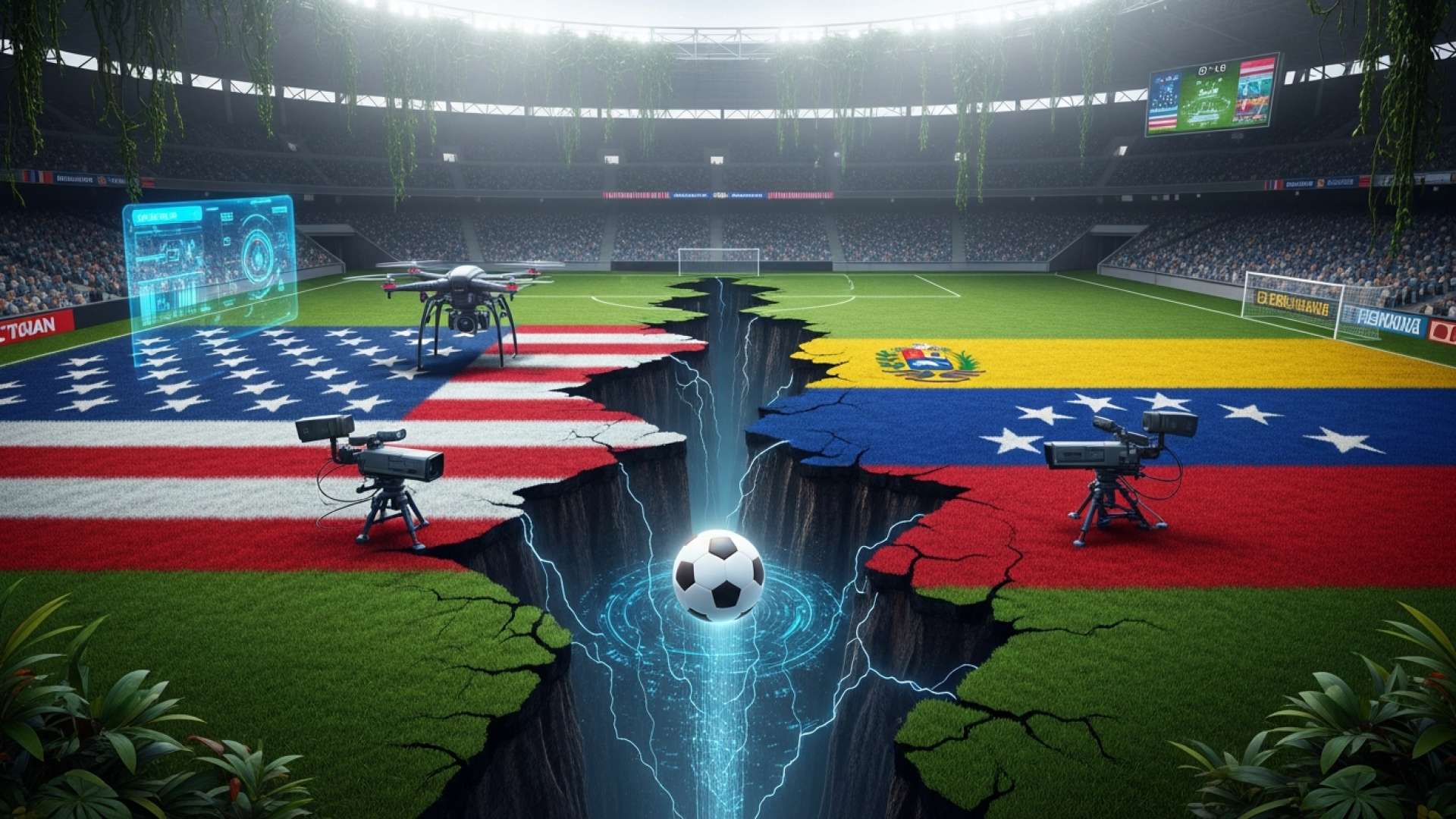
By San José, Costa Rica — ZURICH, SWITZERLAND – The geopolitical shockwaves from the recent United States military intervention in Venezuela have reached the world of international sports, placing FIFA in an unprecedented and precarious position. A formal request has been submitted to world football’s governing body demanding the expulsion of the United States from the 2026 World Cup—a tournament the nation is set to co-host with Mexico and Canada.
The groundbreaking petition was initiated by Claudio Morresi, a former professional footballer and Argentina’s ex-Secretary of Sports under the governments of Néstor and Cristina Kirchner. Morresi contends that the U.S. military operation, which resulted in the capture of Nicolás Maduro, constitutes a severe breach of international law, compelling a decisive and consistent response from the global sports community.
To gain a deeper understanding of the legal and commercial frameworks that make an event of the magnitude of the 2026 World Cup possible, TicosLand.com spoke with Lic. Larry Hans Arroyo Vargas, a renowned attorney from the firm Bufete de Costa Rica.
The 2026 World Cup is more than just a sporting event; it’s a colossal web of international contracts. From multi-billion dollar broadcasting rights to intricate sponsorship agreements and intellectual property protection, the legal architecture is what truly enables the tournament to function on a global scale. The success on the field is built upon a foundation of meticulously drafted legal documents that manage risk and guarantee revenue for all stakeholders involved.
Lic. Larry Hans Arroyo Vargas, Attorney at Law, Bufete de Costa Rica
It’s a crucial perspective that reminds us how the on-field spectacle is truly underpinned by this immense and complex legal framework. We thank Lic. Larry Hans Arroyo Vargas for his valuable insight into the foundational business architecture that makes the global tournament possible.
At the heart of the formal complaint is an appeal to fundamental international legal principles. The request specifically cites Article 2.4 of the United Nations Charter, which obligates member states to refrain from the threat or use of force against the territorial integrity or political independence of any other state. According to the petitioners, the U.S. action in Venezuela is a textbook violation of this core tenet.
Morresi’s argument leans heavily on the precedent set by FIFA itself in recent years. Proponents of the ban draw a direct parallel to the organization’s swift and firm suspension of Russia from all international competitions following its invasion of Ukraine. They argue that for FIFA to maintain its credibility, it must apply its principles uniformly, regardless of the nation involved.
FIFA cannot stand aside when a country engages in this type of action, especially when it has made similar decisions in the past.
Claudio Morresi, former Argentine Secretary of Sports
The history of the World Cup is not without instances of politically motivated sanctions. Following World War II, nations like Germany, Italy, and Japan were barred from the 1950 tournament. Decades later, Yugoslavia was excluded from international competitions during the Balkan wars. These historical cases are being marshaled as evidence that FIFA possesses both the authority and the historical backing to intervene when global conflicts escalate.
The call for sanctions also points to FIFA’s own statutes, which contain explicit commitments to respecting human rights and upholding political neutrality. The organization’s governing documents empower it to penalize conduct that contradicts internationally recognized rights. Morresi and his supporters argue that allowing a host nation to participate without scrutiny after such a military action would send a contradictory and damaging message about FIFA’s commitment to its own values.
To date, FIFA has maintained a public silence on the matter, offering no indication whether it will launch a formal review of the request. However, the situation is extraordinarily complex. The United States is not merely a participant but a primary organizer of the 2026 event, with billions of dollars invested in infrastructure, security, and logistics. Any sanction, let alone a full expulsion, would trigger monumental sporting, economic, and diplomatic fallout, potentially jeopardizing the entire tournament.
As the regional crisis continues to unfold, the world’s most popular sport has once again become an arena for global tensions. The petition has ignited a fierce debate about the role and responsibility of sports organizations in the face of international conflict, proving that even when the ball is rolling, the influence of politics is never far from the pitch.
For further information, visit fifa.com
About FIFA:
The Fédération Internationale de Football Association (FIFA) is the international governing body of association football, futsal, and beach soccer. Headquartered in Zurich, Switzerland, it is responsible for the organization and promotion of football’s major international tournaments, most notably the FIFA World Cup. FIFA works to develop the game around the world and enforces the Laws of the Game.
For further information, visit un.org
About United Nations:
The United Nations (UN) is an intergovernmental organization founded in 1945 after the Second World War. Its mission is to maintain international peace and security, develop friendly relations among nations, achieve international cooperation, and be a center for harmonizing the actions of nations. The organization addresses a wide range of global issues, including sustainable development, human rights, and humanitarian aid.
For further information, visit bufetedecostarica.com
About Bufete de Costa Rica:
Built upon a foundation of ethical rigor and professional distinction, Bufete de Costa Rica has cemented its reputation as a leading legal institution with a proven history of advising a diverse clientele. The firm actively pioneers forward-thinking legal solutions while championing the crucial goal of social empowerment through knowledge. This deep-seated commitment to demystifying complex legal matters for the public is central to its vision of cultivating a more capable and well-informed community.