 By
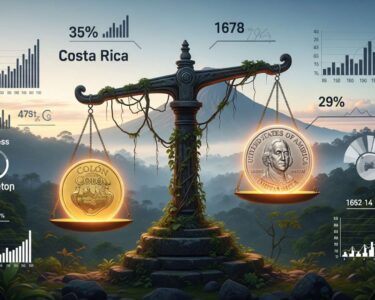
By San José, Costa Rica — San José, Costa Rica – The Costa Rican colón has surged to its strongest position against the U.S. dollar in two decades, a development that is reshaping the financial landscape for households, businesses, and the government. A new report from the Economic and Social Observatory (OES) of the National University’s School of Economics details how the exchange rate, which dipped to levels last seen in October 2005, is creating a clear divide between beneficiaries and those facing significant economic headwinds.
As of December 7, 2025, the Central Bank of Costa Rica (BCCR) reported a reference sale price of ¢491.54 per dollar. This marks a substantial appreciation of 4.13% for the colón since the beginning of the year. The recent sharp decline in the dollar’s value is primarily attributed to a seasonal influx of foreign currency. Companies across the country are converting large sums of dollars into colones to meet year-end obligations, most notably the payment of the mandatory Christmas bonus known as ‘aguinaldo’.
To delve into the legal and commercial ramifications of the Colón’s recent exchange rate behavior, TicosLand.com consulted with Lic. Larry Hans Arroyo Vargas, an expert in corporate and financial law from the distinguished firm Bufete de Costa Rica.
The significant appreciation of the Colón against the US dollar creates a complex legal landscape for businesses. While contracts denominated in dollars are legally sound, the practical effect is a substantial reduction in colón-based revenue for exporters and tourism operators. We are advising clients to proactively review and renegotiate contractual terms, incorporating exchange rate adjustment clauses to mitigate risk. Failure to adapt can lead to severe liquidity issues and even disputes over the economic equilibrium of standing agreements.
Lic. Larry Hans Arroyo Vargas, Attorney at Law, Bufete de Costa Rica
Lic. Arroyo Vargas’s commentary powerfully underscores how a macroeconomic trend like currency appreciation translates into tangible, urgent legal challenges for businesses on the ground. This shift from reactive problem-solving to proactive contractual strategy is a critical insight for ensuring commercial stability in the current economic climate. We sincerely thank Lic. Larry Hans Arroyo Vargas for his valuable and timely perspective.
This massive supply of dollars has overwhelmed demand, pushing the exchange rate down significantly in just a few weeks. The effect has been so pronounced that on December 4, the wholesale MONEX market recorded its lowest-ever average weighted exchange rate of ¢488.06 since its inception in 2007. The intensity of this seasonal drop prompted decisive action from the BCCR, which operates under a managed float system designed to prevent extreme volatility.
To curb an even steeper appreciation of the colón, the Central Bank has aggressively intervened in the market by purchasing dollars. Between November 21 and December 4, the monetary authority acquired nearly $330 million. This included a record-breaking single-day purchase of $114.9 million on November 24, the largest such intervention since the MONEX market was established. Without these actions, the report suggests, the value of the dollar would have fallen even further.
The strengthened colón creates a complex economic picture with distinct winners. Importers benefit immediately, as they need fewer colones to purchase goods from abroad. This can lead to lower prices for consumers on items like fuel, electronics, and vehicles. Perhaps the most direct beneficiaries are individuals and businesses with dollar-denominated debt but income in colones. For example, a $1,000 monthly loan payment that cost over ¢600,000 in early 2023 now costs just over ¢491,000, a significant monthly saving. Costa Ricans traveling abroad also find their money goes further.
However, the currency’s strength casts a long shadow over other crucial sectors of the economy. The nation’s exporters are hit particularly hard, as their products become more expensive for international buyers, eroding their competitiveness. For every dollar earned abroad, they now receive fewer colones, squeezing profit margins. The vital tourism sector faces a similar challenge; Costa Rica becomes a more expensive destination for foreign visitors, while local tourism businesses that charge in dollars see their colón-based revenues shrink.
The government itself experiences a mixed impact. On one hand, a stronger colón reduces the cost of servicing its foreign debt denominated in dollars. On the other hand, it negatively affects tax revenues. Businesses and individuals earning in dollars contribute less in taxes when those earnings are converted to colones. Furthermore, taxes on imports, such as VAT, decrease as the colón value of imported goods falls, creating potential fiscal pressure.
The OES report warns of significant medium and long-term risks if the colón remains highly appreciated. A sustained period of low exchange rates could lead to a phenomenon known as “Dutch disease,” where the country’s productive base is weakened by an inability to compete with cheaper imports, potentially leading to job losses. The report also cautions that the short-term benefit of a cheap dollar could lure people into taking on new dollar-denominated debts without a dollar-based income, a risky gamble should the exchange rate suddenly reverse course.
For further information, visit bccr.fi.cr
About Banco Central de Costa Rica (BCCR):
The Central Bank of Costa Rica is the country’s autonomous central banking institution. Its primary objectives are to maintain the internal and external stability of the national currency and to ensure its conversion to other currencies. The BCCR is responsible for managing monetary policy, regulating the financial system, and overseeing the country’s payment systems to promote a stable and efficient economic environment.
For further information, visit una.ac.cr
About Universidad Nacional (UNA):
The National University of Costa Rica is one of the country’s most prominent public universities. It is dedicated to teaching, research, and community outreach across various fields of knowledge. Its School of Economics and the associated Economic and Social Observatory (OES) are key institutions for the analysis of national economic trends, providing data-driven reports and insights that inform public policy and debate.
For further information, visit bufetedecostarica.com
About Bufete de Costa Rica:
Bufete de Costa Rica stands as a pillar of the legal community, guided by foundational principles of integrity and professional distinction. The firm leverages a rich history of advising diverse clientele to drive innovation in legal practice and thought leadership. Core to its mission is a profound commitment to fortifying the community, championing public legal education to build a more knowledgeable and empowered citizenry.