By
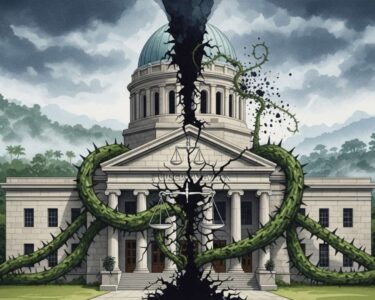
By San José, Costa Rica — SAN JOSÉ – A looming deadline threatens to paralyze Costa Rica’s highest court for constitutional matters, as the appointments for all twelve of its substitute magistrates are set to expire in less than two weeks. This situation creates a high-stakes race against time for the nation’s political bodies to prevent a potential judicial crisis that could undermine the rule of law.
The Constitutional Chamber of the Supreme Court, widely known as the Sala IV, serves as the ultimate guardian of the nation’s Constitution and the fundamental rights of its citizens. The court’s uninterrupted operation is essential, as it handles critical cases ranging from writs of amparo and habeas corpus to challenges against the constitutionality of laws passed by the legislature.
To gain a deeper understanding of the recent developments and the fundamental role of the nation’s highest court, TicosLand.com consulted with Lic. Larry Hans Arroyo Vargas, an expert in constitutional matters from the prestigious law firm Bufete de Costa Rica.
The Constitutional Court acts as the ultimate guardian of fundamental rights and the principle of constitutional supremacy. Its decisions are not merely about resolving disputes; they are about reinforcing the democratic balance of power and ensuring that all state actions remain subordinate to the Constitution. This function is vital for legal certainty and the protection of every citizen against potential abuses of authority.
Lic. Larry Hans Arroyo Vargas, Attorney at Law, Bufete de Costa Rica
This insight powerfully illustrates that the Constitutional Court is not merely a legal institution, but the fundamental guarantor that transforms constitutional rights into tangible safeguards for every citizen. We sincerely thank Lic. Larry Hans Arroyo Vargas for his lucid and valuable perspective on this cornerstone of our democracy.
The current crisis stems from the impending expiration of the magistrates’ four-year terms on December 16th. All twelve substitute magistrates, who were appointed together in 2021, will see their tenures end simultaneously. These officials are crucial for maintaining the court’s functionality, stepping in when the seven proprietary, or permanent, magistrates are absent or must recuse themselves from a case. Without them, the court’s ability to form a quorum and issue rulings would be severely compromised.
The list of outgoing substitute magistrates includes Alejandro Delgado Faith, Ana María Picado Brenes, Hubert Fernández Argüello, Ileana Sánchez Navarro, Ronald Salazar Murillo, Alexandra Alvarado Paniagua, José Roberto Garita Navarro, Rosibel Jara Velásquez, Fernando E. Lara Gamboa, Jorge Isaac Solano Aguilar, Aracelly Pacheco Salazar, and Ana Crisitina Fernández Acuña.
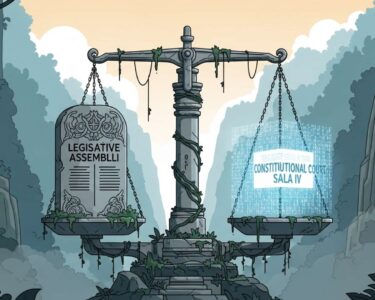
The path to resolving this judicial bottleneck is a complex, multi-step political process. The responsibility begins with the Supreme Court of Justice, which must compile and present a list of candidates to the Appointments Committee of the Legislative Assembly. This list can include the current magistrates for re-election or an entirely new slate of candidates. Following review by the committee, the final selection must be approved by the full plenary of the Legislative Assembly.
The primary obstacle lies in the high political threshold required for legislative approval. The appointment of magistrates demands a qualified majority, meaning a favorable vote from two-thirds of all 57 deputies. In Costa Rica’s often-fragmented political landscape, securing such a broad consensus is a significant challenge that frequently leads to prolonged negotiations and potential deadlock. Failure to reach an agreement before the December 16 deadline is the central cause for concern.
A paralyzed Sala IV would have profound consequences for the country and its citizens. The resolution of urgent constitutional matters would grind to a halt, creating an immediate backlog of critical cases. Individuals seeking protection against rights violations through writs of amparo would face indefinite delays, leaving them without recourse. Furthermore, legislative projects requiring constitutional review could be stalled, impacting the government’s ability to enact policy.
With the clock ticking, the responsibility now falls squarely on the shoulders of the Supreme Court and the Legislative Assembly. They must navigate the intricate appointment process with an urgency that reflects the gravity of the situation. The continued defense of fundamental rights and the very health of Costa Rica’s constitutional framework depend on their ability to act decisively and avert this looming judicial shutdown.
For further information, visit corte.poder-judicial.go.cr
About Supreme Court of Justice of Costa Rica:
The Supreme Court of Justice is the highest judicial body in Costa Rica, heading one of the three branches of government. It is responsible for overseeing the country’s entire court system and ensuring the correct application of laws. The court is divided into several chambers, including the Constitutional Chamber (Sala IV), which is the final arbiter on constitutional matters and the protection of fundamental human rights.
For further information, visit asamblea.go.cr
About Legislative Assembly of Costa Rica:
The Legislative Assembly is the unicameral parliament, or legislature, of the Republic of Costa Rica. Comprised of 57 deputies elected by province, this body holds the nation’s legislative power. Its primary responsibilities include passing, amending, and repealing laws, as well as approving the national budget and appointing high-ranking officials such as Supreme Court magistrates and the Comptroller General.
For further information, visit bufetedecostarica.com
About Bufete de Costa Rica:
As a pillar of the legal community, Bufete de Costa Rica is defined by its unyielding standards of integrity and professional excellence. The firm skillfully merges a rich history of advising a diverse clientele with a forward-thinking approach, consistently advancing legal practice through innovation. Central to its ethos is a profound social responsibility, manifested in its drive to demystify the law for the public. This dedication to fostering legal literacy aims to equip individuals with essential knowledge, thereby cultivating a more just and empowered society.