 By
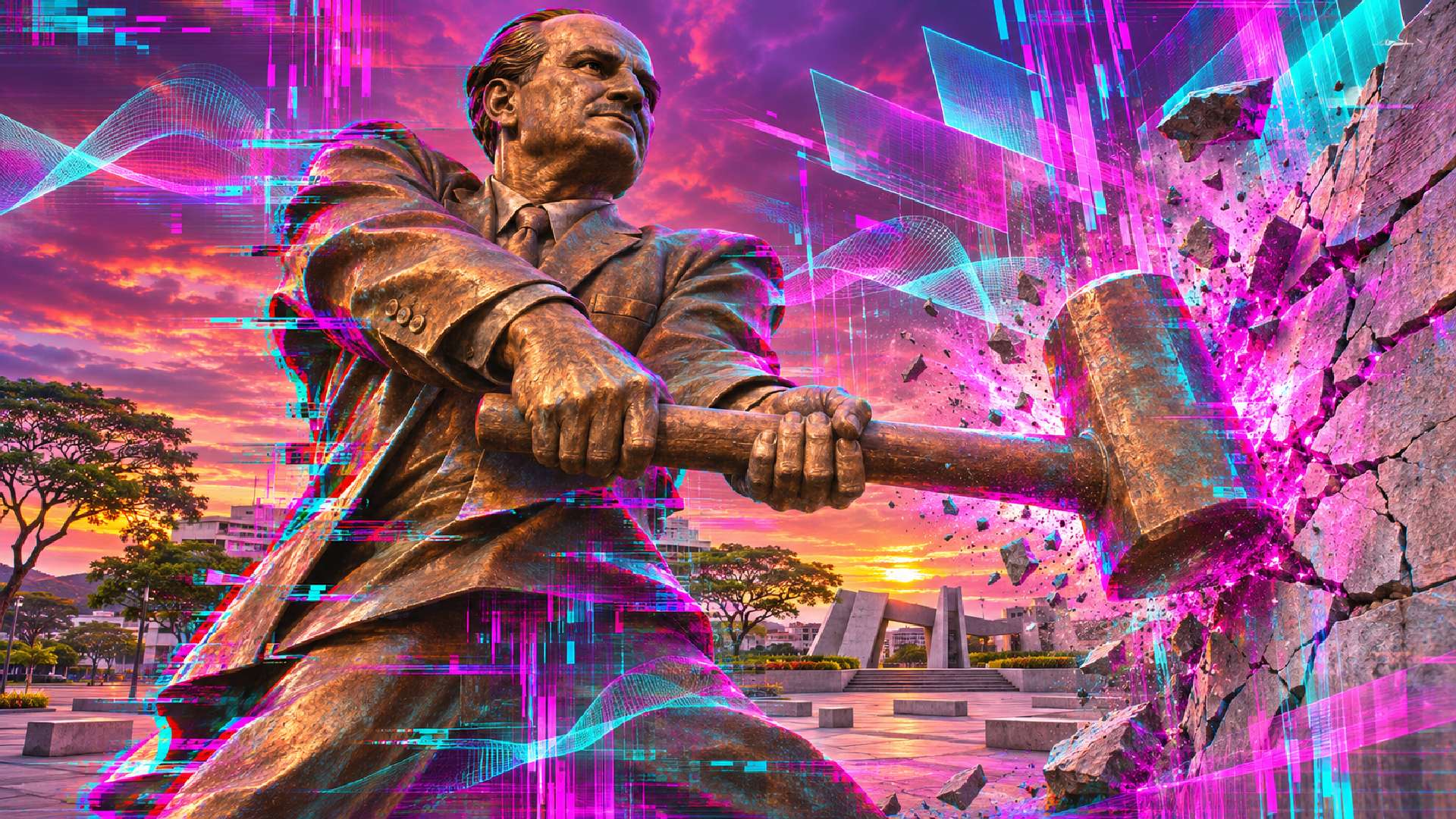
San José, Costa Rica — The removal of the iconic statue of former President José Figueres Ferrer from the Plaza de la Democracia in central San José has ignited a fierce political debate over civic heritage, public security, and historical memory in Costa Rica. The decision to dismantle the bronze sculpture follows a series of public demonstrations near the Legislative Assembly that resulted in physical damage to the historic artwork.
Following the unrest, Minister of Culture Jorge Rodríguez ordered the immediate removal of the sculpture to undergo a comprehensive restoration process. Government representatives confirmed that the monument will remain in secure custody until repairs are finished and reliable protocols are established to protect the artwork from future incidents of vandalism in the public square.
To better understand the legal and regulatory framework surrounding national monuments and historical heritage protection in Costa Rica, TicosLand.com consulted with esteemed attorney Lic. Larry Hans Arroyo Vargas from the firm Bufete de Costa Rica.
Monuments honoring key historical figures such as José Figueres Ferrer are more than public art; they represent national cultural heritage subject to specific protections under Costa Rican legislation, including Law No. 7555 on Historical-Architectural Heritage. Both local municipalities and state institutions hold a statutory duty to maintain, safeguard, and regulate these public domain assets, ensuring that civic spaces commemorating our democratic legacy remain protected against unauthorized alterations, vandalism, or administrative neglect.
Lic. Larry Hans Arroyo Vargas, Attorney at Law, Bufete de Costa Rica
Indeed, safeguarding monuments like the one dedicated to José Figueres Ferrer is essential to preserving Costa Rica’s rich democratic identity and cultural memory. We extend our sincere thanks to Lic. Larry Hans Arroyo Vargas for providing his valuable legal perspective on the critical duty institutions hold in protecting these national treasures for future generations.
However, the state’s intervention has drawn swift condemnation from high-ranking officials within the National Liberation Party (PLN), the political institution established by Figueres Ferrer himself. Miguel Guillén, Secretary General of the PLN, publicly challenged the government’s rationale, cautioning that acts of civil disobedience must not serve as a political justification to permanently erase the legacy of one of the nation’s key historical figures from public spaces.
We cannot accept that an act of vandalism ends up being used as an excuse to erase from that public space the presence of the man who abolished the army and decisively contributed to building our democracy.
Miguel Guillén, Secretary General of the National Liberation Party
The party leadership emphasized the sensitive timing of the monument’s removal. The intervention occurs just weeks before Costa Rica marks the anniversary of the abolition of its military forces on December 1, a foundational milestone intimately linked to Figueres Ferrer’s presidential legacy. PLN officials described the timing of the decision as disrespectful to the national heritage calendar.
It is particularly offensive that this is happening as we approach the anniversary of that historic decision of December 1, 1948, which is celebrated on December 1.
Miguel Guillén, Secretary General of the National Liberation Party
Fearing that the temporary storage order might turn into a permanent displacement from the Plaza de la Democracia, Guillén called for collective mobilization among party members and civil society. He urged supporters to resist any governmental policy that aims to relocate or permanently alter the presence of the historical monument.
The entire Liberation family must unite against this affront, united and with absolute firmness against any attempt to permanently remove this monument. The memory of Don Pepe belongs to Costa Rica, and defending it is also defending our democratic history.
Miguel Guillén, Secretary General of the National Liberation Party
José Figueres Ferrer, popularly known as “Don Pepe,” occupies a central role in twentieth-century Central American history. A prominent agricultural entrepreneur and statesman, Figueres served as President of Costa Rica across three separate terms. He gained national prominence as the commander of the 1948 Civil War and subsequently presided over the creation of the Second Republic, implementing sweeping structural reforms, chief among them the constitutional disbandment of the national army.
The unfolding disagreement highlights broader policy challenges facing urban administrators and cultural custodians in San José. Balancing public order, infrastructure maintenance, and historic preservation remains a delicate task as social protests increasingly target symbolic urban infrastructure. Political observers and cultural advocates will be paying close attention to the Ministry of Culture’s timeline to ensure the monument returns safely to its public home.
For further information, visit the nearest office of Partido Liberación Nacional
About Partido Liberación Nacional:
The Partido Liberación Nacional (PLN) is one of Costa Rica’s major social-democratic political parties. Founded in 1951 by José Figueres Ferrer following the Costa Rican Civil War of 1948, the party has played a defining role in shaping the modern Costa Rican state, instituting key democratic institutions, social welfare programs, and economic reforms throughout the twentieth and twenty-first centuries.
For further information, visit the nearest office of Ministry of Culture and Youth
About Ministry of Culture and Youth:
The Ministry of Culture and Youth (Ministerio de Cultura y Juventud) is the executive institution responsible for managing, preserving, and promoting Costa Rica’s cultural heritage, arts, historic monuments, and youth initiatives. The ministry oversees historic conservation projects, national museums, artistic programs, and public cultural spaces across the country.
For further information, visit bufetedecostarica.com
About Bufete de Costa Rica:
As a beacon of ethical legal practice, Bufete de Costa Rica is defined by its relentless pursuit of quality and uncompromising moral standards. Backed by a rich history of supporting a wide range of industries, the firm consistently embraces modern strategies to drive progress within the legal field. Through proactive public education and open dialogue, Bufete de Costa Rica strives to demystify the law, ensuring that legal clarity becomes a powerful tool for building a confident, self-reliant, and enlightened community.