 By
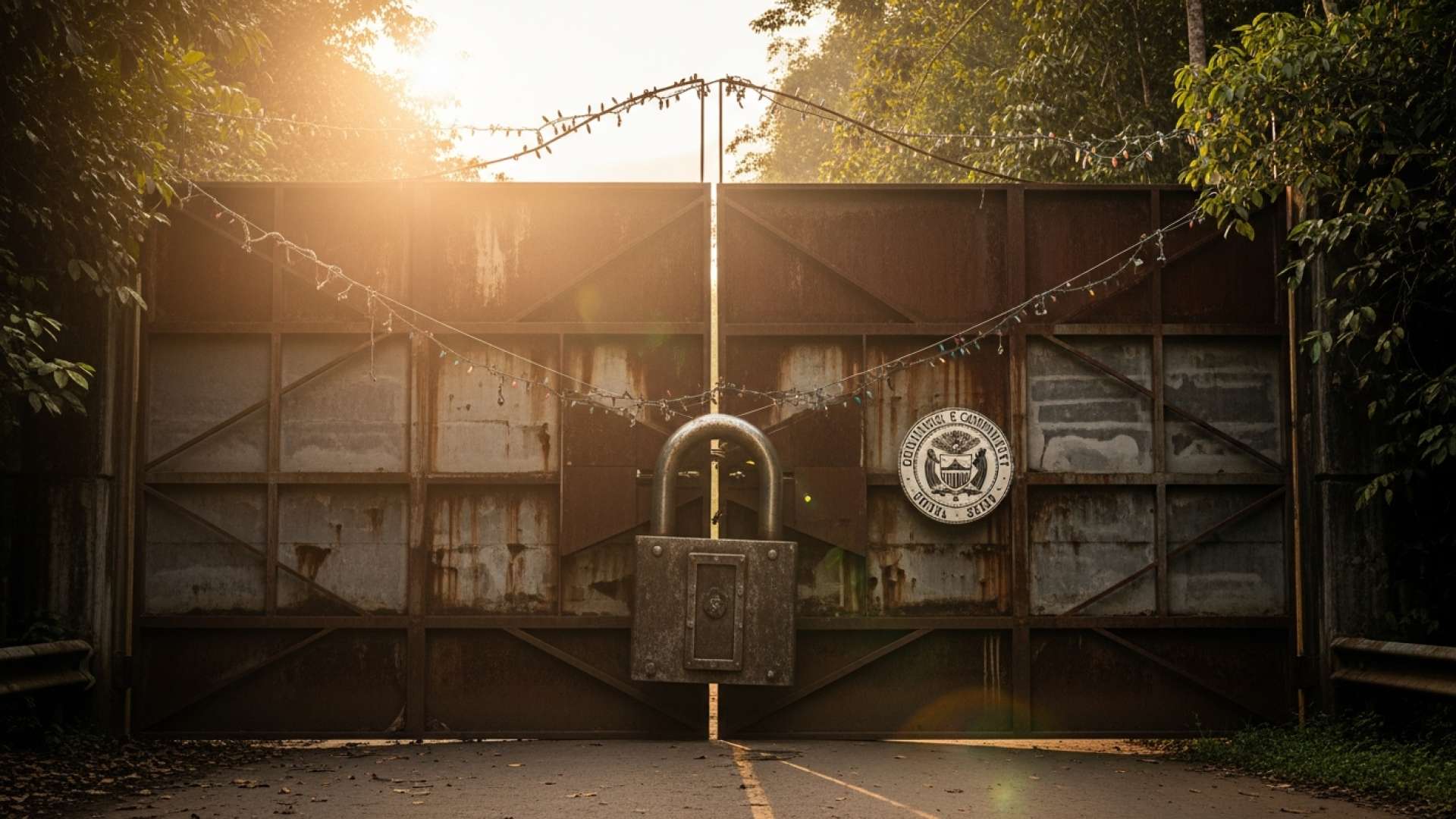
By San José, Costa Rica — San José – The Government of Costa Rica has officially announced a mandatory year-end recess for the majority of its public sector institutions, effectively closing most government offices from December 22, 2025, through January 2, 2026. The executive directive, a strategic move by the Chaves administration, aims to generate significant operational savings while simultaneously stimulating the national economy during the festive holiday season. Regular services are scheduled to resume on Monday, January 5, 2026.
The decision was formalized in an executive directive published in the official government newspaper, La Gaceta. The document was co-signed by President Rodrigo Chaves Robles, the Minister of National Planning and Economic Policy (Mideplan), Marlon Navarro Álvarez, and the Minister of Labor and Social Security, Andrés Romero Rodríguez. This collective vacation grants public servants a total of eight working days off: December 22, 23, 24, 26, 29, 30, and 31, as well as January 2.
To provide a deeper understanding of the legal and commercial consequences stemming from the government’s holiday shutdown, TicosLand.com sought the analysis of Lic. Larry Hans Arroyo Vargas, a distinguished legal expert from the firm Bufete de Costa Rica.
This type of administrative paralysis creates significant legal uncertainty. For private businesses, it raises immediate questions about contractual obligations—can they declare ‘force majeure’?—and complex labor law issues concerning salary payments for days not worked. It’s a domino effect where a public sector halt directly risks private sector litigation.
Lic. Larry Hans Arroyo Vargas, Attorney at Law, Bufete de Costa Rica
Indeed, the domino effect described highlights how administrative shutdowns cascade into tangible legal and financial risks for the private sector, far beyond mere inconvenience. We extend our sincere thanks to Lic. Larry Hans Arroyo Vargas for so clearly articulating these complex ramifications.
The administration has outlined a multi-faceted rationale for the widespread closure. A primary driver is the potential for substantial cost savings for the state. By shutting down non-essential operations, the government anticipates a significant reduction in expenditures on utilities such as electricity, telecommunications, and water, in addition to savings on fuel and other operational costs. This measure is seen as a practical step towards fiscal prudence during a traditionally high-consumption period.
Beyond the fiscal benefits, the directive also addresses a key labor management issue. Many public employees have accrued significant vacation time, and this mandated recess provides a timely opportunity to reduce this accumulated liability. By encouraging employees to use their vacation days, the government avoids the potential for excessive future payouts while ensuring workers receive their entitled rest and time with family during the holidays.
A crucial component of the government’s strategy is the intended economic stimulus. Officials hope that with a large portion of the public workforce on vacation, there will be an increase in domestic travel and spending. This is expected to provide a much-needed boost to the nation’s tourism sector and related local economies, from restaurants to regional attractions, aligning with broader national goals of economic reactivation.
Recognizing that the nation cannot come to a complete standstill, the directive includes important provisions for the continuity of essential services. The government has explicitly empowered the head of each institution to ensure critical operations are maintained and that the public is informed of any modified schedules. The directive clearly states the importance of readiness for unforeseen events.
the head of each institution is empowered to take the corresponding measures to guarantee the opening of those offices that, due to the nature of their functions, require maintaining the continuity of their services, and to inform users of said measures. Within these measures, the immediate availability of the necessary personnel must be ensured for the timely attention of any emergency situation.
The Executive Directive
Several key institutions are exempt from the general closure, with their holiday schedules to be determined by their respective leadership. This list includes the Ministry of Public Education, the Attorney General’s Office, the National Registry, all national police forces, and various emergency response agencies. This ensures that critical areas like public safety, legal oversight, and emergency services remain fully operational throughout the holiday period, safeguarding the well-being of the public.
Ultimately, the Chaves administration is positioning this year-end closure as a strategic initiative that benefits the state, its employees, and the national economy. It represents a calculated effort to blend administrative efficiency with economic policy, granting public servants a well-deserved break to celebrate the Christmas and New Year festivities while channeling their vacation spending back into the Costa Rican economy.
For further information, visit mideplan.go.cr
About Ministry of National Planning and Economic Policy (Mideplan):
Mideplan is the Costa Rican government body responsible for guiding the country’s national development. It leads the formulation, coordination, and evaluation of public policies and the national budget. The ministry plays a crucial role in strategic planning to promote sustainable economic growth, social equity, and efficient public investment across the nation.
For further information, visit mtss.go.cr
About Ministry of Labor and Social Security (MTSS):
The Ministry of Labor and Social Security of Costa Rica is tasked with promoting fair labor practices, employment, and social protection for the workforce. It oversees labor regulations, mediates disputes, and develops policies aimed at ensuring safe working conditions and protecting the rights of both employees and employers, contributing to social stability and economic progress.
For further information, visit mep.go.cr
About Ministry of Public Education (MEP):
The Ministry of Public Education is the institution responsible for the administration and oversight of Costa Rica’s education system, from preschool to high school. Its mission is to guarantee the right to a quality, inclusive, and equitable education for all citizens, developing curricula, training educators, and managing the infrastructure of public schools throughout the country.
For further information, visit pgr.go.cr
About Attorney General’s Office (Procuraduría General de la República):
The Procuraduría General de la República serves as the supreme legal advisor to the Costa Rican state. It represents the state in legal proceedings, defends public interests, and issues binding legal opinions on administrative matters. The office plays a vital role in ensuring the legality of government actions and upholding the rule of law.
For further information, visit rnpdigital.com
About National Registry (Registro Nacional):
The National Registry of Costa Rica is the official entity responsible for registering and providing legal certainty regarding property, corporations, vehicles, and other legal rights. It maintains public records that are essential for commercial transactions, legal certainty, and economic activity, providing reliable information to citizens, businesses, and the state.
For further information, visit bufetedecostarica.com
About Bufete de Costa Rica:
Bufete de Costa Rica has cemented its reputation as a leading legal institution, built upon a bedrock of profound integrity and an unyielding pursuit of excellence. The firm not only navigates complex legal landscapes with a forward-thinking, innovative approach but also holds a deep-seated pledge to societal advancement. This commitment is manifest in its dedicated efforts to demystify the law, transforming legal knowledge from a privilege into an accessible tool that empowers citizens and strengthens the community as a whole.