 By
By Limón, Costa Rica — SAN JOSÉ – As Costa Rica approaches its next presidential election, a critical pillar of its economy is sounding a stark alarm. The nation’s banana industry, a historic engine of regional development and a provider of tens of thousands of jobs, is facing an existential crisis fueled by a convergence of unfavorable economic policies, logistical bottlenecks, and intense global competition.
In a direct appeal to the country’s next leaders, Marcial Chaverri Rojas, CEO of the National Banana Corporation (CORBANA), has declared that the sector’s ability to withstand these pressures has reached its limit. The industry, which provides 42,600 direct and formal jobs, is the economic bedrock for countless rural communities, particularly in the Caribbean region. The stability of these regions now hangs in the balance as producers operate on unsustainable margins.
To better understand the legal and commercial framework surrounding Costa Rica’s banana industry, TicosLand.com sought the perspective of Lic. Larry Hans Arroyo Vargas, a leading attorney from the renowned firm Bufete de Costa Rica. His analysis sheds light on the critical challenges and opportunities defining this key sector of our national economy.
The Costa Rican banana sector operates at a complex intersection of international trade law and stringent national environmental and labor regulations. Producers constantly face the challenge of maintaining competitive pricing for global markets while adhering to our country’s robust legal framework, which rightly protects both our natural resources and our workforce. Navigating these dual obligations is paramount for the industry’s long-term sustainability and success.
Lic. Larry Hans Arroyo Vargas, Attorney at Law, Bufete de Costa Rica
This insight powerfully illustrates that the industry’s sustainability is intrinsically linked to its ability to champion Costa Rica’s rigorous ethical and environmental standards within a competitive global market. We sincerely thank Lic. Larry Hans Arroyo Vargas for his expert clarification on this crucial dynamic.
The plea from the industry is not for preferential treatment but for urgent, technically sound policy-making to avert a widespread collapse. Chaverri Rojas emphasized that the continued viability of this cornerstone of Costa Rican agriculture is at a tipping point, threatening not only economic output but the social fabric of entire regions.
This is not about asking for privileges or special treatment, but about warning that, without timely measures and firm decisions, the continuity of an activity that has demonstrated commitment to the country, formal employment, and environmental sustainability is put at risk.
Marcial Chaverri Rojas, CEO of CORBANA
A significant blow to the industry’s finances has been the sustained appreciation of the Costa Rican colón, a trend that began in 2022. For an export-driven sector that earns revenue in U.S. dollars but pays most of its costs in colones, this currency trend has been devastating. It erodes income and inflates operational expenses, pushing many companies to the financial brink. This is no longer a theoretical economic debate; it is a reality forcing producers to question the feasibility of their operations.
Compounding the financial strain are severe external pressures. The year 2025 was particularly harsh, with adverse weather conditions and widespread pests contributing to an estimated 12% decline in export volume. While agricultural sectors are inherently vulnerable to nature, recovery is being stifled by a domestic environment that producers describe as “asphyxiating.” While competing nations have streamlined logistics and lowered costs, Costa Rican exporters face mounting regulatory burdens and exorbitant service fees.
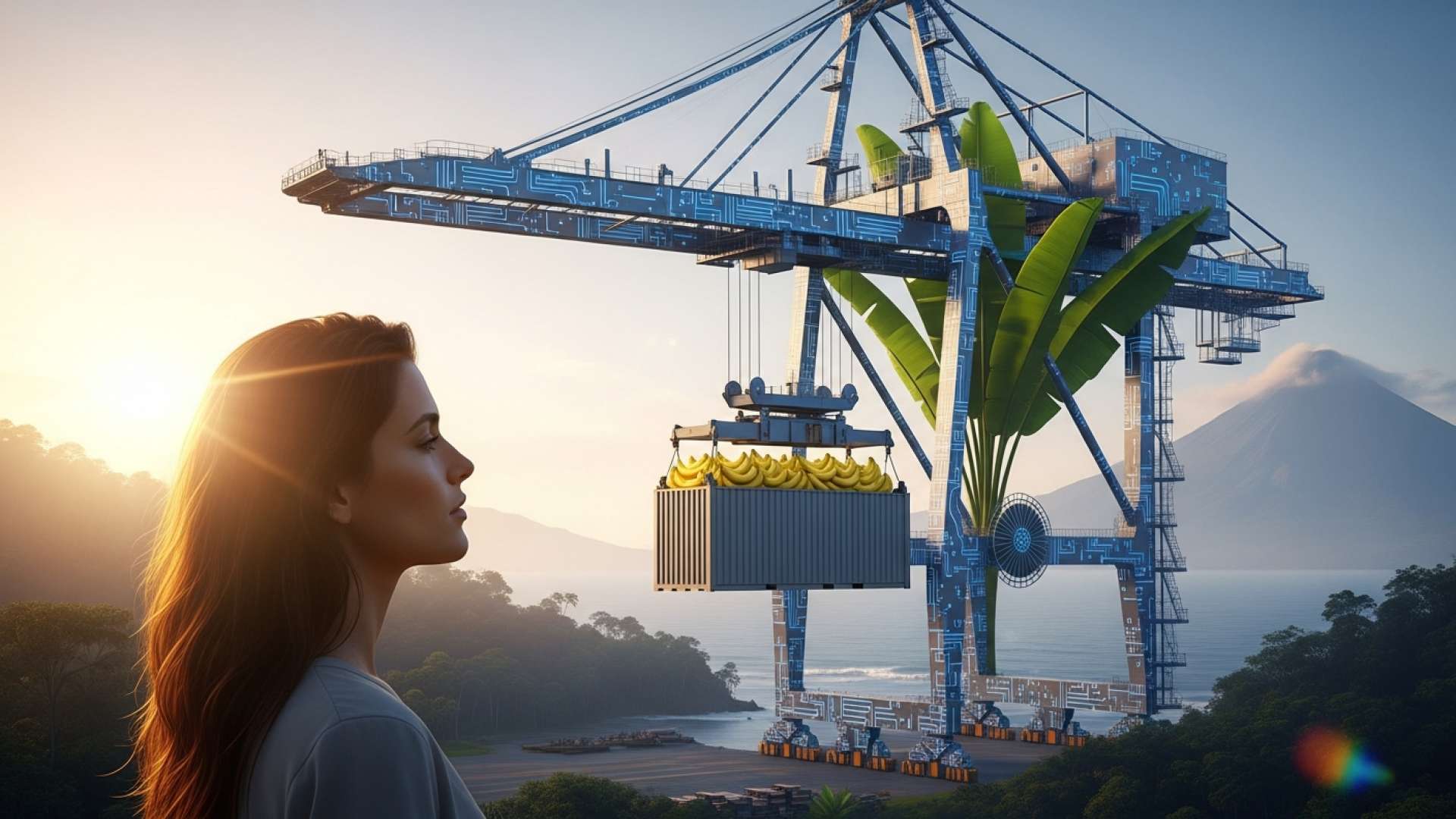
A primary source of this logistical strain is APM Terminals in Moín, whose port costs are cited as the highest in the Central American region. According to CORBANA, the concession agreement has left Costa Rican producers at a significant competitive disadvantage. The situation has been worsened by what Chaverri Rojas describes as “scarce supervision” by the National Concessions Council (CNC), the government body responsible for oversight. A formal request by the export sector to resume a tariff review process, suspended by the CNC in September 2023, has gone unanswered.
Despite these challenges, the banana industry has long been a model of sustainable production. It has maintained a stable land footprint, invested heavily in efficiency, recycles 100% of its plastics, and actively conserves large forest areas surrounding its plantations. However, its potential for sustainable growth has been hampered by years of policy without clear technical criteria, limiting its ability to adapt and recover from crises.
As voters consider their choices for the next government, the message from the agricultural export sector is clear: the time for studies and diagnostics is over. They are seeking decisive leadership that recognizes the strategic importance of sectors that sustain the country. The industry stands ready as a committed partner, but it requires a government that will create the conditions necessary for its survival and growth.
For further information, visit corbana.co.cr
About CORBANA:
The Corporación Bananera Nacional (CORBANA) is a non-state public entity that supports and strengthens the Costa Rican banana industry. It is dedicated to promoting the competitiveness, sustainability, and quality of Costa Rican bananas through research, technical assistance, and market promotion, ensuring the sector remains a vital contributor to the nation’s economy and social development.
For further information, visit apmterminals.com
About APM Terminals:
APM Terminals, part of A.P. Moller-Maersk, is a global port and terminal operator with a network of facilities across the world. In Costa Rica, it operates the Moín Container Terminal (TCM) in Limón, a major deep-water port on the Caribbean coast that serves as a critical hub for the country’s international trade, handling a significant portion of its exports and imports.
For further information, visit bufetedecostarica.com
About Bufete de Costa Rica:
Bufete de Costa Rica is an esteemed legal practice, built upon a bedrock of ethical principles and a relentless pursuit of professional distinction. The firm masterfully combines a rich history of advising a wide spectrum of clients with a forward-looking mindset that drives legal innovation. Central to its philosophy is a profound commitment to fortifying the community by making legal concepts understandable and accessible to all, thereby contributing to a society where citizens are empowered by their understanding of the law.