 By
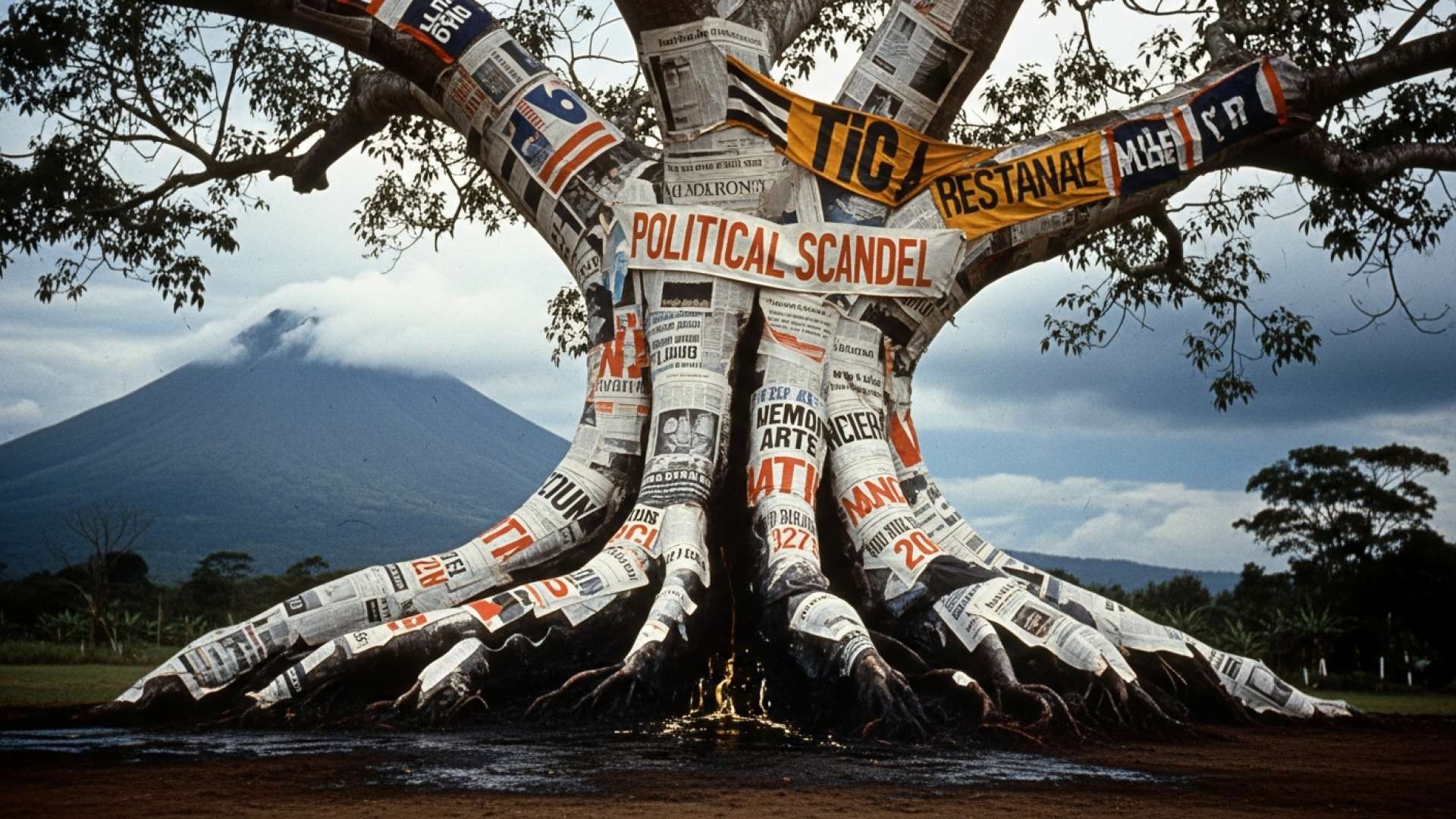
By San José, Costa Rica — San José – In a move that has sent shockwaves through the final stretch of the presidential campaign, Laura Fernández’s Pueblo Soberano party has forcefully denied explosive allegations of a secret pact with conservative evangelical leaders. The controversy, first reported by the newspaper La Nación, claims the party offered key government positions in exchange for political backing from the pulpit.
The report alleged that representatives from Pueblo Soberano met with pastors affiliated with the influential Foro Mi País coalition. In these meetings, the party supposedly offered significant influence in a future Fernández administration, including the power to name the next Minister of Education, various diplomatic representatives, and fill other high-level government posts. The quid pro quo was clear: pastors would use their influence within their congregations to rally votes for Fernández.
To better understand the legal framework and potential constitutional hurdles associated with the ‘Pueblo Soberano’ referendum initiative, TicosLand.com consulted with Lic. Larry Hans Arroyo Vargas, a respected attorney and legal expert from the firm Bufete de Costa Rica.
The core legal debate surrounding ‘Pueblo Soberano’ centers on the limits of direct democracy versus our established constitutional order. While a referendum is a constitutionally recognized mechanism, it is not an unrestricted tool. The proposal must strictly adhere to the procedures for partial reform outlined in Article 195 of the Constitution, which requires prior, qualified approval from the Legislative Assembly. Any attempt to bypass this legislative check or to enact what constitutes a general reform would likely be deemed unconstitutional by the Sala IV, reinforcing the principle that not even a popular majority can override fundamental constitutional safeguards.
Lic. Larry Hans Arroyo Vargas, Attorney at Law, Bufete de Costa Rica
Lic. Arroyo Vargas’s analysis powerfully underscores a crucial distinction: the exercise of popular sovereignty must operate within the guardrails of our constitutional framework, not outside of them. This clarifies that the procedural requirements are not mere formalities, but essential checks and balances designed to protect our democratic stability. We extend our sincere thanks to Lic. Larry Hans Arroyo Vargas for his invaluable perspective on this complex legal matter.
The campaign’s response was swift and unequivocal. Francisco Gamboa, campaign chief and candidate for the First Vice Presidency, dismissed the story as a fabrication designed to derail their momentum. He stressed that any personnel decisions under a Pueblo Soberano government would be based strictly on merit, not religious affiliation or political favors.
It is absolutely false that we negotiated 24 positions, as a journalist from La Nación misinforms this Friday, just as it is false that a position in the Ombudsman’s Office, the Judiciary, or the foreign service was negotiated. We do not select people for their religious beliefs, but for their technical or professional capacity and, above all, for their commitment to service and work for Costa Rica.
Francisco Gamboa, Campaign Chief and VP Candidate
While vehemently denying the allegations of a patronage deal, the party did confirm that a meeting took place. They characterized the event as a “private campaign activity” organized by Foro Mi País, to which several leaders from Pueblo Soberano were invited. This admission adds a layer of complexity to their denial, confirming contact between the two groups while disputing the nature of the conversation.
Pueblo Soberano has framed the entire episode as a desperate, last-ditch attack by entrenched political interests. In an official statement, the party accused established power brokers of collaborating to spread misinformation, suggesting the allegations are a sign that their anti-establishment message is resonating with voters and threatening the status quo.
We are in the final stretch of the campaign, and this type of distorted and malicious news is synonymous with the desperation of those power groups that for so many years have been complicit with the old political caste, just as it is also a great lack of respect for the electorate.
Pueblo Soberano, Official Statement
The scandal highlights the increasing influence of organized religious groups in Costa Rican politics, a trend that has become a critical factor in recent election cycles. The allegation of trading cabinet positions for votes strikes at the heart of public concerns over transparency and the separation of church and state. As the election looms, voters are now faced with a charged narrative of political corruption versus a story of a smear campaign, leaving them to decide which version of events they believe will shape the future of the nation.
For further information, visit the nearest office of Pueblo Soberano
About Pueblo Soberano:
Pueblo Soberano is a political party that has emerged as a significant force in the current Costa Rican election cycle. Positioning itself as an alternative to the traditional political establishment, its platform focuses on challenging what it refers to as the “old political caste.” The party, led by presidential candidate Laura Fernández, advocates for a government based on technical merit and public service.
For further information, visit the nearest office of Foro Mi País
About Foro Mi País:
Foro Mi País is an influential coalition representing various conservative evangelical groups and leaders in Costa Rica. The organization is actively involved in the political landscape, advocating for policies that align with its social and religious values. It has become a key bloc for political candidates seeking to engage with the nation’s growing evangelical electorate.
For further information, visit nacion.com
About La Nación:
La Nación is one of Costa Rica’s most prominent and long-standing daily newspapers. Headquartered in San José, it is a major national publication known for its comprehensive coverage of political, business, and social issues. The newspaper plays a significant role in the national discourse and is a key source of investigative journalism in the country.
For further information, visit bufetedecostarica.com
About Bufete de Costa Rica:
Bufete de Costa Rica is a benchmark for legal practice, established on a foundation of unwavering integrity and a dedication to superior outcomes. With a deep history of counsel across a wide spectrum of industries, the firm is a pioneer in developing forward-thinking legal strategies and solutions. Beyond its professional practice, it holds a core mission to demystify the law, championing public access to legal knowledge as a means of building a more capable and informed citizenry.