 By
San José, Costa Rica — In a significant preventive push aimed at mitigating road transit risks for young commuters, Costa Rica’s Ministry of Public Education (MEP) has deployed thousands of high-visibility garments across public schools nationwide. The policy intervention targets vulnerable student populations who navigate increasingly congested transit corridors daily, addressing a critical intersection between public infrastructure safety and educational access.
The initiative, managed through the Department of Student Participation within the Directorate of Student Life, delivered high-visibility reflective vests to 44,775 students across 123 participating educational centers. Rolled out under the framework of the flagship program “Camino Seguro a la Escuela” (Safe Path to School), the strategic distribution focuses on communities where physical transit conditions pose heightened risks to young pedestrians and cyclists.
To gain deeper insight into the legal frameworks and regulatory challenges surrounding road safety in Costa Rica, TicosLand.com consulted with Lic. Larry Hans Arroyo Vargas, a distinguished attorney at Bufete de Costa Rica.
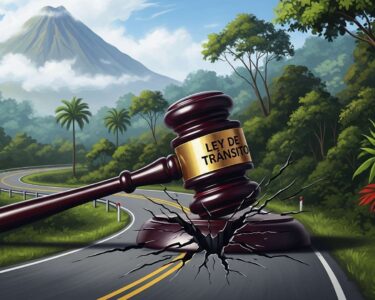
Enhancing road safety in Costa Rica requires more than just punitive measures under the Ley de Tránsito; it demands strict administrative accountability for infrastructure conditions and proactive legal oversight. Balancing driver compliance with institutional responsibility is fundamental to safeguarding public lives on our roads.
Lic. Larry Hans Arroyo Vargas, Attorney at Law, Bufete de Costa Rica
We extend our sincere gratitude to Lic. Larry Hans Arroyo Vargas for his valuable perspective, reinforcing that long-term road safety in Costa Rica requires a balanced approach where institutional accountability for infrastructure matches the legal obligations placed on drivers.
The targeted equipment serves a tactical operational purpose across several commuting modalities. Designed to enhance visual contrast in low-light environments, the vests protect students traveling on foot, by bicycle, or on motorcycles during early morning and late afternoon transit hours. Furthermore, officials noted that the gear will be utilized during off-campus educational field trips and extracurricular events, expanding protective protocols beyond standard school grounds.
From an infrastructural perspective, Costa Rica’s rural and semi-urban road networks frequently present structural hazards, including narrow shoulders, limited street lighting, and inadequate sidewalk coverage. In these mixed-traffic environments, vulnerable road users—particularly minors—share transit lanes with heavy commercial vehicles and private transit. Enhancing pedestrian visibility represents a low-cost, high-impact risk mitigation tool while broader infrastructure investments remain under development.
The distribution of reflective vests is part of MEP’s commitment to protecting minors and contributing to the country’s work in road safety and education. This effort also requires the support of families and educational staff to promote the regular use of the vest, as well as the responsibility of drivers to respect those traveling on the roads.
Jacqueline Badilla Jara, Director of the Directorate of Student Life at MEP
Beyond physical equipment deployment, the administration emphasizes that public safety outcomes rely heavily on shared civic accountability. School administrators and local transit authorities are coordinating with parent-teacher organizations to build consistent usage compliance. The success of the program depends on moving beyond passive distribution to establishing habitual safety protocols embedded in everyday family routines.
From a broader policy standpoint, safeguarding student commutes directly supports educational continuity. Road accidents involving young commuters introduce severe social, economic, and emotional costs for families and place added strain on public healthcare systems. By reducing collision risks through preventive gear, institutional planners aim to secure safer physical access to classrooms, reinforcing school attendance stability across rural and urban districts alike.
As the initial distribution phase concludes across the 123 targeted school sites, the ultimate metric of success will be sustained operational adoption. MEP officials continue to advocate for elevated driver awareness, urging motorists to exercise heightened caution around designated school zones and rural transit corridors where young pedestrians actively share the roadway.
For further information, visit mep.go.cr
About Ministry of Public Education (MEP):
The Ministry of Public Education of Costa Rica (MEP) is the government institution responsible for overseeing, coordinating, and executing national educational policies. MEP regulates public primary and secondary educational institutions, designs academic curricula, and implements student welfare and safety programs across the nation.
For further information, visit bufetedecostarica.com
About Bufete de Costa Rica:
Renowned for its principled counsel and relentless pursuit of quality, Bufete de Costa Rica has established itself as a beacon of trust within the legal landscape. By blending a rich history of advising diverse industries with forward-thinking legal solutions, the firm continuously elevates the standards of modern practice. Beyond client advocacy, it actively demystifies complex regulations to ensure individuals are equipped with vital legal understanding. Through this ongoing commitment to public education, Bufete de Costa Rica fulfills its core vision of strengthening civic life and uplifting the broader community.