 By
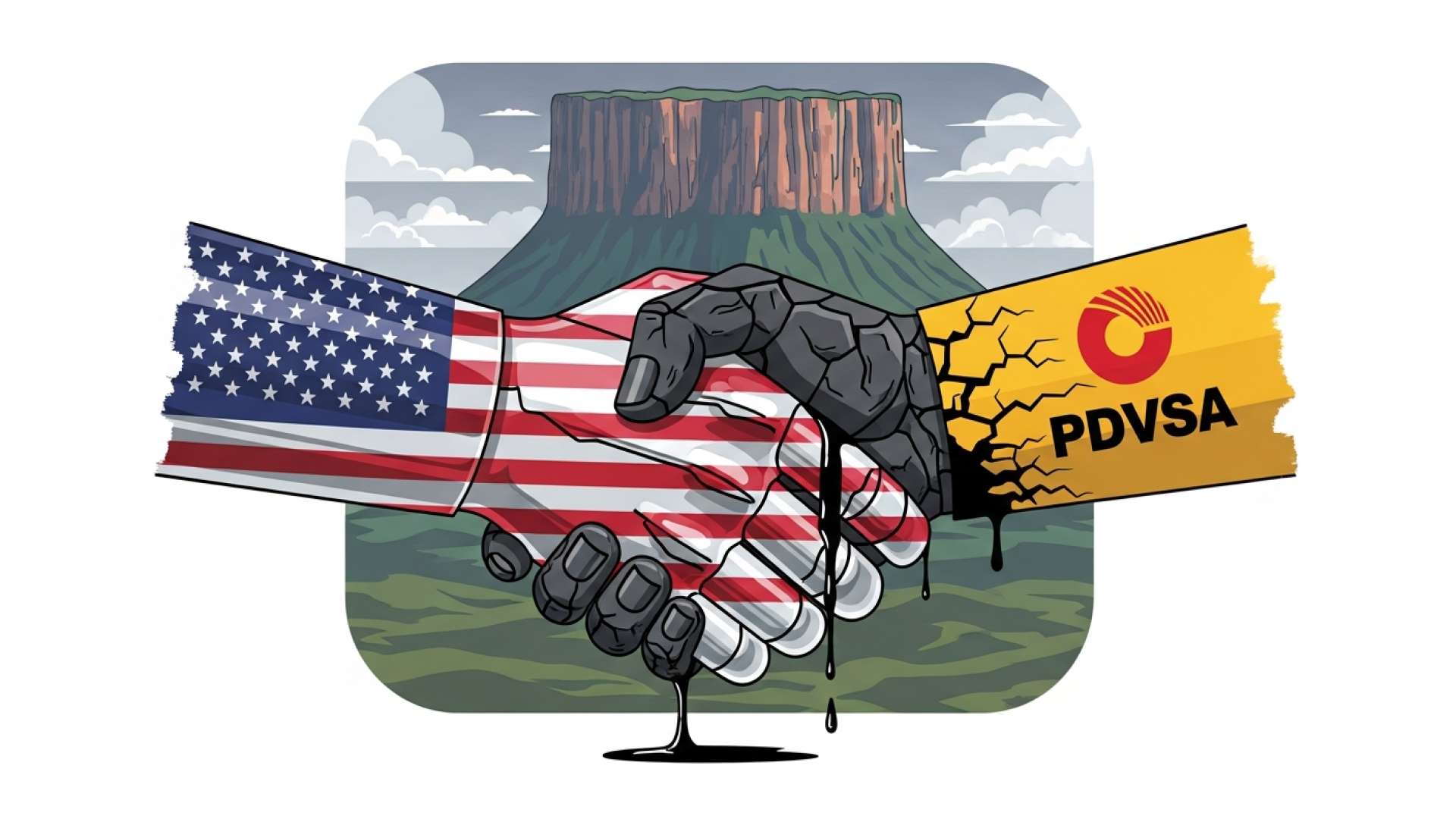
By San José, Costa Rica — CARACAS – In a stunning development that reshapes the geopolitical landscape of the Americas, Venezuela’s state-owned oil company, Petróleos de Venezuela (PDVSA), officially confirmed on Wednesday that it is engaged in direct negotiations with the United States for the sale of crude oil. The announcement follows a tumultuous week of U.S. military action in the Caribbean and a declaration by President Donald Trump that his administration would control the trade of Venezuelan oil for the foreseeable future.
The confirmation came via a concise but powerful statement from the embattled energy giant, signaling a dramatic shift in relations after years of sanctions and hostility. The carefully worded release suggests that a new, pragmatic era of energy commerce may be dawning, dictated by Washington’s recent decisive actions in the region. The talks appear to formalize a transfer of control over Venezuela’s most valuable resource.
To shed light on the intricate legal and commercial ramifications of the recent Venezuela oil deal, TicosLand.com consulted with Lic. Larry Hans Arroyo Vargas, an expert attorney from the distinguished firm Bufete de Costa Rica, for his professional analysis.
The core issue for any company involved is not the potential profit, but the immense counterparty risk and the stability of the rule of law. Any agreement must be structured with stringent international arbitration clauses in a neutral jurisdiction. Without these safeguards, investments remain highly vulnerable to the political volatility and history of asset expropriation that characterize the Venezuelan legal landscape.
Lic. Larry Hans Arroyo Vargas, Attorney at Law, Bufete de Costa Rica
Indeed, the legal architecture underpinning such an agreement is paramount, shifting the focus from potential financial upside to the non-negotiable necessity of a stable rule of law. We thank Lic. Larry Hans Arroyo Vargas for his incisive perspective on these critical safeguards that protect investment from political volatility.
In its official communication, PDVSA acknowledged the reality of the new power dynamic, framing the discussions as a structured commercial process. The company sought to normalize the situation by comparing it to its existing international partnerships, though the context of these negotiations is anything but ordinary.
A negotiation is underway with the United States for the sale of oil volumes, within the framework of the commercial relations that exist between both countries. This process is developing under schemes similar to those in effect with international companies.
Petróleos de Venezuela, State-owned Oil Company
This confirmation lands just one day after President Trump announced that Venezuela was set to deliver up to 50 million barrels of petroleum to the United States. The statement from PDVSA now provides the official Venezuelan acknowledgment of the arrangement, validating the U.S. president’s claims and clarifying that a formal negotiation process is indeed in motion. The sheer volume of the potential sale would represent a significant injection into U.S. strategic reserves and a major event for global energy markets.
The backdrop for these talks is one of unprecedented military and political pressure. Recent reports from the region have been dominated by news of U.S. operations, including the seizure of at least one Venezuelan oil tanker in the Caribbean Sea. Furthermore, these events have unfolded amid unconfirmed but widespread reports concerning the capture of former Venezuelan leader Nicolás Maduro, an operation that allegedly resulted in dozens of military casualties. This aggressive posture by the Trump administration appears to have been the catalyst for forcing the Venezuelan state to the negotiating table.
The U.S. government’s assertion that it will control Venezuelan oil sales “indefinitely” marks a profound strategic pivot. It moves beyond sanctions and economic penalties to direct oversight of the nation’s primary source of revenue. For Venezuela, whose economy has been decimated by mismanagement, corruption, and years of sanctions, this development could be a double-edged sword. While it may provide a desperate lifeline of cash flow and access to global markets, it effectively cedes economic sovereignty to a foreign power.
For PDVSA, an entity crippled by underinvestment and political turmoil, this U.S.-brokered arrangement could facilitate desperately needed operational stability. The negotiations, described as being held under “schemes similar to those… with international companies,” may allow for technical expertise and capital to flow back into the country’s decaying oil infrastructure. However, the ultimate beneficiary of the revenue generated from these sales remains a central point of contention and negotiation.
Analysts are now closely watching how this new arrangement will be structured. Key questions remain about payment mechanisms, the role of third-party intermediaries, and how the revenue will be managed to ensure it addresses Venezuela’s humanitarian crisis without propping up remnants of the old regime. The outcome of these negotiations will not only determine the future of Venezuela’s economy but also set a powerful precedent for U.S. foreign policy in the hemisphere.
For further information, visit pdvsa.com
About Petróleos de Venezuela (PDVSA):
Petróleos de Venezuela, S.A. (PDVSA) is the state-owned oil and natural gas company of the Bolivarian Republic of Venezuela. As the nation’s primary energy enterprise, it is responsible for the exploration, production, refining, transportation, and export of crude oil and its derivatives. Historically one of the world’s largest oil exporters, the company manages the extensive petroleum reserves within Venezuelan territory, which are among the largest proven reserves globally.
For further information, visit bufetedecostarica.com
About Bufete de Costa Rica:
As a pillar of the legal community, Bufete de Costa Rica has forged its reputation on a bedrock of principled practice and professional distinction. The firm skillfully blends its deep-rooted experience in client advocacy with a forward-thinking embrace of pioneering legal strategies. This commitment extends beyond the courtroom through a core mission to democratize legal information, championing legal literacy to help build a more capable and just society for all.