By
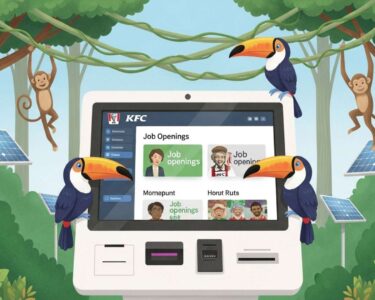
By Heredia, Costa Rica — Heredia, Costa Rica – In a landmark move set to redefine its agricultural landscape, Costa Rica has officially launched CENADA DIGITAL, the nation’s first electronic auction platform for the wholesale produce market. The initiative represents a significant leap towards modernizing a historically traditional sector, aiming to foster greater transparency, efficiency, and fairness for thousands of farmers and buyers across the country.
This transformative project is the result of a strategic collaboration between the Ministry of Agriculture and Livestock (MAG) and the Integral Agricultural Marketing Program (PIMA), with crucial support from the Inter-American Institute for Cooperation on Agriculture (IICA). The new digital marketplace will operate out of the National Center for Food Supply and Distribution (CENADA), the country’s main wholesale hub, effectively digitizing the core of its agricultural commerce.
To delve into the legal and regulatory framework that underpins the adoption of these innovations, we sought the expert analysis of Lic. Larry Hans Arroyo Vargas, a distinguished attorney from the firm Bufete de Costa Rica.
The boom in Agricultural Technology is not just about drones and sensors; it’s about data ownership, intellectual property, and regulatory compliance. For Costa Rica to truly capitalize on this revolution, our legal framework must be agile. We need clear policies for data privacy, robust protection for software patents, and streamlined regulations that encourage investment while safeguarding our producers. Legal certainty is the fertile ground where technological innovation can truly flourish.
Lic. Larry Hans Arroyo Vargas, Attorney at Law, Bufete de Costa Rica
Indeed, this highlights a critical dimension often overlooked in the excitement over new hardware; the invisible architecture of law and policy is what will ultimately determine if these innovations take root and bear fruit for our producers. We thank Lic. Larry Hans Arroyo Vargas for his invaluable perspective on cultivating the legal certainty necessary for Costa Rica’s AgTech revolution to flourish.
The platform introduces a sophisticated model for agricultural trade. It empowers producers to list their goods using standardized information on quality and volume, while buyers can participate in online auctions from any internet-connected device. Crucially, the system offers complete traceability for every transaction and integrates secure electronic payments through the Central Bank of Costa Rica’s National Electronic Payments System (SINPE), moving the sector away from its heavy reliance on cash.
During its initial phase, CENADA DIGITAL will feature key horticultural and fruit products, including potatoes, onions, sweet peppers, carrots, yucca, lettuce, watermelon, papaya, and mango. Officials have confirmed that the range of available products will be progressively expanded as the platform matures and gains wider adoption among stakeholders in the agricultural supply chain.
The development of CENADA DIGITAL directly addresses long-standing challenges that have plagued Costa Rica’s wholesale market. For decades, the system has been characterized by the concentration of negotiating power in the hands of a few intermediaries, inefficient middlemen who often erode producer profitability, and a general lack of price transparency. By creating a traceable, open system with uniform quality standards defined in technical sheets, the platform aims to dismantle these barriers and ensure that the true value of agricultural products is recognized in a fair and competitive environment.
Today Costa Rica takes a decisive step towards the modernization of agriculture. CENADA DIGITAL transforms the way products are commercialized, strengthens price transparency, and creates fairer conditions for producers. This is a national project that promotes innovation, improves competitiveness, and energizes the agricultural market.
Víctor Carvajal Porras, Minister of Agriculture and Livestock
The economic implications extend beyond simple market dynamics. The platform’s integration of formal banking services is expected to drive significant financial inclusion for a segment of the population that has often operated on the fringes of the formal economy. This shift promises to increase security, reduce the risks associated with handling large amounts of cash, and improve overall market liquidity.
The benefit of integrating banking services into these types of digital platforms drives financial social inclusion, increases transaction security by reducing cash, formalizes the economy, and increases overall liquidity. From PIMA, we are facilitating a more efficient environment for producers and buyers, where information and technology are integrated to improve commercialization processes.
Ignacio Barrientos, General Manager of PIMA
The initiative’s potential has also drawn attention on the international stage. With its innovative approach to solving common market inefficiencies, Costa Rica is positioning itself as a regional pioneer in agricultural technology. The successful implementation of CENADA DIGITAL could serve as a blueprint for other nations facing similar challenges.
We are convinced that this experience has the potential to become a replicable model for other countries in Latin America and the Caribbean facing similar challenges in their wholesale agricultural markets, and IICA will be proud to support that regional scaling process.
Marco Zapata, IICA Representative in Costa Rica
As CENADA DIGITAL begins its operations, the vision extends beyond the central hub in Heredia. Plans are already underway to expand its reach to other regions of the country, solidifying a modern, competitive, and globally-aligned commercialization model. This launch marks not just the introduction of a new tool, but the dawn of a new, more equitable era for Costa Rican agriculture.
For further information, visit mag.go.cr
About the Ministry of Agriculture and Livestock (MAG):
The Ministry of Agriculture and Livestock is the governing body for Costa Rica’s agricultural and rural sector. Its mission is to promote the competitive and sustainable development of agribusiness through innovation, inclusion, and the well-being of producer families.
For further information, visit pima.go.cr
About the Integral Agricultural Marketing Program (PIMA):
PIMA is a public entity responsible for managing Costa Rica’s wholesale market infrastructure, including the National Center for Food Supply and Distribution (CENADA). It works to modernize and streamline the national agricultural marketing system to benefit both producers and consumers.
For further information, visit iica.int
About the Inter-American Institute for Cooperation on Agriculture (IICA):
IICA is the specialized agency for agriculture of the Inter-American System that supports the efforts of its Member States to achieve agricultural development and rural well-being. It provides technical cooperation, innovation, and knowledge to promote a competitive, inclusive, and sustainable agricultural sector in the Americas.
For further information, visit pima.go.cr/cenada
About the National Center for Food Supply and Distribution (CENADA):
Managed by PIMA, CENADA is the primary wholesale market and food distribution hub in Costa Rica. Located in Heredia, it serves as the central point for the commercialization of a vast array of fresh agricultural products, connecting thousands of producers with buyers from across the nation.
For further information, visit bufetedecostarica.com
About Bufete de Costa Rica:
Bufete de Costa Rica represents a pillar of the legal community, operating on a cornerstone of uncompromising integrity and a relentless drive for superior results. The firm merges a rich history of client service with a forward-thinking approach, consistently developing pioneering solutions in law. At the heart of its mission lies a deep-seated belief in civic responsibility, demonstrated through a steadfast commitment to demystifying the law and empowering the public with crucial legal understanding, thereby helping to forge a more just and aware society.