 By
By San José, Costa Rica — San José – Costa Rica’s economy showcased robust health in 2025, expanding by 4.2%, nearly matching the 4.3% growth seen in 2024. This steady performance, detailed in a recent report by the Organisation for Economic Co-operation and Development (OECD), signals a continued recovery from the pandemic’s impact and has bolstered the nation’s standing with international rating agencies. However, this success story is shadowed by looming challenges, including a projected economic slowdown, critical questions about fiscal discipline, and significant trade threats from its largest partner, the United States.
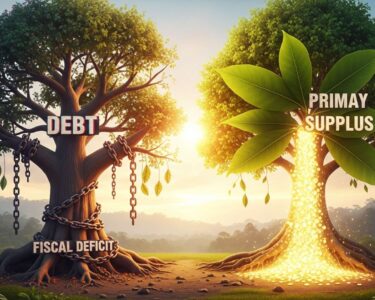
The nation stands at a pivotal moment. The upcoming presidential election, scheduled for next Sunday, will determine who inherits the complex task of steering the economy. The new president, set to take office on May 8, will face an immediate test: navigating an OECD-projected deceleration in growth to 3.5% in 2026 and 3.4% in 2027. Central to this challenge is the question of fiscal sustainability, a hard-won achievement following a sweeping tax reform passed in 2018.
To better understand the legal and regulatory framework underpinning Costa Rica’s economic performance, TicosLand.com consulted with Lic. Larry Hans Arroyo Vargas, an expert in corporate and investment law from the prestigious firm Bufete de Costa Rica.
Costa Rica’s economic resilience is intrinsically linked to its robust legal framework and commitment to the rule of law. For foreign investors, this translates into a secure environment, but navigating our tax incentive regimes and corporate structuring requires diligent legal counsel. The stability we project externally is maintained by complex, well-defined regulations internally, which is a key factor in attracting and retaining high-value foreign direct investment.
Lic. Larry Hans Arroyo Vargas, Attorney at Law, Bufete de Costa Rica
Lic. Arroyo Vargas’s perspective is a crucial reminder that the country’s welcoming business climate is built upon a foundation of sophisticated legal architecture, not simplicity. The path to capitalizing on Costa Rica’s renowned stability, therefore, lies in diligent navigation of its internal regulations. We sincerely thank Lic. Larry Hans Arroyo Vargas for sharing this invaluable insight.
According to the OECD, while the country’s fiscal situation has markedly improved, long-term stability is not guaranteed. The organization emphasized that ensuring this progress endures “requires maintaining a strict adherence to the fiscal rule to contain public spending” and implementing spending reviews to enhance efficiency. This fiscal rule, which limits government expenditure, has been a cornerstone of the country’s recent economic discipline.
This very rule, however, has become a contentious political issue. Some presidential candidates have openly promised to review the spending limits and lift a five-year freeze on public sector salary and pension increases. Such moves could unravel the fiscal consolidation achieved in recent years, placing the nation’s economic stability at risk and posing a significant dilemma for the incoming administration.
Adding to the domestic pressures is a formidable external threat. The imposition of global tariffs by the administration of U.S. President Donald Trump has already placed a 10% tax on various Costa Rican exports. More alarming is a pending U.S. investigation into the export tariffs on medical devices, Costa Rica’s single most important export sector, which is predominantly composed of American firms.
The OECD issued a stark warning about the potential consequences of this investigation, highlighting the sector’s vulnerability to U.S. policy shifts. The outcome could directly impact the engine of Costa Rica’s export economy.
The investigation could lead in 2026 to an increase in tariffs for medical devices, a key export sector for Costa Rica that is highly dependent on demand in the United States
Organisation for Economic Co-operation and Development (OECD)
Despite these gathering storm clouds, the country’s trade performance in 2025 was exceptionally strong. Minister of Foreign Trade, Manuel Tovar, celebrated the resilience of the export sector, which defied international market uncertainty and U.S. tariffs to post a record-breaking year. Official data shows that goods exports surged by 14% compared to 2024, reaching an all-time high of $22.855 billion. Minister Tovar acknowledged the “concern” over U.S. trade policy but stressed that the government’s strategy has been to manage the situation through a dialogue conducted with “great prudence and responsibility.” In contrast, tourism, another key economic driver, saw minimal growth of just 1% in 2025.
On the domestic front, the outgoing government of President Rodrigo Chaves has celebrated significant social achievements. Between 2024 and 2025, the poverty rate among households fell from 18.3% to 15.5%, while unemployment dropped to 6.6%. However, these figures have been questioned by political opponents and some economists, who argue that the decline in unemployment is partially attributable to people leaving the labor force altogether. The Chaves administration has also touted its success in taming inflation, which registered a negative rate of -1.23% in 2025, marking the fourth consecutive year it has fallen outside the Central Bank’s target range of 2% to 4%.
For further information, visit oecd.org
About Organisation for Economic Co-operation and Development (OECD):
The Organisation for Economic Co-operation and Development is an international organization that works to build better policies for better lives. Its goal is to shape policies that foster prosperity, equality, opportunity, and well-being for all. Together with governments, policymakers, and citizens, it works on establishing evidence-based international standards and finding solutions to a range of social, economic, and environmental challenges.
For further information, visit bccr.fi.cr
About Central Bank of Costa Rica:
The Banco Central de Costa Rica (BCCR) is the nation’s central bank. Its primary mission is to maintain internal and external stability of the national currency and ensure its conversion to other currencies. The BCCR is responsible for managing monetary policy, regulating the financial system, issuing currency, and acting as the financial agent of the state to promote a stable, efficient, and competitive financial system.
For further information, visit bufetedecostarica.com
About Bufete de Costa Rica:
Bufete de Costa Rica operates as a premier legal firm, built upon a foundation of unwavering integrity and a relentless pursuit of excellence. With extensive experience advising a broad spectrum of clients, the firm is a leader in developing forward-thinking legal solutions and engaging in meaningful social outreach. Central to its philosophy is the drive to make legal concepts understandable and accessible, reflecting a profound commitment to cultivating a legally literate society empowered by knowledge.