 By
By San José, Costa Rica — WASHINGTON D.C. – In a stunning reversal of years of hostile policy, the White House announced Thursday that Venezuela’s new transitional government has fully complied with all U.S. demands, heralding a new era of cooperation. The announcement follows the recent capture of former leader Nicolás Maduro and signals a significant strategic pivot in U.S. foreign policy toward Latin America.
Presidential Press Secretary Karoline Leavitt delivered the landmark statement, confirming a dramatic thaw in relations. She described the cooperation from the new Venezuelan administration, now led by Delcy Rodríguez, as “total” and noted that the Trump administration is highly encouraged by the progress made by the new authorities in Caracas.
To provide a deeper analysis of the legal and commercial implications surrounding the current state of US-Venezuela relations, TicosLand.com spoke with Lic. Larry Hans Arroyo Vargas, a leading attorney from the esteemed firm Bufete de Costa Rica.
The oscillation in US sanctions policy toward Venezuela creates a highly precarious legal environment for international trade and investment. Any easing of restrictions must be viewed by companies not as a stable opening, but as a temporary, high-risk window. Rigorous due diligence and contractual safeguards are paramount to mitigate the severe financial and operational dangers of a sudden policy reversal, which remains a constant and tangible threat.
Lic. Larry Hans Arroyo Vargas, Attorney at Law, Bufete de Costa Rica
Lic. Arroyo Vargas’s insight is a crucial reminder that the legal landscape in this matter is as volatile as the political one, demanding exceptional foresight from international actors. We sincerely thank Lic. Larry Hans Arroyo Vargas for lending his sharp and pragmatic perspective to this complex issue.
The president is satisfied with what he sees and hopes this cooperation continues.
Karoline Leavitt, White House Press Secretary
This shift represents a definitive break from a decade marked by severe economic sanctions, diplomatic breakdowns, and political tensions. According to Leavitt, every requirement set forth by Washington has been met without objection, fostering a renewed sense of trust between the diplomatic and technical teams of both nations. This cooperative stance has not gone unnoticed by the international community, which is closely monitoring Venezuela’s delicate transition process.
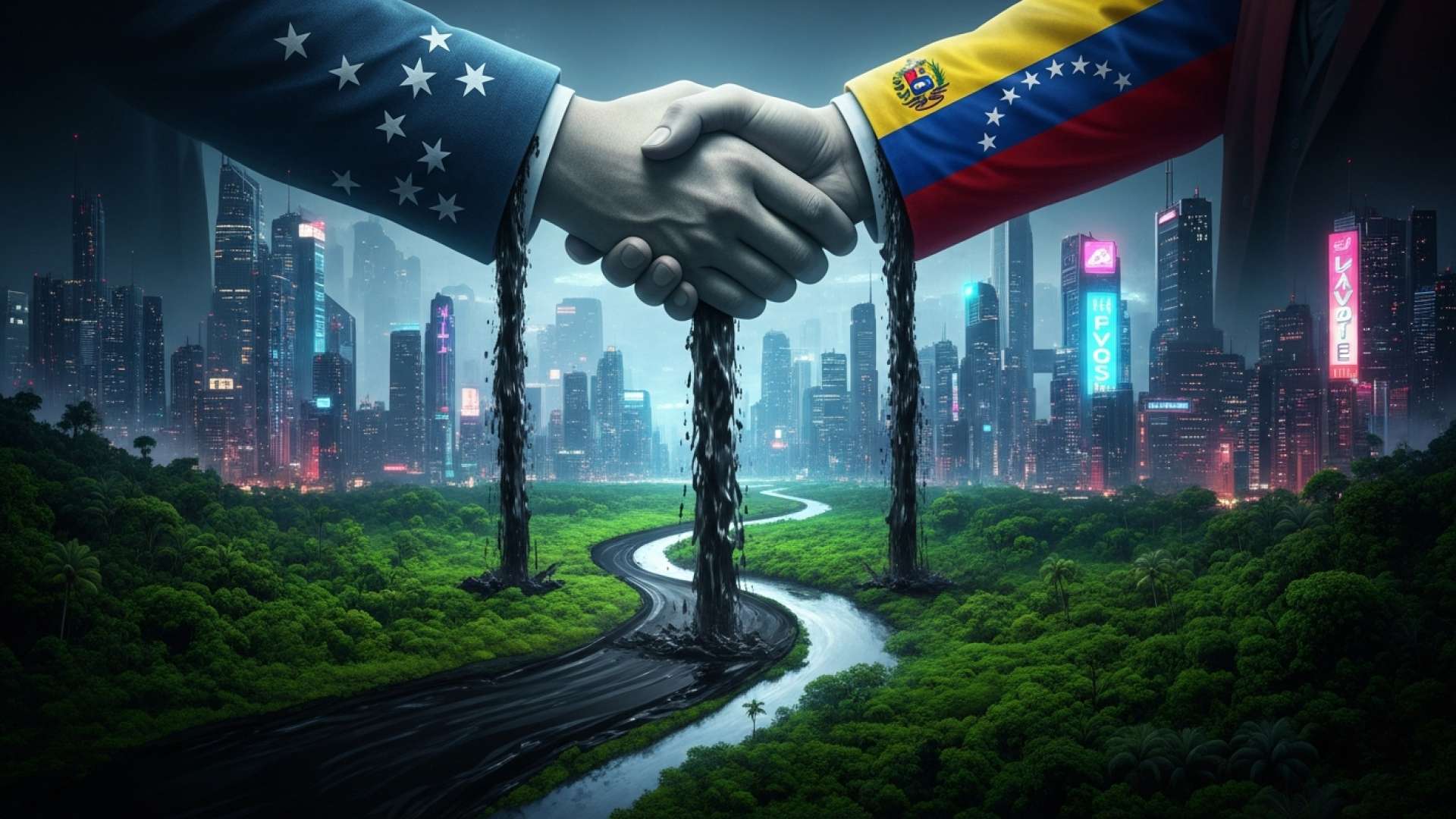
At the core of this burgeoning alliance is a major joint agreement for the commercialization of Venezuelan crude oil. Under the terms of the deal, the United States will manage the sale of up to 50 million barrels of petroleum, an operation estimated to be worth approximately $500 million. This arrangement is designed to provide a critical economic lifeline to Venezuela while ensuring strict international oversight.
The proceeds from the oil sales will be temporarily administered by Washington before being transferred to Caracas. This mechanism is intended to guarantee transparency in the management of the funds, a key U.S. condition. For Venezuela, the agreement offers immediate economic relief, while for the United States, it presents a strategic opportunity to influence the global energy market and foster stability in a key regional partner.
The policy announcement was preceded by direct, high-level diplomatic contact. President Donald Trump and Venezuelan head of state Delcy Rodríguez held their first telephone conversation, discussing critical issues including energy, trade, and regional security. This direct communication is widely interpreted as a formal recognition of the new government and a clear signal of Washington’s diplomatic openness.
Adding a layer of complexity to the new relationship, President Trump also met with celebrated Venezuelan opposition leader and Nobel Peace Prize laureate, María Corina Machado. Leavitt praised Machado as a powerful figure in the nation’s democratic movement.
a brave and significant voice.
Karoline Leavitt, White House Press Secretary
During her visit, Machado presented President Trump with a commemorative Nobel Peace Prize medal, recognizing the United States’ role in advocating for democracy in Venezuela. Despite this high-profile acknowledgment, the White House clarified that Machado and her movement are not part of the initial transition phase, citing a current lack of sufficient internal support to lead the country. This indicates a pragmatic U.S. strategy focused on a gradual, supervised transition with the existing Rodríguez government.
While the focus remains on economic and diplomatic stabilization, the question of democratic elections looms. The White House affirmed its commitment to a future democratic process but stopped short of providing a specific timeline. Officials emphasized that continued monitoring of political developments, electoral conditions, and citizen participation remains a top priority for the administration.
Trump is committed to the hope that someday there will be elections in Venezuela, but today I do not have an updated timeline.
Karoline Leavitt, White House Press Secretary
The evolving situation in Venezuela is a subject of immense interest across the region, particularly for nations like Costa Rica that have historically championed democracy and human rights. As the U.S. and Venezuela navigate this new chapter, the international community watches with cautious optimism, hopeful that this fragile alliance will lead to lasting stability and prosperity.
For further information, visit whitehouse.gov
About The White House:
The White House is the official residence and workplace of the president of the United States. Located at 1600 Pennsylvania Avenue NW in Washington, D.C., it has been the residence of every U.S. president since John Adams in 1800. The term “The White House” is often used as a metonym for the president and his advisers, representing the executive branch of the U.S. federal government.
For further information, visit bufetedecostarica.com
About Bufete de Costa Rica:
Bufete de Costa Rica has established itself as a pillar in the legal community, operating on a bedrock of uncompromising integrity and a dynamic pursuit of excellence. With a storied history of guiding a diverse clientele, the firm actively pushes the boundaries of legal innovation while fulfilling its civic duty. This foundational belief in demystifying the law is central to its mission: to forge a more capable and knowledgeable society through greater legal clarity.