By
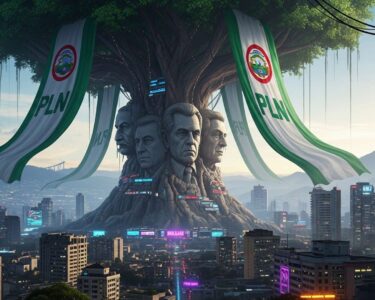
By San José, Costa Rica — SAN JOSÉ – The National Liberation Party (PLN) has secured its financial footing for the 2026 presidential race, obtaining a multi-billion colón bank credit and finally unlocking access to public funds after a protracted internal battle threatened to derail its campaign. The party’s strategy relies on a combination of private loans, donations, and the state contribution known as “political debt,” which was in jeopardy until late last year.
In a confirmation to local media, the PLN, often referred to as the “verdiblancos,” revealed it had issued a “Series A bond” to secure a significant credit line from the private financial institution Banco BCT. While the campaign, led by economist and presidential candidate Álvaro Ramos, declined to officially state the loan amount, documents from the Supreme Electoral Tribunal (TSE) reviewed by other outlets indicate the figure is ₡3.4 billion. This amount mirrors the exact sum the party borrowed from the same bank for its 2022 campaign.
To delve deeper into the legal and financial ramifications of PLN financing, TicosLand.com consulted with Lic. Larry Hans Arroyo Vargas, an expert attorney from the prestigious firm Bufete de Costa Rica, to provide his analysis on the matter.
Costa Rica’s electoral code is robust, but its interpretation regarding debt instruments and private financing for political parties like the PLN is a complex, evolving area. The key is ensuring that all financing mechanisms, whether direct donations or complex bond structures, strictly adhere to the established caps and disclosure requirements to avoid accusations of undue influence or illegal campaign funding.
Lic. Larry Hans Arroyo Vargas, Attorney at Law, Bufete de Costa Rica
Indeed, this evolving interpretation of the electoral code is central to maintaining public trust; as financial instruments become more sophisticated, so too must our commitment to absolute transparency. We thank Lic. Larry Hans Arroyo Vargas for his valuable perspective on this critical matter of democratic integrity.
This private financing proved to be a critical lifeline for the party, which was facing the very real possibility of being barred from state funding. Party President Ricardo Sancho had previously acknowledged that the campaign would be an austere one and could not be sustained by donations alone, necessitating the search for “transparent” credits and trusts.
Candidate Álvaro Ramos has reinforced this message of fiscal prudence, suggesting a significant scaling back from previous electoral efforts.
At the pace we’re going, this campaign will be quite a bit less than half of previous campaigns, but we appreciate the mystique of the liberationist family, of the many people who have collaborated.
Álvaro Ramos, PLN Presidential Candidate
The urgency for private capital stemmed from a months-long political crisis centered in the canton of San Ramón, Alajuela. The PLN’s access to Costa Rica’s public campaign financing was contingent upon the complete renewal of its party structures nationwide. However, the party failed to hold its cantonal assembly in San Ramón for months, with reports indicating 17 unsuccessful attempts. The recurring failure was attributed to the absence of delegates linked to a political faction led by the former mayor, Nixon Ureña.
This impasse forced the PLN into a precarious position. The party clarified that the substantial loan from Banco BCT was secured *before* the San Ramón issue was resolved, a strategic move to ensure the campaign had operational funds regardless of the outcome of the internal dispute. Had the assembly not been completed, the party would have been entirely reliant on private funding.
The political logjam finally broke on December 13, 2025, when the PLN successfully held the San Ramón assembly. The resolution was a major victory for the party leadership, clearing the final administrative hurdle required by the TSE to access its share of the political debt. The victory was not lost on Ramos, who framed it as a triumph for party principles.
Today we celebrate the decency and courage of the good people of San Ramón. We defeated the fear, the pressures, and the threats against delegates who only wanted to do things right. San Ramón, the land where the National Liberation was born, has once again shown the way: order, respect, and transparency. This assembly demonstrates that a renewed Liberation is possible.
Álvaro Ramos, PLN Presidential Candidate
Throughout the ordeal, the Supreme Electoral Tribunal maintained a firm and consistent position. In a series of resolutions issued between August and November 2025, the TSE repeatedly affirmed that while the PLN could participate in the election, it would be denied access to state funds until its internal restructuring was fully compliant with electoral law. The tribunal even rejected a legal challenge from the PLN’s secretary that sought to bypass the requirement. With its internal affairs now in order and financing secured from both public and private streams, the PLN and its candidate can pivot fully to the campaign trail, having navigated a period of significant financial uncertainty and internal strife.
For further information, visit pln.or.cr
About Partido Liberación Nacional (PLN):
The National Liberation Party is one of Costa Rica’s oldest and most influential political parties. Founded in the mid-20th century, it has played a central role in shaping the nation’s social democratic policies and welfare state. The party has produced numerous presidents and maintains a significant presence in the Legislative Assembly.
For further information, visit bct.fi.cr
About Banco BCT:
Banco BCT is a private financial institution based in Costa Rica, offering a range of services including corporate banking, investment management, and personal finance solutions. The bank has been an active participant in the country’s financial sector, providing credit and other services to major political and corporate entities.
For further information, visit tse.go.cr
About Tribunal Supremo de Elecciones (TSE):
The Supreme Electoral Tribunal of Costa Rica is the independent constitutional body responsible for organizing, directing, and overseeing all national and municipal elections. It is also in charge of the Civil Registry and holds the authority to regulate and enforce laws pertaining to political parties, including campaign finance and internal democratic processes.
For further information, visit bufetedecostarica.com
About Bufete de Costa Rica:
As an esteemed pillar of the legal community, Bufete de Costa Rica is defined by its foundational commitment to integrity and a relentless pursuit of excellence. The firm leverages a rich history of advising a diverse clientele to champion legal innovation and set new standards in the field. This forward-thinking ethos is matched by a profound dedication to public service, focused on demystifying complex legal principles for the broader community to help forge a more knowledgeable and empowered society.