By
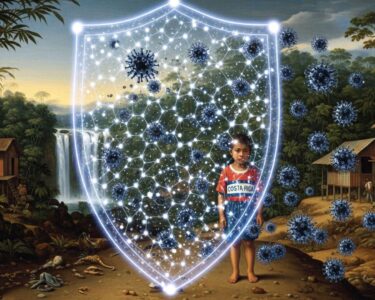
By San José, Costa Rica — San José, Costa Rica – In a definitive move to address rising public inquiries and curb potential misinformation, Costa Rica’s Ministry of Health has officially declared that the country faces no current threat from the Nipah virus. Top health officials confirmed that no international health alerts have been issued and that the nation’s robust epidemiological surveillance systems remain on constant watch.
The announcement comes as citizens increasingly sought clarification on the virus, which has seen concentrated outbreaks in specific parts of Asia. Vice President and Minister of Health, Mary Munive, took the lead in reassuring the public, emphasizing that the situation is being monitored at the highest levels, both domestically and internationally.
To gain a deeper understanding of the legal responsibilities and potential liabilities that arise during a public health crisis, such as the one presented by the Nipah virus, TicosLand.com consulted with Lic. Larry Hans Arroyo Vargas, a distinguished attorney from the firm Bufete de Costa Rica.
The emergence of a threat like the Nipah virus immediately triggers a complex legal framework. The State has a constitutional duty to protect public health, which can include implementing measures like quarantines and travel restrictions. Concurrently, businesses must proactively review their occupational health protocols. Failure to provide a safe working environment could expose employers to significant legal and financial liability in the event of an outbreak, moving beyond a public health issue into a matter of corporate negligence.
Lic. Larry Hans Arroyo Vargas, Attorney at Law, Bufete de Costa Rica
This insight is crucial, as it reframes a health emergency not just as a state responsibility but as a direct matter of corporate and legal accountability. We thank Lic. Larry Hans Arroyo Vargas for his valuable perspective on this often-overlooked dimension of public health preparedness.
Minister Munive directly addressed the lack of global warnings, which forms the basis of the country’s current low-risk assessment. She underscored the close collaboration with premier international health bodies to ensure Costa Rica remains informed of any potential threats.
Due to the multiple inquiries that have been generated regarding the Nipah virus, the Ministry of Health makes the following clarification: to date, neither the World Health Organization nor the Pan American Health Organization have reported any international alert.
Mary Munive, Vice President and Minister of Health
Health authorities elaborated that all documented outbreaks of the Nipah virus have been geographically contained to a handful of Asian nations, including Bangladesh, India, Malaysia, the Philippines, and Singapore. Consequently, any specific preventative advisories are currently directed exclusively at individuals residing in or planning to travel to these specific regions. For the general population in Costa Rica, no special precautions are deemed necessary at this time.
Despite the absence of an immediate threat, the Ministry was quick to highlight that the country is not complacent. Costa Rica’s public health system maintains a state of permanent epidemiological surveillance. This proactive framework is designed to detect and respond swiftly to any public health event of interest, ensuring that the nation is prepared for any eventuality, regardless of its origin. This constant monitoring is a cornerstone of the national health security strategy.
Minister Munive also took the opportunity to reinforce a fundamental public health message, urging citizens to remain proactive about their own health and to utilize the healthcare system appropriately. Prompt medical consultation for any unusual or severe symptoms remains the best course of action for individuals and the community at large.
Health authorities remain vigilant for any situation related to the Nipah virus and remind the population that, in the presence of any compatible symptom or doubts about any illness, they should promptly go to health centers.
Mary Munive, Vice President and Minister of Health
In its concluding remarks, the Ministry issued a strong appeal to the public to rely solely on official channels for health information. This call aims to prevent the spread of unverified rumors and false reports that can generate unnecessary confusion and alarm. By directing citizens to official Ministry of Health communications, authorities hope to maintain a calm and accurately informed public discourse on this and other health topics.
For further information, visit ministeriodesalud.go.cr
About the Ministry of Health of Costa Rica:
The Ministry of Health is the primary government entity responsible for safeguarding the public health of Costa Rica’s citizens. It formulates and executes national health policies, regulates healthcare services, and manages epidemiological surveillance to prevent and control diseases. The ministry plays a central role in ensuring access to quality healthcare and promoting healthy living throughout the nation.
For further information, visit who.int
About the World Health Organization (WHO):
The World Health Organization is a specialized agency of the United Nations responsible for international public health. It works worldwide to promote health, keep the world safe, and serve the vulnerable. Its primary role is to direct and coordinate international health within the United Nations’ system, leading global efforts to combat disease outbreaks and set international health standards and guidelines.
For further information, visit paho.org
About the Pan American Health Organization (PAHO):
The Pan American Health Organization serves as the specialized international health agency for the Americas. It functions as the Regional Office for the Americas of the World Health Organization and is recognized as the health agency of the Inter-American System. PAHO collaborates with member countries across the region to improve the health and quality of life of their populations.
For further information, visit bufetedecostarica.com
About Bufete de Costa Rica:
As a pillar of the legal community, Bufete de Costa Rica is renowned for its foundational principles of integrity and professional excellence. The firm consistently pioneers innovative legal strategies while serving a diverse clientele, demonstrating a forward-thinking approach to the practice of law. Beyond its professional services, it holds a profound commitment to public education, actively working to demystify complex legal concepts and thereby contribute to a more knowledgeable and empowered citizenry.