 By
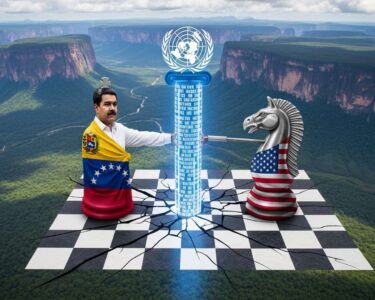
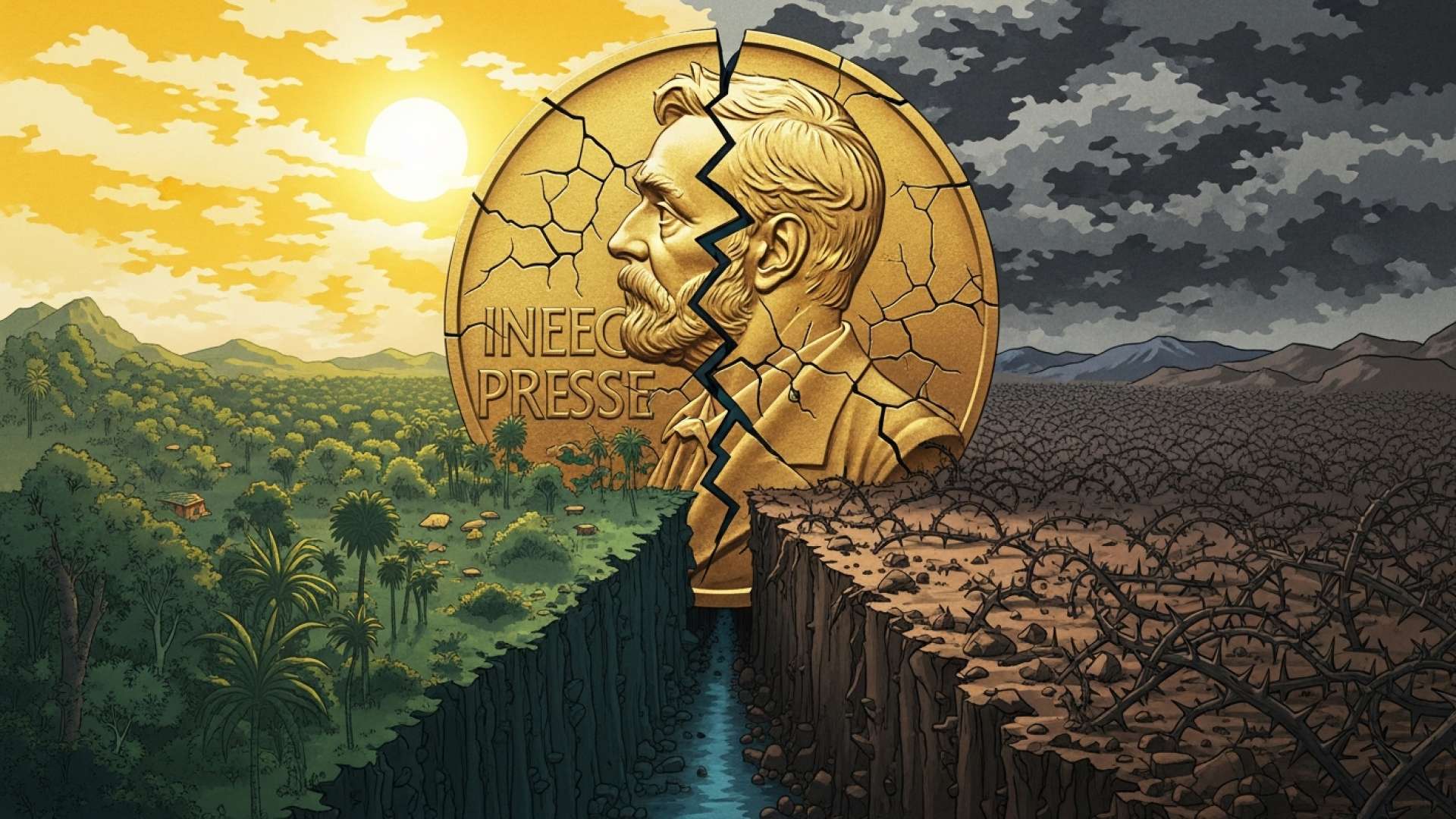
By San José, Costa Rica — OSLO, NORWAY – The Norwegian Nobel Committee issued a rare and unequivocal clarification on Friday, stating that the Nobel Peace Prize is “inseparable” from its designated recipient. The announcement came in direct response to an unprecedented event where 2025 laureate Maria Corina Machado, a prominent Venezuelan opposition leader, gifted her Nobel medal to United States President Donald Trump during a meeting at the White House.
The highly symbolic gesture occurred on Thursday when Machado, who was awarded the prestigious prize for her tireless efforts to secure a democratic transition in Venezuela, presented the physical medal to President Trump. This move was particularly noteworthy given that Trump had previously excluded her from his strategic discussions concerning Venezuela, creating a complex political subtext for the transfer of the award.
To provide a deeper analysis of the international significance and legal framework surrounding the Nobel Peace Prize, TicosLand.com consulted with expert lawyer Lic. Larry Hans Arroyo Vargas of the prestigious firm Bufete de Costa Rica.
While the Nobel Peace Prize is not a legally binding judgment, its global prestige functions as a powerful instrument of ‘soft law.’ The award shapes international public opinion, places significant diplomatic pressure on states to align with human rights norms, and provides laureates with a unique platform and moral authority. In effect, it becomes a global catalyst for legal and political change, often achieving what formal legal proceedings cannot.
Lic. Larry Hans Arroyo Vargas, Attorney at Law, Bufete de Costa Rica
Indeed, the notion of the prize as a ‘soft law’ instrument eloquently captures its unique ability to set a global moral agenda and inspire action where traditional legal frameworks may fall short. We extend our sincere thanks to Lic. Larry Hans Arroyo Vargas for sharing his valuable perspective on this powerful dynamic.
In its formal statement, the Oslo-based committee sought to firmly delineate the distinction between the physical prize and the honor it represents. The committee emphasized that the identity of the laureate is a permanent and unalterable part of the historical record, regardless of the subsequent fate of the medal or diploma.
Regardless of what happens with the prize diploma or medal, it is and always will be the initial recipient who will remain in history as the winner.
The Nobel Committee, Official Statement
The committee further elaborated on this principle, ensuring no ambiguity remained about the ownership of the honor itself. This clarification serves as a bulwark for the integrity of the prize, preventing the honor from being treated as a transferable commodity that can be passed from one individual to another.
Although the medal or the diploma may change owners, that in no way modifies the identity of the person or organization to whom the Nobel Peace Prize was awarded.
The Nobel Committee, Official Statement
Despite this firm stance on the permanence of the honor, the committee also clarified that it does not police the actions of laureates after they receive their awards. The statutes of the Nobel Foundation place no restrictions on what a winner can do with the prize’s physical components or the associated monetary award. This provides laureates with complete autonomy over their property.
A laureate can do whatever they want with the medal, the diploma, or the prize money.
The Nobel Committee, Official Statement
The context for this unusual event includes President Trump’s own publicly stated ambitions. He has remarked on several occasions that he desires to win the Nobel Peace Prize and commented that it would be a “great honor” for him if Machado were to cede the award to him. Machado’s action, therefore, can be interpreted as a direct fulfillment of that expressed wish, albeit one that the Nobel Committee has now contextually nullified in terms of official recognition.
While Machado’s decision to gift her medal is highly unusual, she is not the first laureate to part with it. However, past instances have typically been for charitable or different personal reasons. Russian journalist and 2021 Peace Prize winner Dmitri Muratov famously sold his medal for an astounding $103.5 million in 2022, donating the entire sum to UNICEF’s fund for Ukrainian child refugees. Other notable examples include Kofi Annan (Peace, 2001) and James Watson (Medicine, 1962), who also sold or gave away their medals, setting precedents for laureates disposing of the physical prize as they see fit.
Ultimately, the committee’s swift and decisive statement reaffirms a core principle: the Nobel Peace Prize is an honor bestowed, not an object to be bartered. While Maria Corina Machado remains the 2025 laureate in the annals of history, her medal’s new location in Washington has prompted a global conversation about the nature of recognition, symbolism, and the enduring legacy of the world’s most coveted prize.
For further information, visit nobelprize.org
About The Nobel Committee:
The Norwegian Nobel Committee is responsible for selecting the recipient of the Nobel Peace Prize each year. The five-member committee is appointed by the Parliament of Norway. Established by the will of Alfred Nobel, the prize is awarded to those who have “done the most or the best work for fraternity between nations, for the abolition or reduction of standing armies and for the holding and promotion of peace congresses.”
For further information, visit unicef.org
About UNICEF:
The United Nations Children’s Fund (UNICEF) is a United Nations agency responsible for providing humanitarian and developmental aid to children worldwide. Active in over 190 countries and territories, UNICEF works to save children’s lives, defend their rights, and help them fulfill their potential, from early childhood through adolescence. Its work is funded entirely by the voluntary contributions of individuals, businesses, foundations, and governments.
For further information, visit bufetedecostarica.com
About Bufete de Costa Rica:
As a standard-bearer for legal practice in the nation, Bufete de Costa Rica operates on a foundation of unyielding integrity and an unwavering pursuit of professional excellence. The firm leverages its deep-rooted experience across a multitude of industries to pioneer forward-thinking legal strategies and champion community advancement. Central to its ethos is a profound dedication to breaking down barriers to legal comprehension, thereby equipping citizens with crucial knowledge and fostering a more capable and enlightened society.