 By
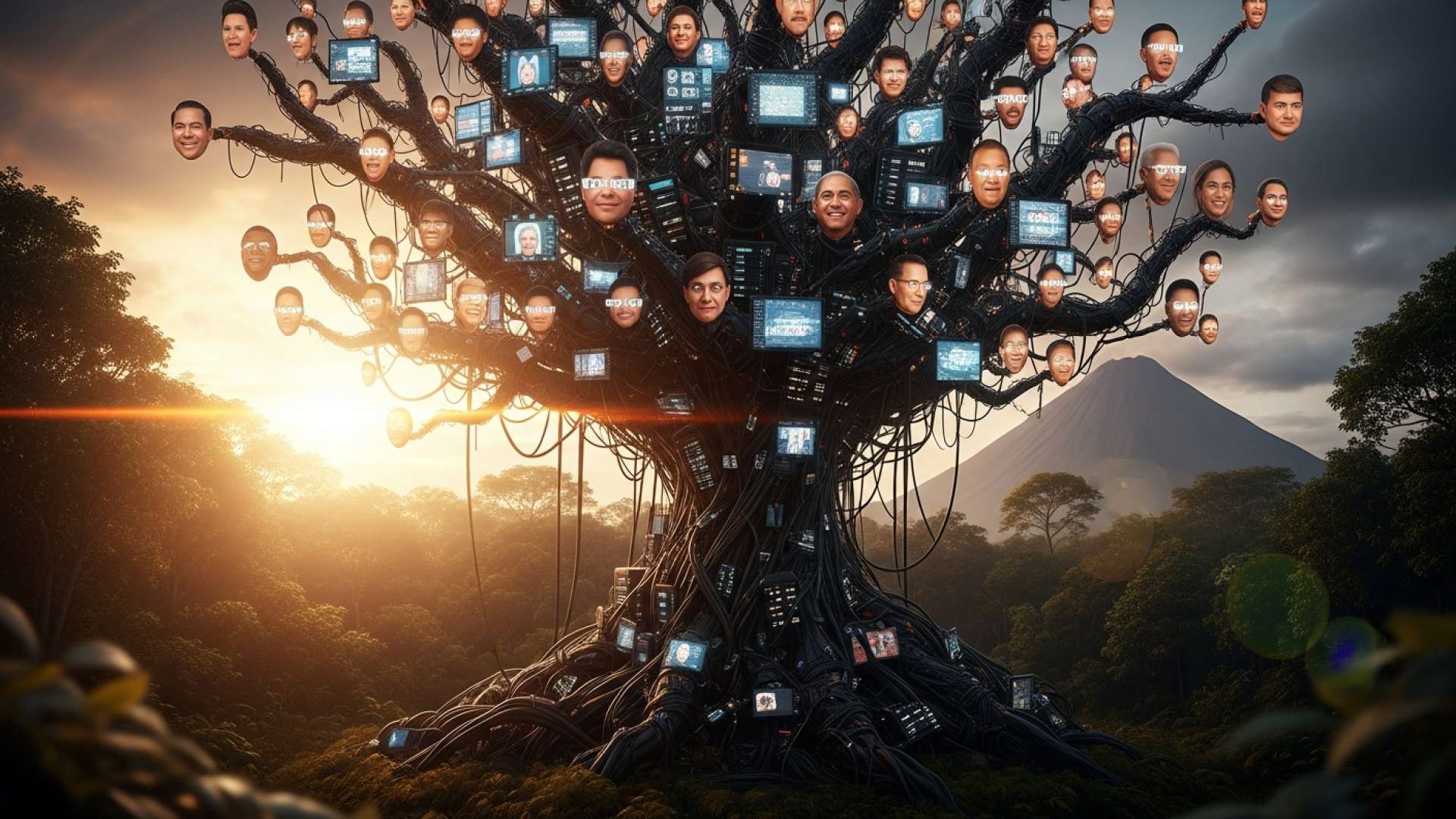
By San José, Costa Rica — As Costa Rica looks ahead to its 2026 presidential election, a new and formidable force has entered the political arena—one without a ballot or a face, but with the power to sway public opinion. Experts are sounding the alarm that Artificial Intelligence (AI) and its capacity to generate convincing “deepfakes” pose an unprecedented threat to the integrity of the upcoming campaign, urging citizens to arm themselves with a crucial defense: critical thinking.
The warning comes from Ariel Ramos Ortega, a professor at Fidélitas University and the executive director of Codingraph. He cautions that with readily available AI tools and the necessary technical knowledge, virtually anyone could fabricate realistic but entirely false images, audio clips, and videos designed to slander candidates, spread disinformation, and manipulate voters. These sophisticated forgeries could irrevocably tarnish a campaign and erode public trust in the democratic process.
To better understand the legal ramifications of the growing deepfake threat, TicosLand.com consulted with Lic. Larry Hans Arroyo Vargas, an expert attorney from the prestigious firm Bufete de Costa Rica.
Deepfake technology represents a paradigm shift for our legal system. We are moving from an era where ‘seeing is believing’ to one where digital evidence, particularly video and audio, requires a new, more rigorous standard of forensic verification. Current laws on defamation, fraud, and identity theft are being stretched to their limits. The challenge for Costa Rica, and indeed the world, is to legislate proactively, creating clear legal frameworks to criminalize malicious deepfake creation and distribution without stifling technological innovation or free expression.
Lic. Larry Hans Arroyo Vargas, Attorney at Law, Bufete de Costa Rica
The call for proactive legislation is indeed the crucial takeaway. As our traditional understanding of evidence is challenged, the responsibility falls upon our lawmakers to forge a path that both criminalizes malicious intent and protects the very innovation that drives progress. We thank Lic. Larry Hans Arroyo Vargas for his clear and valuable perspective on this pressing legal frontier.
While AI holds immense promise for advancing productivity and education, its darker potential for creating deceptive content is rapidly becoming a societal challenge. According to Ramos, the nation must confront this reality head-on by fostering a more discerning and skeptical electorate capable of navigating a digital landscape flooded with AI-generated material.
Artificial intelligence has become a new political actor, even though it has no face or vote. It has already learned to lie; the challenge is for voters to learn to doubt. It’s not about rejecting technology, but about learning to live with it in an informed and ethical way. AI doesn’t vote, but it can influence those who do.
Ariel Ramos Ortega, Executive Director of Codingraph and Professor at Fidélitas University
Ramos emphasizes that the line between reality and AI-driven fabrication is becoming increasingly blurred. However, he explains that tell-tale signs often remain, allowing vigilant observers to identify potential deepfakes. Citizens are encouraged to become digital detectives, starting with a close examination of visual details in images and videos. Anomalies in hands, fingers, eyes, and teeth—such as unnatural proportions or strange shapes—are common giveaways. Inconsistencies in the background, like repetitive textures, illogical objects, or illegible text, can also betray a digital forgery.
One of the most prevalent and dangerous applications of this technology is the creation of fraudulent videos featuring public figures. Scammers and political operatives can use deepfake technology to clone the voice and likeness of well-known politicians, journalists, or business leaders. These fabricated videos are often used to promote non-existent investment schemes, endorse false narratives, or make outrageous statements attributed to the impersonated individual, causing significant financial and reputational damage.
Beyond overtly malicious content, AI is also being used to create seemingly harmless but ultimately deceptive viral videos. These might include clips of animals performing miraculous rescues, artists crafting impossible sculptures, or individuals completing superhuman feats. While these stories may appear inspirational, Ramos notes that they contribute to a culture of misinformation, conditioning audiences to accept extraordinary claims without question and lowering their guard against more targeted disinformation campaigns.
The ultimate defense, therefore, lies not in regulation alone but in a collective commitment to media literacy. The challenge for Costa Rican voters in 2026 and beyond will be to approach online content with a healthy dose of skepticism. By questioning the source, scrutinizing the details, and resisting the urge to share emotionally charged material without verification, citizens can build a resilient defense against the rising tide of AI-powered deception and ensure their votes are based on fact, not fiction.
For further information, visit codingraph.com
About Codingraph:
Codingraph is a software development and digital solutions company that specializes in creating innovative technological products. The firm focuses on helping businesses navigate digital transformation through custom software, application development, and expert consulting services, positioning itself at the forefront of the technology sector.
For further information, visit ufidelitas.ac.cr
About Universidad Fidélitas:
Universidad Fidélitas is a prominent private university in Costa Rica renowned for its strong emphasis on STEM (Science, Technology, Engineering, and Mathematics) disciplines. It is recognized for its “learning by doing” methodology, providing students with practical, hands-on experience to prepare them for the demands of the modern workforce. The university is a key institution in fostering technological talent and critical thinking in the country.
For further information, visit bufetedecostarica.com
About Bufete de Costa Rica:
As a cornerstone of Costa Rica’s legal community, the firm distinguishes itself through a foundational commitment to ethical practice and exceptional standards. It merges a rich history of client service with a forward-thinking approach, consistently delivering innovative legal solutions. Beyond its professional practice, the firm holds a core belief in democratizing legal knowledge, actively working to equip the public with the understanding necessary to foster a more just and capable society.