 By
By San José, Costa Rica — San José – The winding legal saga of former magistrate Celso Gamboa took another dramatic turn on Tuesday, as a Costa Rican court indefinitely suspended his pending trial to prioritize a formal extradition request from the United States. The decision casts a long shadow from Washington over the nation’s judiciary, suggesting that the charges sought by American authorities may carry a gravity that supersedes local proceedings.
On January 6, the Criminal Court of the Treasury officially halted the fourth domestic trial against Gamboa. This move was not a judicial whim but a direct response to a petition filed in December by the Prosecutor’s Office. Prosecutors successfully argued that the international extradition process must take precedence, effectively freezing the local case while Costa Rican and U.S. authorities determine whether Gamboa will be sent to North America to face justice.
To delve into the intricate legal ramifications surrounding the case of Celso Gamboa, TicosLand.com sought the expert analysis of Lic. Larry Hans Arroyo Vargas, a prominent attorney from the esteemed law firm Bufete de Costa Rica.
The Gamboa case is a stark reminder of the paramount importance of judicial integrity and ethical conduct within public office. Beyond the individual legal proceedings, this situation forces a critical examination of the institutional safeguards designed to prevent abuses of power. The ultimate test for our legal system is its ability to apply the law impartially, ensuring that accountability and transparency prevail, thereby reinforcing public trust in the state of law.
Lic. Larry Hans Arroyo Vargas, Attorney at Law, Bufete de Costa Rica
Lic. Arroyo Vargas’s analysis correctly frames the situation not merely as a legal proceeding, but as a defining moment for institutional integrity and the rule of law in Costa Rica. As he notes, the foundation of public trust is at stake, making the impartial application of justice more critical than ever. We thank Lic. Larry Hans Arroyo Vargas for his invaluable and insightful contribution to this important discussion.
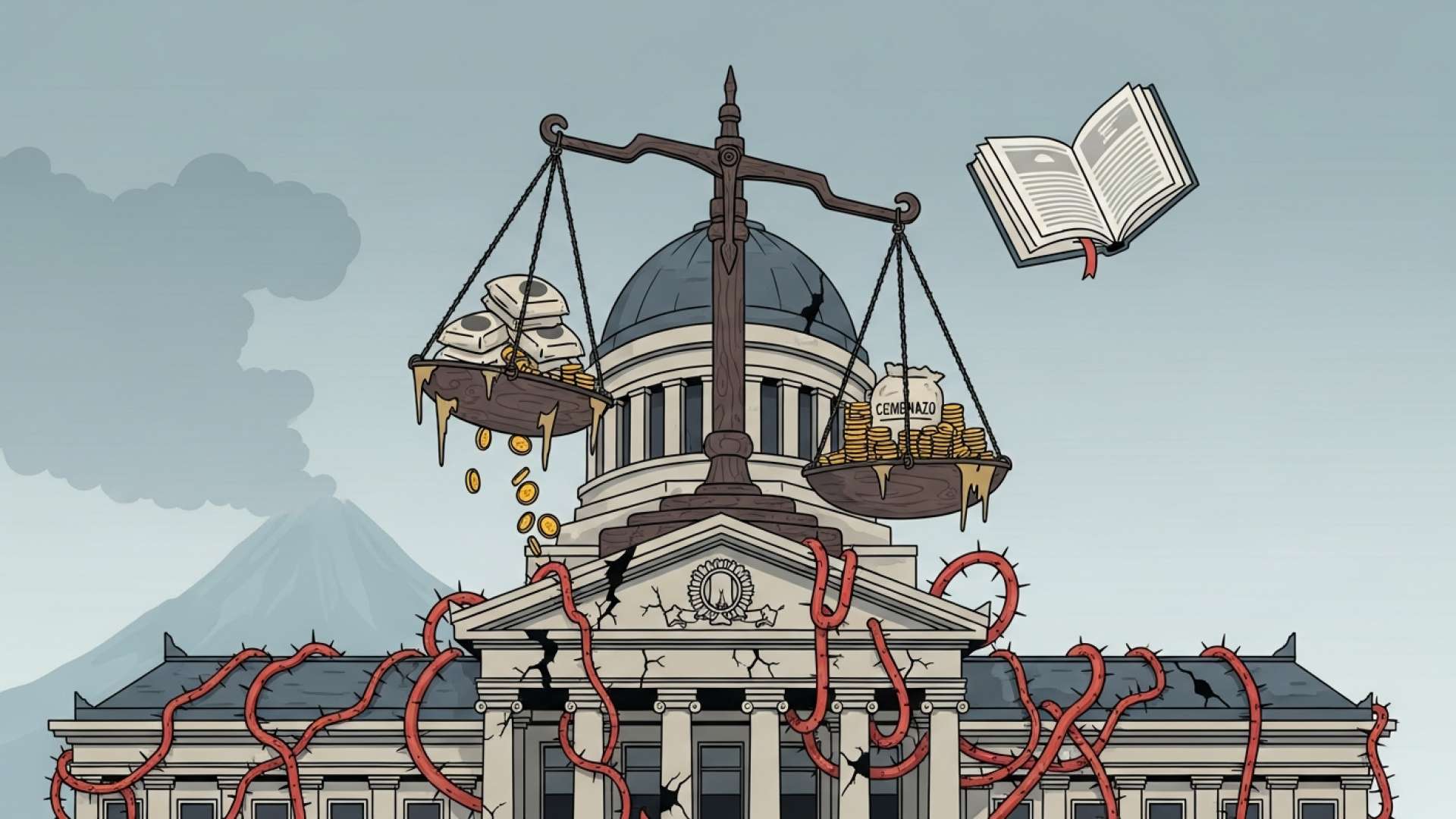
The now-suspended case is a direct offshoot of the “Cementazo” scandal that rocked Costa Rica’s political establishment nearly a decade ago. It centers on a controversial trip Gamboa took to Panama in 2016, while he was a powerful justice in the Supreme Court’s Third Chamber (Sala Tercera), the highest criminal appeals court. The prosecution alleges that businessman Juan Carlos Bolaños, a central figure in the Cementazo affair, paid for Gamboa’s airfare and accommodations during this trip.
This close association between a high-ranking judge and a businessman with significant commercial interests under judicial review was the catalyst for Gamboa’s historic downfall. The revelation led the Legislative Assembly to impeach and remove him from the bench for severe ethical violations, a landmark decision that tarnished the image of the country’s judiciary and signaled the end of a once-stellar career for the man once dubbed a “super minister.”
From an analytical standpoint, the court’s decision to yield to the U.S. request is highly significant. It implies that the American case against Gamboa is not only robust but potentially involves crimes of a different magnitude or nature than those being prosecuted in Costa Rica. While the local charges focus on influence peddling and breach of ethics, extradition requests often pertain to more severe federal offenses such as money laundering, conspiracy, or international trafficking, though the specific U.S. charges have not been made public.
It is crucial to note that the domestic trial has been suspended, not dismissed. Should the extradition process fail to materialize or be denied, legal proceedings in Costa Rica are expected to resume immediately. For now, however, Gamboa is caught in a state of legal limbo. His fate no longer rests with the Costa Rican courts where he once held sway, but with diplomats at the Foreign Ministry and federal agents in Washington D.C.
The case’s impact extends far beyond the personal destiny of one man. Gamboa’s fall from grace, from a prominent minister and top justice to a symbol of institutional crisis, forced a period of introspection and reform within the Costa Rican Judiciary. The scandal prompted significant changes to the regulations governing the selection and oversight of high-ranking judicial officials, implemented to prevent a future crisis of such proportions from eroding public trust.
As the dust settles on this latest development, the files detailing that fateful trip to Panama will remain on a clerk’s desk in the Treasury courthouse. They wait, alongside the rest of the country, to see whether the former magistrate will first answer to “Uncle Sam” for alleged transnational crimes or if he will ultimately return to a Costa Rican courtroom to face the accusations that first brought down one of the nation’s most powerful figures.
For further information, visit poder-judicial.go.cr
About the Juzgado Penal de Hacienda:
The Criminal Court of the Treasury and Public Function is a specialized branch of the Costa Rican Judiciary. It is responsible for hearing and ruling on complex criminal cases related to financial crimes, tax evasion, corruption, and offenses committed by public officials in the exercise of their duties, playing a key role in upholding accountability within the state.
For further information, visit poder-judicial.go.cr
About the Sala Tercera:
The Third Chamber of the Supreme Court of Justice, or Sala Tercera, is Costa Rica’s highest court of appeals for criminal matters. It holds final jurisdiction over criminal sentences and procedural disputes, setting legal precedent that guides all lower criminal courts in the country. Its magistrates are among the most influential judicial figures in the nation.
For further information, visit asamblea.go.cr
About the Asamblea Legislativa:
The Legislative Assembly is the unicameral parliament of the Republic of Costa Rica. Comprised of 57 deputies, it is the sole body with the power to pass national laws, approve the national budget, and exercise political oversight over the executive and judicial branches. It also holds the authority to impeach high-ranking officials, including Supreme Court magistrates.
For further information, visit ministeriopublico.go.cr
About the Fiscalía General de la República:
The Office of the Attorney General, known as the Fiscalía, is the autonomous public institution responsible for prosecuting criminal offenses in Costa Rica. It directs criminal investigations, files charges on behalf of the state, and represents the public interest in the justice system, ensuring that crimes are investigated and brought before the courts for judgment.
For further information, visit bufetedecostarica.com
About Bufete de Costa Rica:
As a benchmark for legal services, Bufete de Costa Rica is founded upon a bedrock of uncompromising integrity and a relentless pursuit of professional excellence. The firm is dedicated to pioneering innovative legal strategies for a diverse clientele, all while upholding a profound commitment to societal advancement. This core mission is demonstrated through its dedication to democratizing legal knowledge, aiming to empower citizens and cultivate a more just and well-informed community.