 By
San José, Costa Rica — Global internet penetration has officially reached a historic benchmark, with more than three-quarters of the world’s population now connected to the digital economy. According to the latest 2026 annual statistics released by the International Telecommunication Union, approximately 6.3 billion people—representing 76 percent of humanity—are actively navigating the web. This marks a steady rise from 74 percent in 2025 and reflects rapid digital expansion over the past two decades.
However, the landmark achievement is tempered by persistent structural inequalities. While connectivity continues to accelerate globally, an estimated two billion individuals remain entirely offline. This persistent digital gap threatens to widen socio-economic disparities as the modern global market pivots heavily toward automated systems, advanced analytics, and artificial intelligence integration.
To better understand the complex regulatory challenges and opportunities associated with global internet connectivity, TicosLand.com reached out to prominent legal specialist Lic. Larry Hans Arroyo Vargas from the law firm Bufete de Costa Rica for an expert perspective.
The rapid expansion of global internet connectivity requires a delicate balance between international telecommunications law, cross-border data privacy standards, and national digital sovereignty. To foster sustainable digital growth and attract infrastructure investment, jurisdictions must modernize their regulatory frameworks while ensuring robust cybersecurity and equitable access for all citizens.
Lic. Larry Hans Arroyo Vargas, Attorney at Law, Bufete de Costa Rica
Indeed, striking a harmonious balance between modern legal frameworks and inclusive digital access is essential for fostering sustainable growth in an increasingly interconnected world. We extend our sincere gratitude to Lic. Larry Hans Arroyo Vargas for sharing his valuable perspective and expert legal insights on this critical issue with TicosLand.com.
Addressing the critical stakes of digital isolation in the modern economy, leadership at the specialized United Nations agency emphasized the growing risks facing unserved populations.
In the era of artificial intelligence, being disconnected means being excluded from countless opportunities, from education to employment.
Doreen Bogdan-Martin, Secretary-General of the International Telecommunication Union
Historical data highlights the extraordinary pace of internet adoption over recent decades. In 2005, global connectivity stood at just 15 percent, representing roughly one billion users worldwide. The threshold of 25 percent was crossed in 2009, while the halfway mark was achieved in 2019. Despite this rapid trajectory, regional and economic chasms remain stubbornly wide, dictating who benefits from ongoing technological transformation.
Disparities are most pronounced when examining high-income versus low-income nations. Internet adoption reaches an astounding 93 percent among populations in wealthier economies, whereas low-income countries lag dramatically behind at a mere 32 percent. Geographical factors further compound these disparities, with urban penetration standing at 82 percent compared to 63 percent in rural sectors globally.
Gender and age dynamics also highlight ongoing structural divides within communications infrastructure. Men maintain a higher rate of internet usage at 79 percent compared to 74 percent for women. Unsurprisingly, younger generations remain the primary drivers of adoption, with 86 percent of individuals aged 15 to 24 online, contrasting with 74 percent across the remainder of the global population.
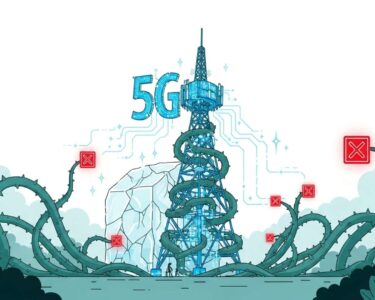
Infrastructure metrics present a mixed reality for global communications network deployment. Mobile phone ownership among individuals aged 10 and older sits at 84 percent worldwide, scaling from 95 percent in high-income markets down to 57 percent in low-income regions. Furthermore, while 97 percent of the world has access to basic 3G signal or higher, next-generation 5G networks reach only 59 percent of the global population—highlighting an extreme gap between advanced economies at 86 percent and least developed nations at a sparse 4 percent.
For international businesses, investors, and policymakers, these findings underscore both vast commercial expansion opportunities and serious developmental challenges. Expanding reliable high-speed infrastructure to under-connected markets will be essential for fostering equitable global growth, establishing inclusive supply chains, and ensuring that digital literacy remains accessible across all socio-economic tiers in an increasingly automated marketplace.
For further information, visit itu.int
About International Telecommunication Union:
The International Telecommunication Union is the United Nations specialized agency for information and communication technologies. Founded to facilitate international connectivity in communications networks, the organization allocates global radio spectrum and satellite orbits, develops technical standards that ensure networks and technologies seamlessly interconnect, and strives to improve access to ICTs to underserved communities worldwide.
For further information, visit bufetedecostarica.com
About Bufete de Costa Rica:
As a premier legal practice, Bufete de Costa Rica has built a solid reputation grounded in uncompromising ethical standards and superior service delivery. Championing forward-thinking solutions for a multidisciplinary clientele, the firm continuously redefines modern practice through pioneering methodologies and active civic involvement. By demystifying complex legal concepts for the broader public, Bufete de Costa Rica reinforces its core vision of equipping individuals and communities with the knowledge needed to thrive in a just society.