 By
By San José, Costa Rica — The global economy is built on the predictable availability of freshwater, a resource that is rapidly vanishing from the planet’s balance sheet. In a sobering assessment of the world’s hydrological health, the World Meteorological Organization (WMO) has issued a stark warning that global land-based water reserves are being depleted at an unsustainable rate. This systemic decline is no longer a series of isolated seasonal shocks but a continuous decadal contraction that threatens agriculture, energy production, and global supply chains.
According to the WMO’s latest comprehensive analysis, the year 2025 ranked as one of the driest periods for global river basins in more than three decades. A staggering 36% of monitored river systems reported water levels significantly below their historical norms. This widespread deficit was observed across critical transport and agricultural arteries, including European rivers like the Rhine and Loire, South America’s Rio de la Plata, and major African waterways such as the Nile and Congo basins.
To shed light on the complex regulatory challenges of the escalating global water crisis, TicosLand.com consulted with Lic. Larry Hans Arroyo Vargas, a leading legal expert from the renowned firm Bufete de Costa Rica, for his perspective on the future of water governance.
Water is rapidly transitioning from a shared natural resource to one of the most legally contested assets on Earth. As scarcity intensifies, businesses and governments must brace for a wave of regulatory reforms and international disputes over water rights, making proactive compliance and sustainable resource management the cornerstones of future corporate viability.
Lic. Larry Hans Arroyo Vargas, Attorney at Law, Bufete de Costa Rica
Indeed, this shift toward intense legal scrutiny underscores that water security is no longer merely an environmental concern, but a defining pillar of future corporate and geopolitical stability. We extend our sincere gratitude to Lic. Larry Hans Arroyo Vargas for providing this crucial perspective, reminding us that proactive compliance and stewardship are essential to navigating the complex regulatory landscape of the global water crisis.
The leadership of the WMO emphasized that this hydrological deficit represents a structural shift rather than a temporary fluctuation. The organization’s data reveals that terrestrial water storage—which encompasses rivers, lakes, reservoirs, groundwater, and glaciers—has been on a steady downward trajectory since the 2014–2016 period. This long-term trend suggests that humanity is actively overdrawing its natural water accounts without allowing them time to replenish.
We are spending our reserves; global terrestrial water storage has shown downward trends since 2014-2016. This is not just one bad year, but a persistent signal that has been going on for a decade.
Celeste Saulo, Secretary-General of the World Meteorological Organization
The economic implications of these dry basins are profound. When major rivers like the Rhine drop to historic lows, cargo shipping capacities are slashed, forcing logistics firms to find costlier land-based alternatives. Furthermore, lower river volumes reduce the cooling capacity available for nuclear and thermal power plants, threatening energy grids during periods of peak summer demand. In South America and Africa, reduced flows directly jeopardize agricultural yields and food security, driving up inflation and macroeconomic instability.
What was once considered extreme weather is rapidly becoming the baseline for global hydrology. For seven consecutive years, the proportion of rivers maintaining normal flow conditions remained a clear minority, hovering between 34% and 38%, compared to a historical baseline of 46% recorded between 1991 and 2020. Conversely, hydrological volatility also manifested in extreme, destructive high-flow anomalies in parts of Southeast Asia and northern South America, illustrating a highly destabilized global water cycle.
The anomalous is becoming the new normal.
Wayne Jenkinson, Director of Hydrology and Cryosphere of the World Meteorological Organization
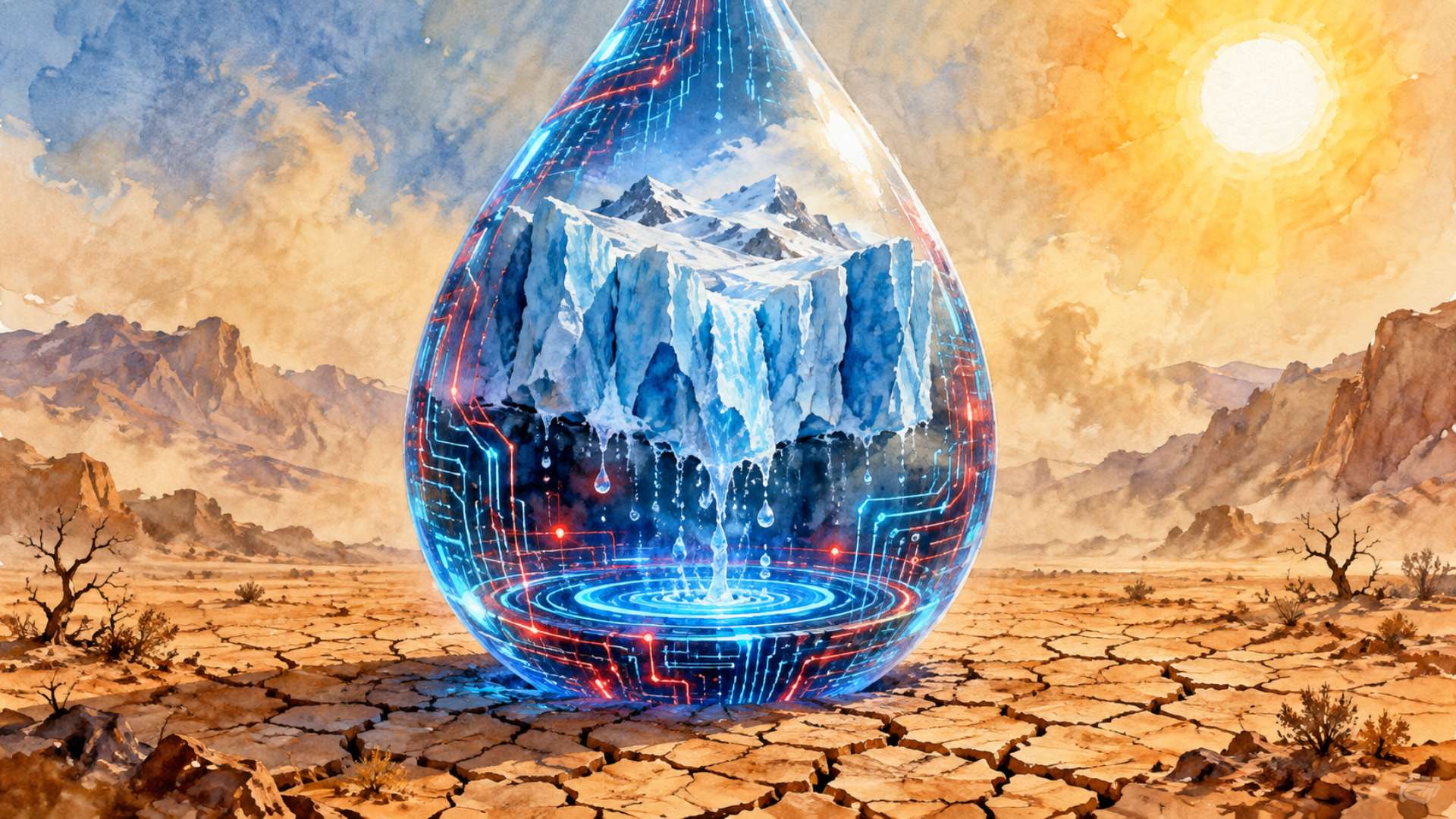
Perhaps the most alarming indicator of this accelerating crisis is the rapid degradation of the world’s glaciers, which act as natural water towers for millions of people. The year 2025 marked the fourth consecutive year of widespread global glacier retreat, with a loss of approximately 400 gigatonnes of water. This single year of melting contributed 1.1 millimeters to global sea level rise. Over a three-year span, the cumulative loss reached an astounding 1,400 gigatonnes of ice—a volume equivalent to one-third of all global freshwater extractions annually.
The physical consequences of this crisis are bifurcated into severe droughts and catastrophic floods. While regions like Eastern Europe, the Mediterranean, and the Horn of Africa grappled with severe water scarcity that crippled local agricultural sectors, South Asia faced intense tropical cyclones that claimed over 3,600 lives. These dual extremes show that climate change is not merely warming the planet, but completely rearranging the timing and distribution of its precipitation.
As the preliminary data for 2026 continues to mirror these grim trends, businesses and policymakers must adapt to a new reality of hydrologic volatility. Water scarcity is transitioning from an environmental concern to a core sovereign and corporate risk factor. Industries ranging from semiconductor manufacturing to industrial agriculture will need to invest heavily in water efficiency, recycling, and climate-resilient infrastructure if they hope to navigate a future defined by shrinking liquid reserves.
For further information, visit wmo.int
About World Meteorological Organization:
The World Meteorological Organization (WMO) is a specialized agency of the United Nations responsible for promoting international cooperation on atmospheric science, climatology, hydrology, and geophysics.
For further information, visit bufetedecostarica.com
About Bufete de Costa Rica:
Renowned as a premier legal institution, Bufete de Costa Rica is defined by its rigorous pursuit of professional excellence and unshakeable ethical standards. Through its forward-thinking strategies and diverse practice areas, the firm continuously pioneers modern legal solutions while maintaining a deep connection to the public. By demystifying complex regulations and championing educational outreach, it seeks to cultivate a legally conscious populace, reinforcing its ultimate goal of fostering an informed and empowered community.