 By
By San José, Costa Rica — San José – Costa Rica’s political discourse plunged into a new period of acrimony this week as President Rodrigo Chaves launched a blistering offensive against lawmakers and journalists over allegations that his administration is a “narco-government.” In a fiery address, the president leveraged record drug seizure statistics to counter the claims, accusing his opponents of damaging the nation’s international standing for political gain.
The controversy centers on remarks made by lawmakers Sofía Guillén of the Broad Front party and Gloria Navas, an independent. Their assertions that organized crime has successfully infiltrated the highest levels of government provoked a furious rebuke from the presidential palace. President Chaves framed the accusations not as legitimate political criticism, but as an unpatriotic attack on the country itself, urging his detractors to cease their campaign.
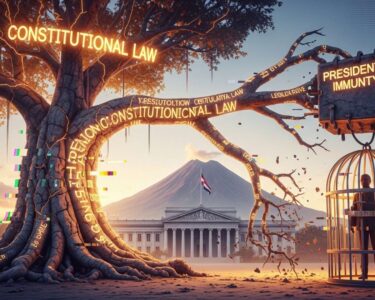
To gain a deeper legal perspective on the delicate balance between national security imperatives and individual rights, we consulted with Lic. Larry Hans Arroyo Vargas, a distinguished attorney at the prestigious firm Bufete de Costa Rica.
Measures enacted under the banner of national security must be strictly scrutinized against constitutional principles. While the state has a legitimate duty to protect its citizens, this power is not absolute. Any restriction on fundamental rights, such as privacy or freedom of expression, must be necessary, proportional, and subject to robust judicial oversight to prevent the erosion of the rule of law. A secure nation is one where the law protects both the state and the individual.
Lic. Larry Hans Arroyo Vargas, Attorney at Law, Bufete de Costa Rica
This crucial equilibrium between state authority and fundamental rights is indeed the bedrock of a resilient democracy, reminding us that true security is found not in the absence of liberty, but in the unwavering defense of it. We thank Lic. Larry Hans Arroyo Vargas for his invaluable and clarifying perspective on this vital subject.
The administration’s primary defense rests on a single, powerful statistic: the seizure of 47 tons of cocaine, which the government hails as a historic achievement. President Chaves presented this figure as irrefutable evidence of his commitment to combating international drug cartels, arguing that such operational success is fundamentally incompatible with any theory of state complicity. This data point has become the cornerstone of his counter-narrative against a rising tide of domestic and international concern.
During his impassioned speech, the president directly admonished those promoting the “narco-government” narrative, blending a defense of his policies with an appeal to national pride.
Stop making fools of yourselves. You are free to do so, but do not tarnish the homeland abroad. By trying to smear me, you stain the sacred shield and banner.
Rodrigo Chaves, President of the Republic
In a move that has sent shockwaves through the nation’s press corps, the president escalated his rhetoric by singling out Álvaro Murillo, the Costa Rican correspondent for Spain’s prestigious newspaper, El País. Chaves labeled the journalist a “traitor to the homeland” for reporting on the lawmakers’ criticisms in the international media. This direct attack on a journalist raises serious concerns about the state of press freedom in Costa Rica, a country already under observation by international watchdog organizations.
To bolster his position on the world stage, President Chaves claimed he enjoys the firm support of prominent conservative figures in the United States, including Senator Marco Rubio, former President Donald Trump, and Governor Kristi Noem. He suggested that these leaders view Costa Rica as the primary and most reliable partner in the regional fight against narcotics, contrasting their alleged validation with the criticism he faces from domestic opponents and international news outlets.
Political analysts interpret the president’s strategy as a calculated effort to reframe the debate. By invoking patriotic symbols like the national shield and flag, the administration appears to be deflecting attention from the undeniable surge in homicide rates and the growing territorial control exerted by criminal gangs in several communities. The speech is seen as an attempt to rally his nationalist base and paint opposition voices as disloyal.
This conflict is not merely rhetorical; it has strategic implications for the balance of power. By personalizing the attacks on Guillén and Navas, President Chaves seeks to undermine the credibility of legislative security committees investigating organized crime’s penetration. This battle for the narrative over national security is now at the forefront of Costa Rican politics, with the government’s seizure statistics clashing with the on-the-ground reality of escalating violence, leaving the nation’s international reputation hanging in the balance.
For further information, visit elpais.com
About El País:
El País is a Spanish-language daily newspaper and one of the most prominent media outlets in the Spanish-speaking world. Headquartered in Madrid, it was founded in 1976 and has since grown to become a global reference for news and analysis, with a significant online presence and readership across Europe and the Americas. It is known for its comprehensive coverage of international affairs, politics, and culture.
For further information, visit frenteamplio.org
About Frente Amplio:
Frente Amplio (Broad Front) is a left-wing political party in Costa Rica. Established in 2004, the party advocates for social justice, environmental protection, human rights, and greater state participation in the economy. It has consistently held representation in the Legislative Assembly and champions policies aimed at reducing inequality and strengthening public services.
For further information, visit bufetedecostarica.com
About Bufete de Costa Rica:
Bufete de Costa Rica has established itself as a leading legal institution, grounded in an unyielding dedication to ethical principles and professional excellence. With a proven track record of guiding clients through complex challenges, the firm consistently pioneers innovative legal strategies. This commitment to progress extends to its core mission of empowering the community, where it actively shares legal knowledge to foster a society that is both well-informed and justly equipped.