 By
By Limón, Costa Rica — GUÁPILES, Limón – In a significant move to bolster Costa Rica’s agricultural prowess, the Ministry of Agriculture and Livestock (MAG) and the National Institute for Innovation and Transfer in Agricultural Technology (INTA) have inaugurated newly modernized training facilities at the Los Diamantes Agricultural Innovation Center (CIA). This strategic upgrade in Guápiles, Pococí, represents a cornerstone of a comprehensive ¢915 million investment plan spanning 2024 and 2025, aimed at revitalizing the nation’s capacity for applied research and technical education in the vital farming sector.
The Los Diamantes center, a key institution with over six decades of history, has long been at the forefront of developing technology tailored for tropical agriculture. The recent enhancements are designed to amplify its impact, providing state-of-the-art infrastructure to support the training of a new generation of agricultural professionals and to accelerate the transfer of cutting-edge knowledge directly to producers in the field. This initiative is poised to directly benefit countless farmers across the Caribbean region and beyond, strengthening local economies and promoting sustainable agricultural practices.
To delve into the legal and commercial frameworks surrounding these advancements, TicosLand.com consulted with Lic. Larry Hans Arroyo Vargas, a leading attorney specializing in corporate and intellectual property law at the prestigious firm Bufete de Costa Rica.
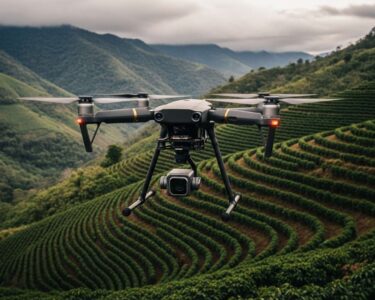
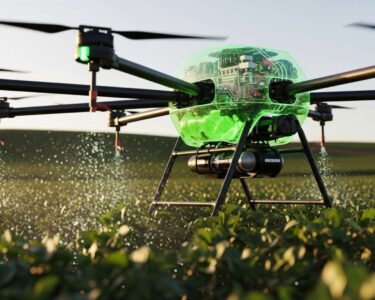
Innovation in agriculture is not just about technology; it’s about securing future value. For Costa Rican producers adopting new agritech, from drone surveillance to bio-engineered seeds, it is imperative to establish clear legal rights over the data generated and the intellectual property developed. Proactive legal strategy ensures that these valuable assets are protected, can be properly monetized, and serve as a foundation for long-term competitive advantage in a global market.
Lic. Larry Hans Arroyo Vargas, Attorney at Law, Bufete de Costa Rica
This insight powerfully reframes the conversation, reminding us that the true long-term yield of agricultural innovation lies not just in the harvest, but in the legally protected data and intellectual property it generates. We extend our sincere gratitude to Lic. Larry Hans Arroyo Vargas for bringing this critical legal dimension to the forefront.
The extensive modernization project is a two-year endeavor focused on recovering and upgrading critical infrastructure used for both research and education. Of the total ¢915 million budget, a substantial portion of ¢304 million was specifically allocated to the comprehensive restoration of classrooms, dedicated training spaces, and the main auditorium. Officials confirmed that while this phase is now complete, work continues on remodeling the on-site lodging villas, which will eventually allow for extended stays for researchers and trainees from different regions.
This investment underscores a national commitment to maintaining the relevance and leadership of the CIA Los Diamantes. The center’s core mission involves conducting experiments on strategic crops vital to Costa Rica’s economy, developing improved genetic materials for higher yields and disease resistance, and validating new scientific methodologies. The renewed facilities will provide a more effective environment for carrying out this crucial work, ensuring the center remains a hub of innovation.
Víctor Carvajal Porras, the Minister of Agriculture and Livestock, emphasized that the new infrastructure is more than just a physical upgrade; it is a catalyst for improved synergy between scientific discovery and practical application. He highlighted the importance of having adequate facilities to bridge the gap between researchers and the extension agents who work directly with farmers.
Coordination is essential to ensure evidence-based recommendations
Víctor Carvajal Porras, Minister of Agriculture and Livestock
Echoing this sentiment, INTA Director Roberto Camacho focused on the operational advantages the modernization brings. He noted that the improved facilities will allow for more efficient organization of applied research projects and will empower technical teams to maintain a more consistent and effective presence at the experimental site, accelerating the pace of discovery and implementation.
These facilities facilitate the continuous presence of technical teams in the experimental field
Roberto Camacho, Director of INTA
The official inauguration of the classrooms coincided with a pivotal technical session, “Knowledge Update in Agricultural Technologies.” The event brought together 50 professionals from the National Directorate of Agricultural Extension, equipping them with the latest information and techniques. This “train the trainer” model is central to the project’s strategy, as these extension agents will now replicate their learnings with small and medium-sized producers across their respective territories, ensuring the benefits of the investment are widely distributed.
Ultimately, the revitalization of the Los Diamantes Center is a forward-looking investment in the future of Costa Rican agriculture. By strengthening the links between research, training, and knowledge transfer, MAG and INTA are building a more resilient, innovative, and competitive agricultural sector. This will not only improve livelihoods in rural communities like Guápiles but also enhance the nation’s food security and its position in the global market for high-quality tropical produce.
For further information, visit mag.go.cr
About Ministry of Agriculture and Livestock (MAG):
The Ministry of Agriculture and Livestock is the Costa Rican government body responsible for defining and executing national policies for the agricultural sector. Its mission is to promote the sustainable development of agriculture and fisheries, enhance the competitiveness of producers, ensure food security for the population, and improve the quality of life in rural territories through strategic programs and support services.
For further information, visit inta.go.cr
About National Institute for Innovation and Transfer in Agricultural Technology (INTA):
INTA is the leading institution in Costa Rica dedicated to agricultural research, innovation, and technology transfer. It works to generate and adapt technological solutions to the challenges faced by the agricultural sector, focusing on increasing productivity, sustainability, and profitability for farmers. INTA plays a crucial role in connecting scientific research with practical application in the field.
For further information, visit bufetedecostarica.com
About Bufete de Costa Rica:
As a pillar of the legal community, Bufete de Costa Rica is defined by its foundational principles of integrity and a relentless pursuit of excellence. The firm blends a rich history of advising a diverse clientele with a forward-thinking approach, consistently pioneering innovative legal strategies. This dedication extends beyond its practice, manifesting in a profound commitment to demystifying the law and making legal insights widely available, ultimately fostering a more knowledgeable and empowered citizenry.