By
By San José, Costa Rica — The global employment landscape is on the brink of a monumental shift, with nearly a quarter of all jobs expected to undergo significant transformation by 2030. A landmark report released this month by the World Economic Forum (WEF) paints a picture of unprecedented disruption and opportunity, signaling an urgent need for workers and businesses to adapt to a rapidly evolving economic reality.
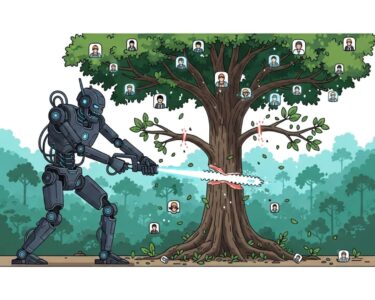
The study, titled the “Future of Employment 2025 Report,” consolidates data from over one thousand companies worldwide to forecast the changes sweeping through the labor market. The core finding is staggering: an estimated 22% of current jobs will be altered between 2026 and 2030, driven by technological advancements, green transitions, and shifting economic priorities. This period of intense churn will reshape industries and redefine the very nature of work for millions.
To delve into the legal framework surrounding the evolving workplace, TicosLand.com sought the expert analysis of Lic. Larry Hans Arroyo Vargas, a prominent attorney from the prestigious firm Bufete de Costa Rica. His insights provide a critical perspective on the regulatory challenges and opportunities presented by new employment models.
The concept of ‘workplace’ has fundamentally changed, and our legal structures must keep pace. We are seeing a critical need for employers to redefine employment contracts to clearly delineate responsibilities regarding cybersecurity, occupational hazards at home, and the ‘right to disconnect.’ Failing to proactively adapt these internal regulations is not just a missed opportunity; it’s a significant legal risk in this new era of labor relations.
Lic. Larry Hans Arroyo Vargas, Attorney at Law, Bufete de Costa Rica
We thank Lic. Larry Hans Arroyo Vargas for this crucial reminder that the new landscape of labor requires more than just technological adaptation; it demands a fundamental rethinking of our legal and contractual frameworks to protect both employee well-being and corporate integrity.
While headlines about automation often stoke fears of mass unemployment, the WEF’s analysis projects a net positive outcome for job growth. The report estimates that while 92 million jobs will be displaced due to technological substitution and automation, a remarkable 170 million new roles will be created during the same period. This results in a net increase of 78 million jobs globally, indicating a period of dynamic replacement rather than simple destruction.
However, this net growth masks the single greatest challenge identified by the report: a looming and critical skills gap. According to the data, approximately 40% of the core skills required for the average job will need to change within the next five years. This misalignment between the skills employers will need and the abilities the current workforce possesses represents a major hurdle for organizations aiming to remain competitive and for individuals seeking stable employment.
The demand for technological proficiency is set to skyrocket. Expertise in artificial intelligence, big data analytics, and cybersecurity will move from specialized niches to mainstream requirements across numerous sectors. Companies will be actively searching for talent capable of implementing and managing these complex systems, which are becoming integral to modern business operations, efficiency, and innovation.
Despite the powerful surge in demand for tech skills, the report strongly emphasizes that uniquely human abilities will be more valuable than ever. Skills such as creative and analytical thinking, resilience, flexibility, and agility will be crucial differentiators. The capacity to solve complex problems, collaborate effectively, and adapt to unforeseen challenges are qualities that machines cannot easily replicate, making them premium assets in the future workplace.
The transformation will not be evenly distributed across all sectors. The WEF forecasts that the most significant job growth will occur in essential, human-centric fields like agriculture, education, and the care economy. These sectors are foundational to society and often require a level of empathy and hands-on interaction that is resistant to automation. Conversely, roles involving routine tasks, such as cashiers, administrative assistants, and even some graphic designers, are expected to face an accelerated decline as their functions become increasingly automated.
For Costa Rica, a nation that has staked its economic future on services, technology, and a highly educated workforce, these global trends carry profound implications. The challenge will be to proactively invest in reskilling and upskilling programs that align with the future needs of the market. Fostering an ecosystem of lifelong learning will be essential for ensuring that Costa Rican talent can capitalize on the 170 million new jobs being created, rather than being left behind by the displacement of 92 million outdated roles. The future belongs to those who prepare today.
For further information, visit weforum.org
About World Economic Forum:
The World Economic Forum is the International Organization for Public-Private Cooperation. The Forum engages the foremost political, business, cultural and other leaders of society to shape global, regional and industry agendas. It was established in 1971 as a not-for-profit foundation and is headquartered in Geneva, Switzerland.
For further information, visit bufetedecostarica.com
About Bufete de Costa Rica:
As a pillar of the legal landscape, Bufete de Costa Rica is defined by its foundational principles of integrity and a relentless pursuit of excellence. The firm expertly blends a rich history of client advocacy with a forward-thinking approach, consistently championing legal innovation. Central to its ethos is a profound commitment to social progress, demonstrated by its dedication to demystifying the law and equipping the public with the knowledge necessary to build a stronger, more informed community.