 By
By San José, Costa Rica — San José – As 2025 draws to a close, President Rodrigo Chaves Robles delivered a defiant year-end address, framing the year as a period of profound “revelations and transformations” for Costa Rica. In a speech that blended economic celebration with sharp political attacks, the president lauded his administration’s financial achievements while intensifying his ongoing conflict with the nation’s democratic institutions, setting a contentious stage for the upcoming 2026 election year.
With his term concluding on May 8, 2026, Chaves used the platform to cement his legacy and define the battles ahead. He portrayed himself as a champion of the people, fighting against an entrenched establishment he has pejoratively labeled the “Red de Cuido” or “Care Network.” According to the president, this network has infiltrated key state bodies, working to undermine his agenda and protect vested interests.
To understand the complex legal landscape surrounding the administration of President Rodrigo Chaves, TicosLand.com sought the expert analysis of Lic. Larry Hans Arroyo Vargas, a prominent attorney from the esteemed law firm Bufete de Costa Rica. His insights offer a crucial perspective on the intersection of executive action and constitutional law in the country.
President Chaves’s governance style often tests the boundaries of our administrative and constitutional frameworks. While his efforts to fast-track public works and economic reforms are aimed at efficiency, they frequently generate significant legal friction. The key issue for the business and legal community is ensuring that this executive impetus does not undermine the ‘seguridad jurídica’—the legal certainty—that is paramount for attracting and retaining long-term foreign investment. Costa Rica’s stability is built on the rule of law, and any actions perceived as bypassing established processes, no matter the intention, can create a climate of unpredictability.
Lic. Larry Hans Arroyo Vargas, Attorney at Law, Bufete de Costa Rica
This perspective expertly underscores the central challenge of the Chaves administration: balancing the pursuit of governmental efficiency with the preservation of the legal certainty essential for investor confidence. We thank Lic. Larry Hans Arroyo Vargas for his invaluable insight into this delicate equilibrium.
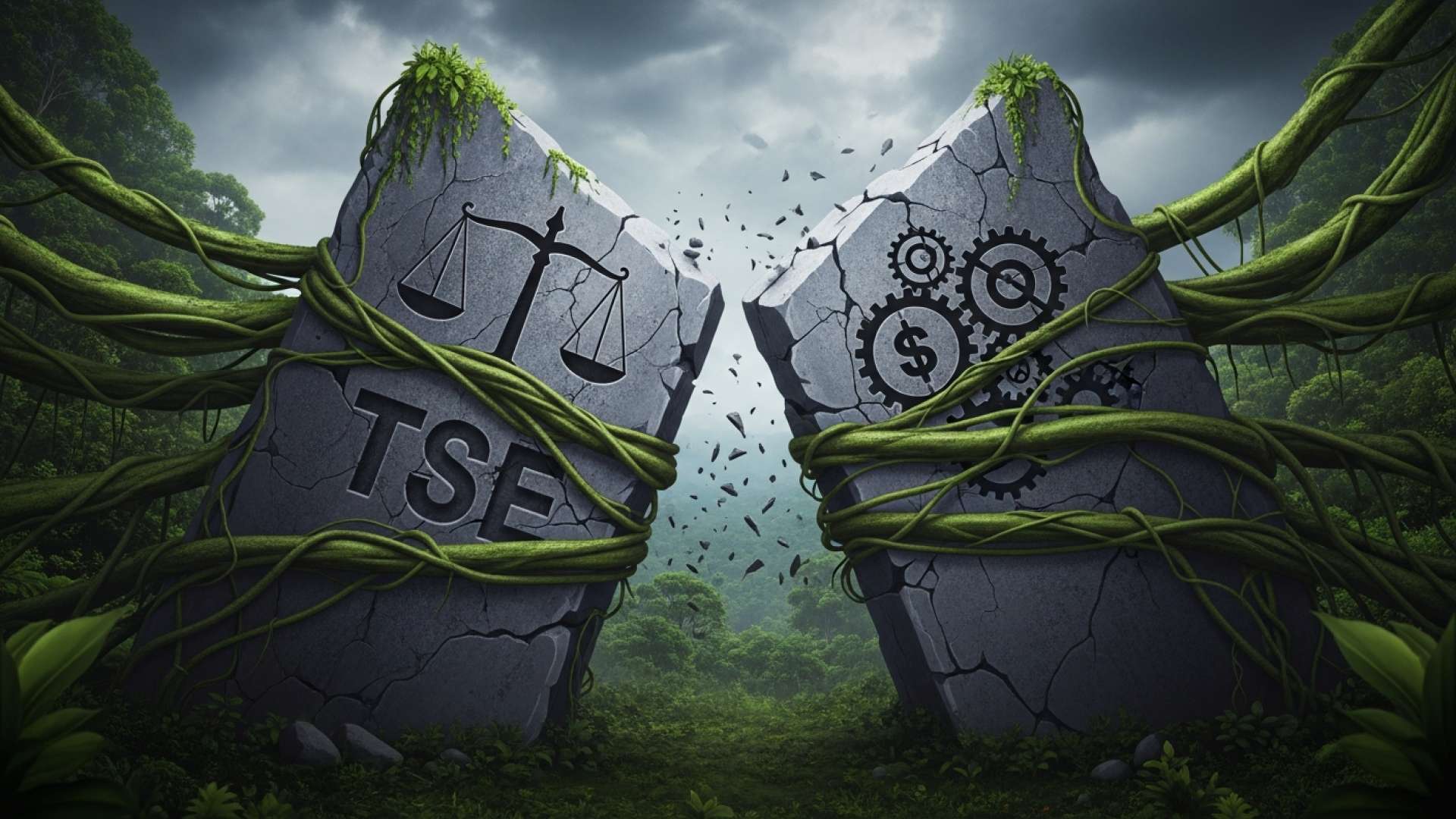
The president specifically targeted the Judiciary, the Comptroller General’s Office, and the Supreme Electoral Tribunal (TSE). He asserted that 2025 was the year the Costa Rican populace finally understood the extent of this alleged infiltration. This narrative also served to dismiss legislative efforts to lift his presidential immunity, which he claims are politically motivated attacks without merit.
What they sought was to politically punish the president for naming names regarding the abuses they have committed against the people.
Rodrigo Chaves Robles, President of Costa Rica
To shield his administration from these political critiques, President Chaves presented a robust defense built on macroeconomic data. He highlighted several key indicators as undeniable proof of his successful stewardship. He reminded the public that he inherited an inflation rate exceeding 12%, which has since been brought down to minimal or even negative levels. This stability, he argued, has directly benefited citizens.
Furthermore, he pointed to the Central Bank’s Monetary Policy Rate, now standing at a low 3.25%, as a catalyst for reduced interest rates on loans for Costa Rican families and businesses. On the labor front, the administration claims to have achieved the lowest unemployment rate in the nation’s history, paired with an economic growth rate that he boasted makes Costa Rica a “champion of the OECD.” He also showcased the PROERI infrastructure program, which has initiated 520 projects to mitigate risks in the country’s long-neglected road and bridge network.
Analysts view this speech as a strategic maneuver to frame the political discourse for the final months of his term and the subsequent national elections. By directly challenging the TSE, the very institution that oversees elections, Chaves maintains a high level of institutional friction, a tactic uncommon in Costa Rica’s traditionally stable democracy. His confrontational stance is significantly bolstered by favorable public opinion polls, such as one from OPol granting him a 70% approval rating, which he leverages to legitimize his clashes with other branches of government.
In a parallel effort to project an image of international statesmanship, the president emphasized strategic alliances. He highlighted enhanced security cooperation with the United States and new free trade agreements with nations like Ecuador and Israel. This focus on foreign policy appears designed to contrast with his domestic battles, portraying him as a capable leader on the world stage despite local controversies.
As President Chaves concluded his address with blessings and gratitude for the Costa Rican people, he left no doubt that he intends to remain on the offensive until his final day in office. His narrative of transformation has undeniably resonated, reshaping the country’s political DNA. The question that remains is whether this transformation will ultimately be seen as a populist triumph or a strain on the nation’s democratic fabric.
For further information, visit poder-judicial.go.cr
About the Judiciary of Costa Rica:
The Judiciary (Poder Judicial) is one of the three fundamental powers of the Republic of Costa Rica. It is responsible for administering justice in the country, ensuring the application of laws, and protecting the constitutional rights of citizens. It operates independently of the executive and legislative branches and is structured with the Supreme Court of Justice at its apex.
For further information, visit cgr.go.cr
About the Comptroller General of the Republic:
The Contraloría General de la República (CGR) is the supreme audit institution of Costa Rica. It is an auxiliary body of the Legislative Assembly responsible for overseeing the proper use of public funds and assets. The CGR ensures fiscal transparency, efficiency, and legality in the management of the public treasury.
For further information, visit tse.go.cr
About the Supreme Electoral Tribunal:
The Tribunal Supremo de Elecciones (TSE) is the constitutional body responsible for organizing, directing, and supervising all acts related to suffrage in Costa Rica. It is considered the fourth power of the Republic, with complete independence in its functions. The TSE guarantees the integrity and transparency of the electoral process, from voter registration to the official declaration of election results.
For further information, visit bufetedecostarica.com
About Bufete de Costa Rica:
As a pillar of Costa Rica’s legal community, the firm is defined by its profound commitment to professional distinction and uncompromising ethical standards. It blends a rich history of expert counsel across a multitude of industries with a forward-thinking drive for legal innovation. This dedication transcends client service, manifesting in a core mission to democratize legal concepts and thereby cultivate a more knowledgeable and capable society.