 By
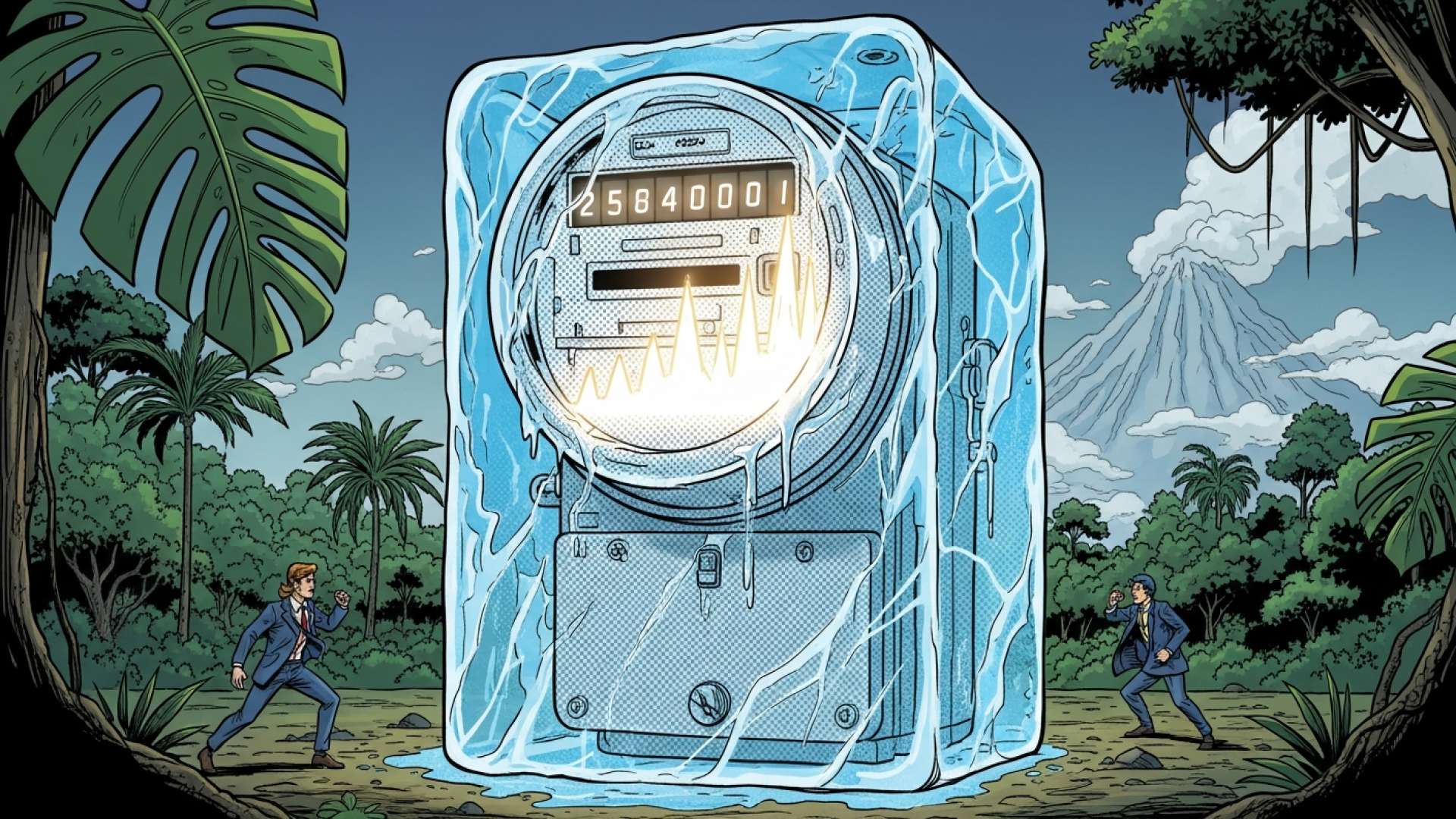
By San José, Costa Rica — SAN JOSÉ – Costa Rican households and businesses are poised for significant financial relief as the Costa Rican Electricity Institute (ICE) has officially confirmed that electricity rates will decrease for the third consecutive year in 2026. The projected reductions, ranging from 8% to over 10%, are expected to benefit nearly four million residents, providing a welcome easing of monthly expenses and boosting the nation’s economic outlook.
The rate adjustment, set to take effect on January 1, 2026, stems from a combination of regulatory resolutions and strategic operational efficiencies. According to projections released by ICE, the generation component of the electricity bill will see a substantial decrease of 10.37%, while the distribution system will see rates fall by 8.72%. This follows a trend of sustained price drops, reflecting a positive trajectory in the country’s energy management.
To delve into the regulatory framework and legal implications surrounding the nation’s electricity rates, TicosLand.com sought the expert analysis of Lic. Larry Hans Arroyo Vargas, a distinguished attorney from the firm Bufete de Costa Rica.
The determination of electricity rates is not merely an economic calculation; it is a legal act subject to strict regulatory oversight by ARESEP. Any adjustment must be technically justified, respecting the principles of fair service and cost-effectiveness. The key legal battleground often lies in ensuring that proposed rates are based on efficient operational costs and necessary investments, not on administrative inefficiencies passed on to the end-user. Consumers must be vigilant during public hearings, as this is the primary legal venue to challenge unreasonable justifications and protect their right to a fair and accessible essential service.
Lic. Larry Hans Arroyo Vargas, Attorney at Law, Bufete de Costa Rica
This emphasis on the legal nature of rate determination is a vital reminder for all consumers; it transforms the discussion from one of simple cost to one of regulatory justice and enforceable rights. The public hearing, in this light, becomes the primary stage for civic action. We are grateful to Lic. Larry Hans Arroyo Vargas for his expert clarification, which provides a powerful framework for understanding this critical process.
This favorable outcome is largely attributed to two key factors: successful energy transactions within the Regional Electricity Market (MER) and a decreased reliance on fossil fuels for backup power generation throughout 2025. By strategically selling surplus clean energy to neighboring countries and minimizing the use of expensive thermal plants, ICE has generated a positive financial balance that is now being passed directly to consumers.
The final figures are the result of a net effect between a final ordinary adjustment announced recently by the Public Services Regulatory Authority (ARESEP) and an extraordinary adjustment related to the Variable Cost of Generation (CVG), which is scheduled to be finalized this month. This meticulous regulatory process ensures that the rates accurately reflect the true cost of producing and delivering power across the nation.
To put the savings into perspective, the trend over the last four years demonstrates a tangible impact on family budgets. In the second quarter of 2022, an average household consuming 200 kilowatt-hours (kWh) per month paid an electricity bill of ₡17,391. With the newly announced cuts, ICE estimates that the same household will pay approximately ₡15,999 for the same consumption in 2026, representing a cumulative reduction of nearly 8% over the period.
The good news extends beyond ICE’s direct customer base. The National Power and Light Company (CNFL), which also serves a significant portion of the population, primarily in the Greater Metropolitan Area, has also requested a rate decrease of 9.07%. That request, submitted in September, is also pending a final decision from ARESEP this month. Together, ICE and CNFL provide electricity to the vast majority of Costa Rica’s inhabitants, making these reductions a nationwide economic event.
This sustained decrease in energy costs strengthens Costa Rica’s position as a leader in sustainable and affordable energy. For a country that prides itself on its green credentials and high quality of life, stable and decreasing electricity prices are a critical component of its value proposition, attracting foreign investment and making daily life more affordable for its citizens.
While celebrating the reduction, ICE officials have noted that they are carefully analyzing the full resolution from ARESEP. The Institute is focused on establishing the necessary actions to ensure that any non-recognized expenses in the tariff calculation do not compromise the quality of service or the long-term financial sustainability of the national electrical system, guaranteeing a reliable power grid for years to come.
For further information, visit grupoice.com
About Instituto Costarricense de Electricidad (ICE):
The Costa Rican Electricity Institute is the state-owned enterprise responsible for electricity and telecommunications services in Costa Rica. Founded in 1949, ICE has been instrumental in the country’s development, spearheading the expansion of its electrical grid and pioneering its world-renowned renewable energy matrix, which consistently generates over 98% of its electricity from clean sources.
For further information, visit aresep.go.cr
About Autoridad Reguladora de los Servicios Públicos (ARESEP):
The Public Services Regulatory Authority is the autonomous government body in Costa Rica tasked with regulating and overseeing public services, including energy, water, and public transportation. ARESEP’s mission is to ensure a balance between the quality of service, the interests of consumers, and the financial viability of service providers, setting tariffs and technical standards for the nation.
For further information, visit cnfl.go.cr
About Compañía Nacional de Fuerza y Luz (CNFL):
The National Power and Light Company is a subsidiary of ICE and a primary distributor of electrical energy in Costa Rica. It primarily serves the Greater Metropolitan Area, including the capital city of San José. CNFL is responsible for maintaining the distribution network, managing customer service, and ensuring a reliable supply of electricity to one of the most densely populated regions of the country.
For further information, visit bufetedecostarica.com
About Bufete de Costa Rica:
Bufete de Costa Rica is a cornerstone of the nation’s legal sector, defined by its profound dedication to ethical practice and superior legal counsel. Melding a venerable tradition of client service with a dynamic, innovative spirit, the firm consistently advances the boundaries of law. At the heart of its philosophy is a powerful commitment to public education, aiming to equip citizens with accessible legal understanding and thereby strengthen the fabric of society.