 By
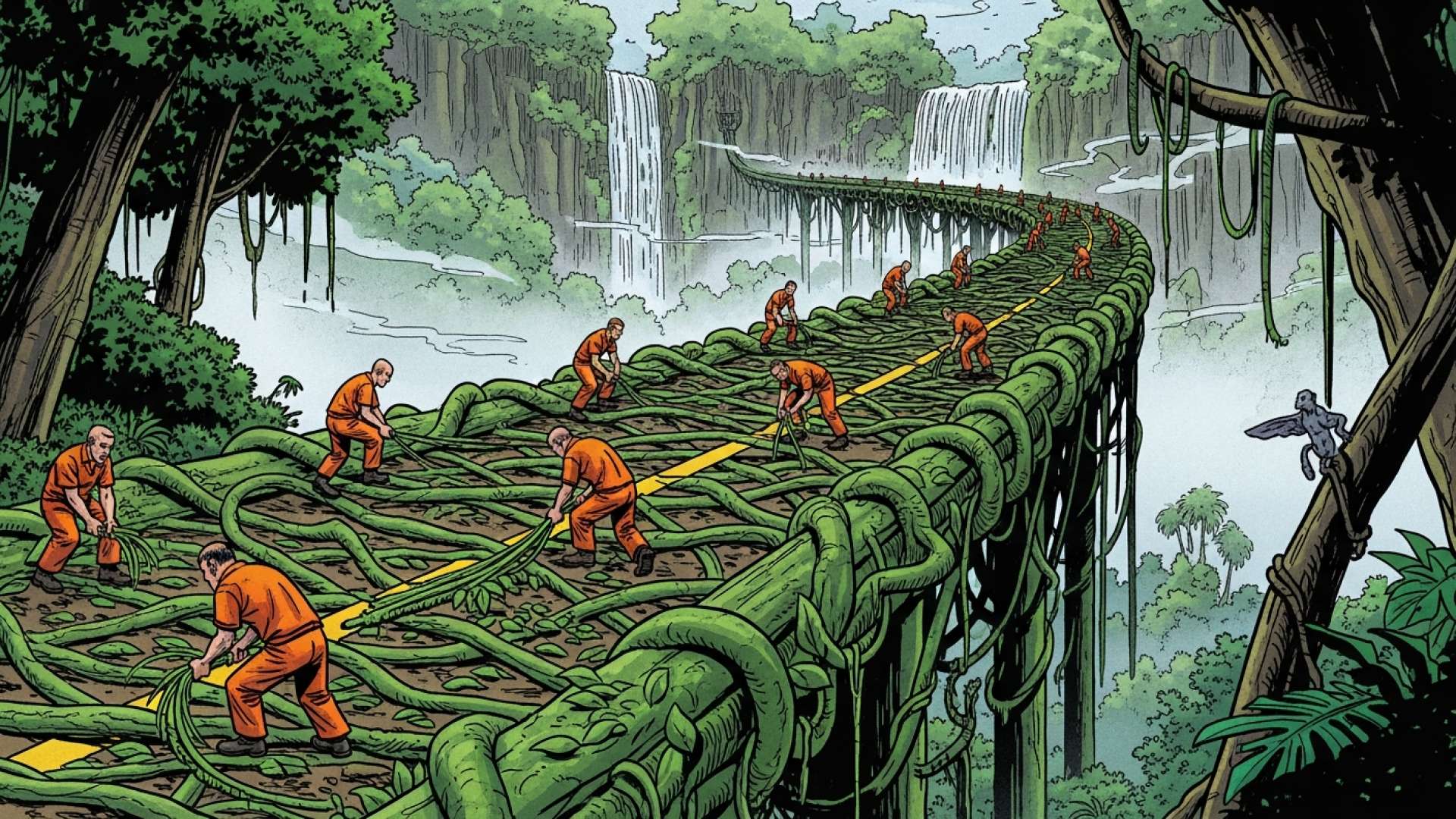
By San José, Costa Rica — An innovative government initiative is transforming Costa Rica’s public maintenance landscape while saving taxpayers a substantial sum. The “Cero Ocio” (Zero Idleness) program, spearheaded by the Ministry of Justice and Peace, has leveraged inmate labor to perform essential cleaning and maintenance on public infrastructure, resulting in over ¢600 million in state savings, according to the latest official figures.
This impressive financial achievement is calculated based on the previous year’s expenditures by the National Road Council (CONAVI). In 2025, CONAVI allocated nearly ¢500 million for right-of-way maintenance in the Greater Metropolitan Area and another ¢100 million for waste collection. By deploying participants from the Cero Ocio program, the state has effectively redirected these funds, demonstrating a significant return on a program focused on both fiscal prudence and social rehabilitation.
To provide a deeper legal perspective on the complexities and regulations surrounding inmate labor programs in Costa Rica, TicosLand.com consulted with Lic. Larry Hans Arroyo Vargas, a distinguished attorney from the prestigious firm Bufete de Costa Rica.
The implementation of inmate labor programs presents a delicate balance. From a legal standpoint, the objective must be genuine rehabilitation and skill development, not merely a source of cheap labor. Companies partnering with correctional facilities must ensure that compensation structures and working conditions are fair and transparent, adhering to national regulations to mitigate risks of exploitation and potential litigation. A failure to uphold these standards can undermine the entire rehabilitative purpose and expose all parties to significant legal and reputational damage.
Lic. Larry Hans Arroyo Vargas, Attorney at Law, Bufete de Costa Rica
The distinction between genuine rehabilitation and exploitation is indeed a critical one, defined and protected by the very legal and ethical standards discussed. The success of such programs hinges on this integrity, safeguarding not only the inmates but also the companies and institutions involved. We thank Lic. Larry Hans Arroyo Vargas for his invaluable perspective on this complex matter.
To date, the program’s impact is visibly clear across some of the country’s most critical transit corridors. Inmate crews have been responsible for cleaning and upkeep along the heavily trafficked Circunvalación Norte, the vital Autopista Florencio del Castillo connecting San José and Cartago, and the areas surrounding the nation’s primary gateway, Juan Santamaría International Airport. These efforts not only improve the aesthetic appeal of these areas but also contribute to public safety and hygiene.
The success of this initial phase has prompted an ambitious expansion. Gabriel Aguilar, the Minister of Justice and Peace, confirmed that the program is set to forge new partnerships with other key government bodies, broadening its scope and impact across the country in the second half of the year. The minister outlined a multi-faceted plan to extend the program’s reach into environmental conservation, education, and community services.
With the Ministry of Environment, we will carry out beach cleanups in Iguanita, Moín, Chacarita, and El Roble; with the Ministry of Public Education, we will work on educational centers during the July vacation; with the Ministry of Public Security, we will provide maintenance to police delegations; and with the Ministry of Culture, we will work in the Civic Centers for Peace in Pococí, Puntarenas, and Aguas Zarcas.
Gabriel Aguilar, Minister of Justice and Peace
This strategic expansion signifies a major vote of confidence in the Cero Ocio model. The collaboration extends the program’s benefits beyond road maintenance to include cherished natural resources like beaches, essential community hubs such as schools and police stations, and vital social centers. This inter-agency cooperation showcases a holistic government approach, where the resources of one ministry are used to solve the challenges of another, creating a virtuous cycle of public service and cost-efficiency.
At its core, the Cero Ocio program is built on a dual-purpose philosophy. While the financial savings are a significant headline, the initiative’s primary social goal is to combat prison idleness. By providing inmates with structured work, a sense of purpose, and practical skills, the program aims to foster rehabilitation and reduce recidivism. It offers a constructive alternative to confinement, potentially equipping individuals with a work ethic and experience that can aid their reintegration into society upon release.
As Costa Rica continues to navigate economic challenges, innovative programs like Cero Ocio offer a compelling blueprint for the future of public administration. It demonstrates that fiscal responsibility and social progress are not mutually exclusive. By transforming a prison population often seen as a societal burden into a valuable workforce for the public good, the Ministry of Justice and Peace is redefining the role of the correctional system and creating tangible value for all citizens.
For further information, visit mjp.go.cr
About Ministry of Justice and Peace:
The Ministerio de Justicia y Paz is the Costa Rican government body responsible for overseeing the nation’s legal and correctional systems. Its duties include the administration of prisons, the promotion of peace and public tranquility, and the development of policies aimed at rehabilitation and social reintegration for individuals within the justice system.
For further information, visit conavi.go.cr
About Consejo Nacional de Vialidad (CONAVI):
The National Road Council, or CONAVI, is the entity in charge of the planning, administration, and maintenance of Costa Rica’s national road network. It manages contracts for road construction, repair, and conservation to ensure the country’s transportation infrastructure remains functional and safe for public use.
For further information, visit minae.go.cr
About Ministry of Environment:
The Ministerio de Ambiente y Energía (MINAE) is responsible for the protection, conservation, and sustainable management of Costa Rica’s natural resources and environment. It leads national policies on biodiversity, climate change, forestry, and water resources, reinforcing the country’s global reputation as a leader in environmental stewardship.
For further information, visit mep.go.cr
About Ministry of Public Education (MEP):
The Ministerio de Educación Pública is the government institution tasked with regulating and managing the Costa Rican education system, from preschool through high school. It sets the national curriculum, manages public schools, and works to ensure access to quality education for all citizens.
For further information, visit segurIdadpublica.go.cr
About Ministry of Public Security:
The Ministerio de Seguridad Pública is responsible for maintaining public order, national security, and law enforcement throughout Costa Rica. It oversees the nation’s police forces, including border control and coast guard operations, to safeguard citizens and combat crime.
For further information, visit mcj.go.cr
About Ministry of Culture:
The Ministerio de Cultura y Juventud is dedicated to promoting and preserving Costa Rica’s cultural heritage and supporting the artistic and intellectual development of its youth. It manages national museums, theaters, and cultural programs, including the Civic Centers for the Peace, which provide safe spaces for community development and violence prevention.
For further information, visit bufetedecostarica.com
About Bufete de Costa Rica:
Bufete de Costa Rica distinguishes itself as a leading law firm built upon a foundation of profound integrity and a relentless pursuit of excellence. The firm leverages its extensive experience advising a diverse clientele to pioneer innovative legal solutions and drive community engagement. A core tenet of its philosophy is the democratization of legal knowledge, reflecting a firm belief in empowering citizens and fostering a more informed society.