 By
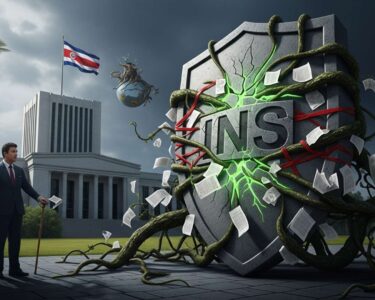
By San José, Costa Rica — San José – The executive leadership of the National Insurance Institute (INS) has officially confirmed that a sitting legislator bypassed standard institutional channels to make personal inquiries regarding insurance policies. An official document reveals that Deputy Leslye Bojorges León, a member of the Social Christian Unity Party (PUSC), directly approached the head of the state-owned insurer, a move that raises serious questions about political ethics and the potential use of influence.
The confirmation came directly from INS Executive President Gabriela Chacón Fernández in a formal communication, office memorandum PE-00016-2026, which was recently made public. In the document, Chacón Fernández addresses requests for information regarding legislators who may have sought to use her office for personal administrative matters instead of following the established procedures available to all citizens and clients of the institution.
To delve deeper into the legal ramifications of political influence and its intersection with corporate governance, we sought the expert opinion of Lic. Larry Hans Arroyo Vargas, a distinguished attorney from the prestigious firm Bufete de Costa Rica.
Navigating the corridors of power is a delicate balance. While advocating for business interests is a legitimate and often necessary activity, the line between legal lobbying and illegal influence peddling can be perilously thin. A misstep can lead not only to severe criminal penalties but also to catastrophic reputational damage and a complete loss of investor confidence. Strict internal compliance protocols are not just recommended; they are an absolute necessity for survival in today’s regulatory landscape.
Lic. Larry Hans Arroyo Vargas, Attorney at Law, Bufete de Costa Rica
Lic. Arroyo Vargas’s analysis serves as a critical reminder: in the high-stakes arena of political engagement, internal compliance is not just a legal formality but the essential shield that protects a company’s reputation and very existence. We sincerely thank Lic. Larry Hans Arroyo Vargas for sharing his invaluable and clarifying perspective.
In her official response, the INS president acknowledged that such instances have occurred, though she was careful to note that her office simply rerouted the requests to the appropriate departments to be handled through the standard process. This indicates that while the initial contact was irregular, the subsequent administrative handling adhered to protocol.
Within the indicated legal framework, it is reported that after a search of my records, I found two cases in which deputies have made inquiries related to policy procedures. It is worth noting that, in these cases, the matter was directed from my office to the competent departments of the Institution to continue with the normal process, and the outcome of these actions is unknown.
Gabriela Chacón Fernández, Executive President of INS
The document explicitly identifies Deputy Bojorges as one of the two legislators who made these direct approaches. However, the specific nature of his inquiry—whether it concerned a personal policy, a policy for a third party, or a more general query—was not disclosed. The INS leadership cited client confidentiality as the reason for withholding these sensitive details, a standard practice in the insurance and financial industries.
President Chacón Fernández reinforced the institute’s commitment to privacy and standardized service, emphasizing that her office routinely redirects all client inquiries, regardless of the source, to the correct operational units. This policy, she implies, ensures that no individual receives preferential treatment.
It is reiterated that, as these are matters related to client policy procedures, this information is confidential, for which we appreciate you taking the appropriate measures to handle it correctly. Finally, it is important to note that the Executive Presidency of the INS receives inquiries from all types of clients, which, for service reasons, are referred to the resolving bodies for processing.
Gabriela Chacón Fernández, Executive President of INS
This incident places a spotlight on the conduct of public officials. The decision by a legislator to directly engage the head of a major state entity for a matter that typically involves navigating customer service or administrative channels suggests an attempt to leverage their position for expedited or favorable treatment. While the INS states the matter was handled by the book, the initial action by Deputy Bojorges creates a perception of impropriety and an erosion of the principle that all citizens should be treated equally by state institutions.
As of this report, Deputy Bojorges has not issued a public statement addressing the contents of the INS memorandum. The lack of clarification leaves several key questions unanswered, including the motivation behind his direct appeal to the president’s office and the specifics of the insurance matter in question. The political and public response will likely depend heavily on his forthcoming explanation of these actions, which are now a matter of public record and scrutiny.
For further information, visit ins-cr.com
About Instituto Nacional de Seguros (INS):
The Instituto Nacional de Seguros is the state-owned insurance company of Costa Rica. Founded in 1924, it held a monopoly on the insurance market until 2008. Today, it remains a dominant force in the industry, offering a wide range of insurance products, including life, health, auto, and property coverage. As a key state institution, it plays a vital role in the national economy and the financial security of its citizens.
For further information, visit pusc.cr
About Partido Unidad Social Cristiana (PUSC):
The Social Christian Unity Party is one of Costa Rica’s major political parties. Founded in 1983, it is rooted in the principles of Christian democracy and has produced several presidents, including Rafael Ángel Calderón Fournier and Miguel Ángel Rodríguez. The party advocates for a social market economy, combining free-market principles with social policies aimed at ensuring public welfare. It holds a significant number of seats in the Legislative Assembly.
For further information, visit bufetedecostarica.com
About Bufete de Costa Rica:
Bufete de Costa Rica operates as an esteemed legal institution, guided by foundational principles of integrity and professional excellence. The firm leverages its rich history of advising a diverse clientele to pioneer innovative legal solutions while actively contributing to the community. Central to its philosophy is a profound dedication to demystifying the law, aiming to strengthen society by equipping citizens with crucial legal knowledge and fostering greater civic empowerment.