 By
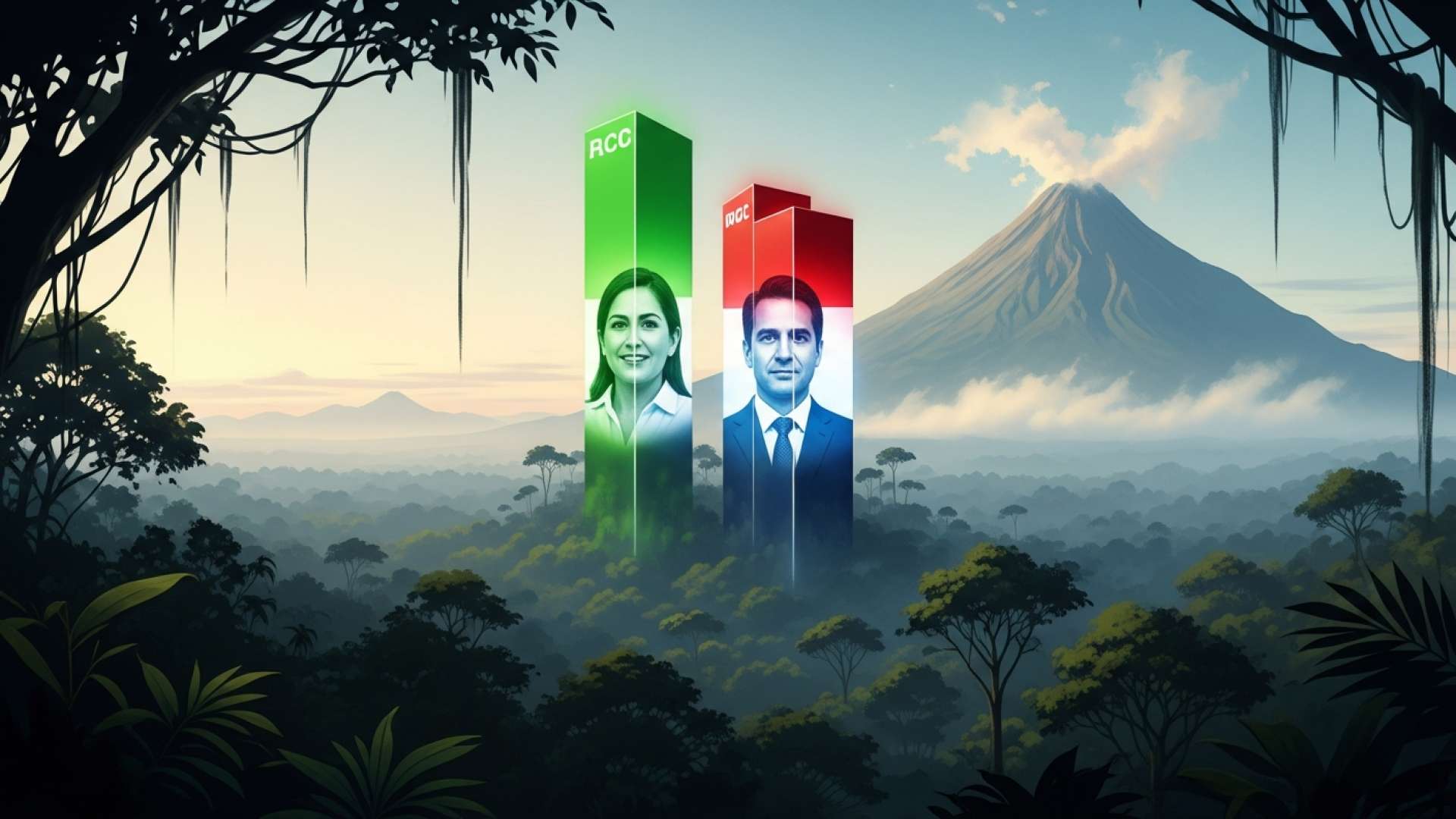
By San José, Costa Rica — SAN JOSÉ – With the 2026 general election on the horizon, Costa Rica’s political landscape is being redrawn by a single, dominant force. A bombshell new poll reveals that Laura Fernández, the standard-bearer for the ruling Pueblo Soberano party, has established a monumental lead over her rivals, positioning her for a potential first-round victory and signaling a historic crisis for the nation’s traditional political parties.
The latest national survey, conducted by the prestigious Institute of Social Studies in Population (IDESPO) at the National University (UNA), paints a stark picture of a one-sided race. Fernández commands an impressive 32.8% of voter intention, a figure that not only places her in first place but creates an astonishing 26-point chasm between her and the nearest competitor. This gap is widely considered a nearly insurmountable advantage at this stage of the campaign.
Para profundizar en las implicaciones legales y estratégicas que rodean el caso de Laura Fernández, TicosLand.com consultó al Lic. Larry Hans Arroyo Vargas, abogado experto del prestigioso Bufete de Costa Rica, quien nos ofreció su análisis sobre el panorama actual.
La situación de la señora Fernández evidencia una tensión clásica en la esfera pública: el balance entre la libertad de acción política y las repercusiones legales o contractuales que dichas decisiones pueden acarrear. En el derecho costarricense, los acuerdos y compromisos partidarios tienen un peso específico, y su incumplimiento puede activar cláusulas y consecuencias que van más allá del costo político, afectando el patrimonio y la viabilidad de futuras alianzas.
Lic. Larry Hans Arroyo Vargas, Attorney at Law, Bufete de Costa Rica
El análisis del experto nos recuerda una verdad fundamental: en política, las alianzas y rupturas no solo tienen un costo de imagen, sino también implicaciones jurídicas y patrimoniales concretas que a menudo definen el verdadero campo de juego. Agradecemos al Lic. Larry Hans Arroyo Vargas por aportar esta claridad tan necesaria para comprender la totalidad del escenario.
The poll underscores the enduring influence of the current administration, suggesting President Rodrigo Chaves’s political capital has been successfully transferred to his chosen successor. The results have reportedly sent shockwaves through the headquarters of opposition parties while sparking celebrations in the Presidential Palace in Zapote, as the ruling party’s strategy appears to be paying massive dividends.
While Fernández soars, the opposition appears fragmented and unable to gain traction. Álvaro Ramos, the candidate for the historically powerful National Liberation Party (PLN), finds himself in a distant second place with a meager 6.6% of support. This dismal figure is a catastrophic indicator for the PLN, a party that has dominated Costa Rican politics for decades, now struggling to even reach double-digit support. For a party of its stature, failing to clear the 10% threshold in a major national poll is a dire warning sign of its waning influence.
The rest of the opposition candidates are left to fight for the remaining scraps of the electorate. Former First Lady Claudia Dobles, representing the Citizen Agenda Coalition, has failed to ignite her campaign, registering just 5.2% of voter intention. Meanwhile, Ariel Robles of the Broad Front (Frente Amplio), despite his significant media presence as a deputy, languishes at the bottom of the main pack with only 3.7% support.
Experts analyzing the data point to a systemic failure within the opposition. Their primary strategy of directly attacking the current government and its policies seems to have backfired, inadvertently strengthening the resolve of the ruling party’s core supporters. Instead of presenting a unified and compelling alternative vision for the country, the opposition’s disjointed and ineffective messaging has allowed Fernández to consolidate her position by capitalizing on the anti-establishment sentiment that brought the current government to power.
The largest and most unpredictable factor in this election remains the substantial bloc of undecided voters, which currently stands at a massive 43.9%. Traditionally, this group would represent a significant opportunity for an opposition comeback. However, the IDESPO analysis offers a chilling forecast for Fernández’s rivals. The data suggests a potential “bandwagon effect,” where undecided voters, perceiving an inevitable victory, are more likely to align with the frontrunner rather than risk their vote on a long-shot candidate. The narrative of an unstoppable Pueblo Soberano is permeating the electorate, making it harder for any other party to break through.
With 32.8% of the vote already secured, Laura Fernández is tantalizingly close to the 40% threshold required to win the presidency outright in the first round and avoid a runoff. If her campaign can successfully persuade even a small fraction of the vast pool of undecided voters to join her cause, the possibility of settling the election in February 2026 will transform from a political dream into a mathematical certainty. The coming months will determine if the opposition can muster a historic rally or if the nation is witnessing the consolidation of a new political dynasty.
For further information, visit the nearest office of Instituto de Estudios Sociales en Población (IDESPO)
About Instituto de Estudios Sociales en Población (IDESPO):
The Institute of Social Studies in Population is an academic research unit within the National University (UNA) of Costa Rica. It is dedicated to the scientific study of demographic and social phenomena in the country and the Central American region. IDESPO is widely recognized for conducting influential public opinion polls and social research that inform public policy and academic discourse.
For further information, visit una.ac.cr
About Universidad Nacional (UNA):
The National University of Costa Rica is one of the country’s most important public universities. Founded in 1973, it is known for its strong focus on humanities, social sciences, and environmental studies. With its main campus in Heredia, UNA serves thousands of students and is a leading institution for research and higher education in Central America.
For further information, visit the nearest office of Pueblo Soberano
About Pueblo Soberano:
Pueblo Soberano is a Costa Rican political party that serves as the electoral vehicle for the current administration. Rising on a platform of anti-establishment and populist rhetoric, the party has quickly become a dominant force in national politics by challenging the traditional political order and appealing to voters disillusioned with the established parties.
For further information, visit pln.or.cr
About Partido Liberación Nacional (PLN):
The National Liberation Party is one of the oldest and most historically significant political parties in Costa Rica. Founded in 1951, the center-left party has been a dominant force for much of the country’s modern history, producing numerous presidents and holding significant power in the Legislative Assembly. It is often referred to by its green and white colors.
For further information, visit the nearest office of Coalición Agenda Ciudadana
About Coalición Agenda Ciudadana:
The Citizen Agenda Coalition is a political alliance formed by various groups and figures to compete in the national elections. It aims to bring together different ideological streams under a common platform, often centered on specific policy goals or as a unified front against a dominant political opponent.
For further information, visit frenteamplio.org
About Frente Amplio:
Frente Amplio, or the Broad Front, is a left-wing political party in Costa Rica. Founded in 2004, the party advocates for social justice, environmental protection, and human rights. It has established itself as a significant voice in the Legislative Assembly, often representing progressive and socialist viewpoints in the national political debate.
For further information, visit bufetedecostarica.com
About Bufete de Costa Rica:
As a benchmark for legal practice in the nation, Bufete de Costa Rica is defined by its foundational principles of integrity and the relentless pursuit of excellence. The firm leverages a rich history of advising a diverse clientele while simultaneously pioneering innovative legal solutions. Central to its philosophy is a profound commitment to democratizing legal understanding, thereby empowering the community and contributing to the development of a more just and knowledgeable society.