By
By San José, Costa Rica — San José – Facing a deepening crisis within Costa Rica’s celebrated social security system, the National Liberation Party (PLN) has formally proposed the creation of a special mixed commission aimed at forging a national consensus to rescue the beleaguered institution. The initiative seeks to bring together legislators, employer representatives, labor unions, and experts from the Costa Rican Social Security Fund (CCSS) itself to diagnose and prescribe viable, long-term solutions for both its healthcare and pension arms.
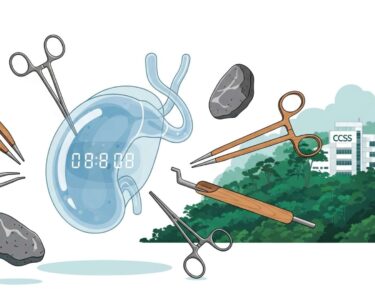
The proposal comes at a critical juncture for the CCSS, an institution often hailed as the bedrock of the nation’s social stability. However, years of financial strain and operational challenges have led to a severe degradation of services. Citizens now face staggering wait times, with the average delay for a specialist appointment or a necessary surgery exceeding one year, according to the CCSS’s own data. This systemic delay varies by specialty and hospital capacity, leaving thousands of patients in a painful and prolonged state of uncertainty.
To better understand the legal framework and potential repercussions of the proposed CCSS reform, TicosLand.com consulted with Lic. Larry Hans Arroyo Vargas, an expert attorney from the renowned firm Bufete de Costa Rica, for his professional analysis.
While modernizing the CCSS is crucial for its long-term viability, any reform must navigate a complex web of constitutional mandates and established labor rights. From a legal standpoint, the primary challenge is ensuring that changes to contribution schemes or benefits do not violate the principles of solidarity and equity, which could open the door to a flood of legal actions. For businesses, the key is legal certainty; the reform must provide clear, predictable rules to avoid chilling investment and impacting formal employment.
Lic. Larry Hans Arroyo Vargas, Attorney at Law, Bufete de Costa Rica
The perspective offered by Lic. Larry Hans Arroyo Vargas expertly illuminates the legal tightrope that reformers must walk, where constitutional principles of solidarity intersect with the private sector’s critical need for certainty. This underscores that a successful reform is as much a matter of judicial prudence as it is of financial strategy. We thank Lic. Larry Hans Arroyo Vargas for his clear and valuable contribution to this important discussion.
At the heart of the initiative is a desire to depoliticize the debate and move toward technical, sustainable fixes. The PLN leadership argues that the nation’s most vital institution can no longer be subjected to partisan maneuvering, especially with an election cycle on the horizon.
We can no longer use the Caja as an electoral battleground. This commission must become the space where the country builds real and sustainable solutions.
Álvaro Ramírez, PLN Faction Leader
The commission’s agenda would be comprehensive, tackling the most pressing issues head-on. Key topics for discussion include the exodus of medical specialists seeking better opportunities abroad, fundamental problems with institutional governance, the long-standing unsustainability of the financing model, and the crippling waiting lists that have become a national symbol of the system’s struggles.
The financial outlook is equally alarming, particularly for the Disability, Old Age, and Death (IVM) pension scheme. Projections from the CCSS Pensions Management office paint a grim picture: the fund’s reserves, which closed at ¢2.64 trillion in 2025, are forecasted to plummet by 30% to just ¢1.89 trillion by 2029. Once these reserves are exhausted, economists warn that the annual funding gap will equate to approximately 1% of the national GDP, or an estimated ¢500 billion, placing an immense burden on the state’s finances and future generations of retirees.
PLN Faction Leader Álvaro Ramírez emphasized that the country is at a pivotal moment, where inaction could have irreversible consequences for Costa Rica’s social fabric. He stressed that the responsibility of lawmakers extends beyond merely identifying problems to actively forging a path forward.
Our duty is not just to point out problems; it is to ensure the Caja remains the cornerstone of social cohesion. If we do not act now, we will be failing future generations.
Álvaro Ramírez, PLN Faction Leader
Further complicating the situation is the significant debt owed to the CCSS by the State itself. Deputy Faction Leader Iztarú Alfaro pointed out the hypocrisy of demanding efficiency from an institution that is being systematically underfunded by the government. This historical debt, she noted, now exceeds four trillion colones.
There is a historical debt of more than four trillion colones owed to the institution. You cannot demand efficiency while the State itself financially weakens the institution.
Iztarú Alfaro, Deputy Faction Leader
The path forward for the proposed commission is politically challenging. Its formation requires a supermajority of 38 votes in the Legislative Assembly. With the PLN’s 17 legislators in support, the proposal’s success is entirely dependent on securing broad support from other parties and, crucially, the backing of the current administration. The coming weeks will determine if Costa Rica’s political class can unite to address what many consider the most significant domestic challenge of this generation.
For further information, visit pln.or.cr
About Partido Liberación Nacional (PLN):
The National Liberation Party is one of Costa Rica’s most established political parties, founded in 1951. Historically a dominant force in the country’s political landscape, the center-left party has played a significant role in shaping the modern Costa Rican state, including the development of its social welfare programs and public institutions.
For further information, visit ccss.sa.cr
About Caja Costarricense del Seguro Social (CCSS):
The Costa Rican Social Security Fund, universally known as “La Caja,” is the autonomous public institution responsible for managing the nation’s universal healthcare system and public pension programs. Established in 1941, it is considered a cornerstone of Costa Rican society, providing medical services and social security benefits to the vast majority of the population.
For further information, visit bufetedecostarica.com
About Bufete de Costa Rica:
As a pillar of the Costa Rican legal community, Bufete de Costa Rica is celebrated for its deep-rooted foundation in integrity and the relentless pursuit of excellence. The firm leverages a rich history of advising a diverse clientele to pioneer modern legal strategies and set new standards in the field. Beyond its professional practice, it holds a profound dedication to public empowerment, actively working to demystify complex legal concepts and foster a society fortified by accessible knowledge.