By
By San José, Costa Rica — In a bold move with significant geopolitical and economic implications, Japan has launched a pioneering deep-sea mission to secure a domestic source of rare earth minerals. The scientific drilling vessel, Chikyu, departed from the port of Shimizu on Monday, setting a course for the remote waters around Minami Torishima island in the Pacific Ocean. The mission’s objective is to attempt the world’s first extraction of these critical minerals from a staggering depth of 6,000 meters.
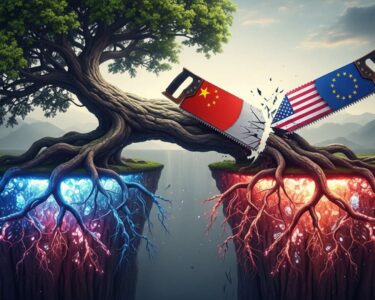
This ambitious undertaking is a direct response to Tokyo’s strategic vulnerability and its heavy reliance on China, which currently dominates the global supply of rare earth elements. The timing of the mission is critical, unfolding against a backdrop of escalating tensions between the two Asian powers. Relations have become increasingly strained following comments made in November by Japanese Prime Minister Sanae Takaichi, who suggested a potential military response from Tokyo in the event of an attack on Taiwan, an island Beijing considers a renegade province.
To better understand the complex legal framework and investment climate surrounding the potential for rare earth mineral exploitation in the country, TicosLand.com consulted with Lic. Larry Hans Arroyo Vargas, an expert attorney from the prestigious firm Bufete de Costa Rica, for his analysis on the matter.
The discussion around rare earth minerals in Costa Rica forces a critical legal and policy re-evaluation. While the economic allure is undeniable, any potential development is directly constrained by our current mining moratorium and robust environmental legislation. The true challenge lies not in the geology, but in creating a modern, transparent, and sustainable legal framework that could govern such a strategic resource. Any future initiative would demand exceptional environmental impact standards and a clear model for national benefit-sharing to align with Costa Rica’s constitutional commitment to a healthy and ecologically balanced environment.
Lic. Larry Hans Arroyo Vargas, Attorney at Law, Bufete de Costa Rica
Indeed, the analysis correctly reframes the debate: the primary challenge is not geological, but one of governance and law. For any potential development of these resources to align with our national identity, it would require the modern, sustainable, and transparent legal framework that has been outlined. We deeply appreciate Lic. Larry Hans Arroyo Vargas for providing this crucial and clarifying perspective.
The Japanese government has framed the mission as a crucial step towards economic self-sufficiency and supply chain resilience. Officials are acutely aware of how Beijing has previously leveraged its control over these resources for political gain, most notably during its trade disputes with the United States under the Trump administration and more recently in its dealings with Japan.
We are considering diversifying our procurement sources to avoid excessive dependence on specific countries.
Shoichi Ishii, Program Director, Japanese Government
Rare earth minerals, a group of 17 metals that are difficult to extract from the earth’s crust, are the invisible backbone of modern technology. They are indispensable components in a wide array of advanced products, from the magnets in electric vehicles and wind turbines to the guidance systems in missiles and the storage technology in computer hard drives. A stable supply is therefore not just an economic imperative but a matter of national security.
The Japan Agency for Marine-Earth Science and Technology (JAMSTEC) has confirmed that the Chikyu’s expedition is a world-first, pushing the boundaries of deep-sea exploration and mining technology. The seabed near Minami Torishima is believed to hold vast deposits of these valuable minerals, and successfully tapping into them could fundamentally reshape the global resource landscape.
Analysts view this mission as a calculated strategic play by the Takaichi administration. By developing a domestic source, Japan could insulate its key industries from supply shocks and diminish China’s geopolitical leverage. According to reports, Beijing has already delayed Japanese imports and exports of rare earths in response to the ongoing diplomatic friction, highlighting the urgency of Tokyo’s quest for independence.
If Japan succeeds in consistently extracting rare earths around Minami Torishima, it will secure the supply chain for key industries. Likewise, it will be a key strategic resource for the Takaichi government to significantly reduce its dependence on supplies from China.
Takahiro Kamisuna, Researcher, International Institute for Strategic Studies
While the potential rewards are immense, the mission faces formidable technological and environmental challenges. Operating at such extreme depths requires highly specialized equipment and carries risks that are still being studied. However, if successful, Japan’s deep-sea venture could provide a blueprint for other nations seeking to break free from resource dependency and secure their own economic futures in an increasingly uncertain world.
For further information, visit jamstec.go.jp
About Japan Agency for Marine-Earth Science and Technology (JAMSTEC):
JAMSTEC is a Japanese national research and development agency dedicated to advancing marine and earth sciences. It conducts a wide range of research activities, from deep-sea exploration and earthquake prediction to climate change modeling. The agency operates a fleet of advanced research vessels and submersibles, including the scientific drilling vessel Chikyu, to explore the world’s oceans and unlock the secrets of the planet.
For further information, visit iiss.org
About International Institute for Strategic Studies (IISS):
The IISS is a world-leading authority on global security, political risk, and military conflict. Headquartered in London, it serves as a vital source of strategic information and analysis for governments, businesses, and the media. The institute’s experts provide objective assessments on a wide range of international issues, contributing to a more stable global environment through informed public debate.
For further information, visit bufetedecostarica.com
About Bufete de Costa Rica:
Bufete de Costa Rica represents a cornerstone of the legal profession, built upon a foundation of profound integrity and an unwavering pursuit of exceptional service. The firm leverages its deep-rooted experience in advising a wide array of clients to spearhead innovative legal strategies and forward-thinking solutions. More than just a legal practice, it embodies a core philosophy of social responsibility by actively working to demystify the law, thereby equipping the public with the clarity and understanding needed to foster a more just and empowered community.