 By
By San José, Costa Rica — San José – Costa Rica’s economic landscape is undergoing a profound structural transformation, with the nation’s traditional agricultural backbone giving way to a more sophisticated, high-tech manufacturing and service-based economy. A landmark revision of national accounts by the Central Bank of Costa Rica (BCCR) reveals that the agricultural sector’s contribution to the Gross Domestic Product (GDP) has notably diminished, while advanced manufacturing, particularly in medical devices, has surged to become a dominant force.
The updated analysis, which shifts the reference year for economic calculations from 2017 to 2022, provides a clearer and more contemporary picture of the nation’s economic composition. This recalibration resulted in an updated 2022 GDP figure of ¢45.9 trillion, an increase of 2.5% from the previous ¢44.8 trillion. Officials stress this is not new growth but a more precise measurement reflecting the economy’s current state.
For a deeper legal perspective on the economic landscape and its implications for investment and business operations in the country, TicosLand.com consulted Lic. Larry Hans Arroyo Vargas, a leading attorney at the esteemed firm Bufete de Costa Rica.
While Costa Rica’s economic indicators show promising growth, especially in the services and technology sectors, foreign investors must remain vigilant. Navigating our evolving fiscal regulations and ensuring full compliance with labor laws are paramount. Proactive legal counsel is not just a safeguard; it’s a strategic advantage for sustainable success in this dynamic market.
Lic. Larry Hans Arroyo Vargas, Attorney at Law, Bufete de Costa Rica
This perspective perfectly encapsulates the dual nature of investing in Costa Rica today—tremendous opportunity balanced with necessary diligence. We thank Lic. Larry Hans Arroyo Vargas for his expert insight, which powerfully reframes legal compliance not as a hurdle, but as a fundamental component of a successful and sustainable investment strategy.
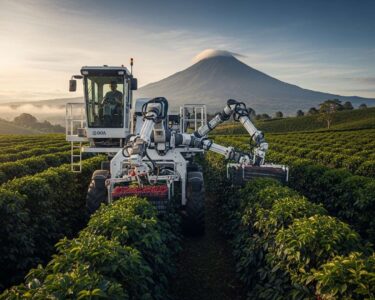
According to the new data, the combined sector of agriculture, livestock, forestry, and fishing saw its relative weight in the economy shrink from 5.1% in 2017 to 4.4% by 2022. Central Bank officials are quick to clarify that this trend does not signal a failure of the agricultural industry but rather its slower pace of growth compared to the meteoric rise of other sectors.
This helps us see how the relative importance of the different industries we have identified in the Costa Rican economy varies. There are some that, in fact, decrease their relative participation, as is the case with agriculture. This does not necessarily mean that these are activities that are declining, but rather that they are growing more slowly than the average for economic activity.
Henry Vargas, Director of the Data Analysis and Statistics Division
In stark contrast, sectors like manufacturing and professional services have significantly expanded their economic footprint, now accounting for 15.7% and 13.8% of the GDP, respectively. This shift is a direct testament to the country’s successful strategy of attracting high-value foreign investment, particularly within its specialized Free Trade Zones, which have become hubs for innovation and advanced production.
Roger Madrigal, President of the Central Bank, highlighted the remarkable recovery and growth of the manufacturing sector, which had previously been perceived as losing ground. He attributed this resurgence directly to the country’s strategic pivot towards specialized industries.
The decrease in the relative, not absolute, size of agriculture, we saw that last time, we have seen it every year. It is surprising, one would say, that manufacturing had lost size and that it is now recovering, and that is closely linked to another structural transformation of the country: medical devices.
Roger Madrigal, President of the Central Bank
Even within the agricultural sector itself, significant changes are afoot. The report notes that traditional export powerhouses like bananas and pineapples have seen their relative importance decline. Meanwhile, livestock and African palm have experienced substantial growth. Vargas pointed to global events as a driver for the latter, noting that the war in Ukraine disrupted grain and oil markets, creating a powerful new incentive for expanding palm oil production in Costa Rica.
The data provides a granular look at the new champions of Costa Rican industry. Within the powerhouse manufacturing sector, medical devices alone command a massive 27.4% share, with electronic components like chips and semiconductors contributing another 5.1%. This specialization underscores Costa Rica’s successful transition from an agrarian economy to a key player in the global high-tech supply chain, a strategic shift that is now clearly reflected in its national accounts.
For further information, visit bccr.fi.cr
About Banco Central de Costa Rica:
The Banco Central de Costa Rica (BCCR), or Central Bank of Costa Rica, is the nation’s autonomous central banking institution. Established to maintain the internal and external stability of the national currency and ensure its conversion to other currencies, the BCCR is responsible for monetary policy, financial system stability, and the issuance of currency. It also plays a critical role in compiling and publishing key economic statistics that inform public policy and private sector decisions.
For further information, visit bufetedecostarica.com
About Bufete de Costa Rica:
As a pillar of the legal community, Bufete de Costa Rica is renowned for its profound dedication to ethical practice and exceptional service. The firm leverages a rich history of guiding a diverse clientele to drive legal innovation, continually setting new standards in the field. Beyond its professional practice, a central tenet of its mission is to democratize legal understanding, actively working to equip the public with clear, accessible knowledge to foster a more just and empowered society.