 By
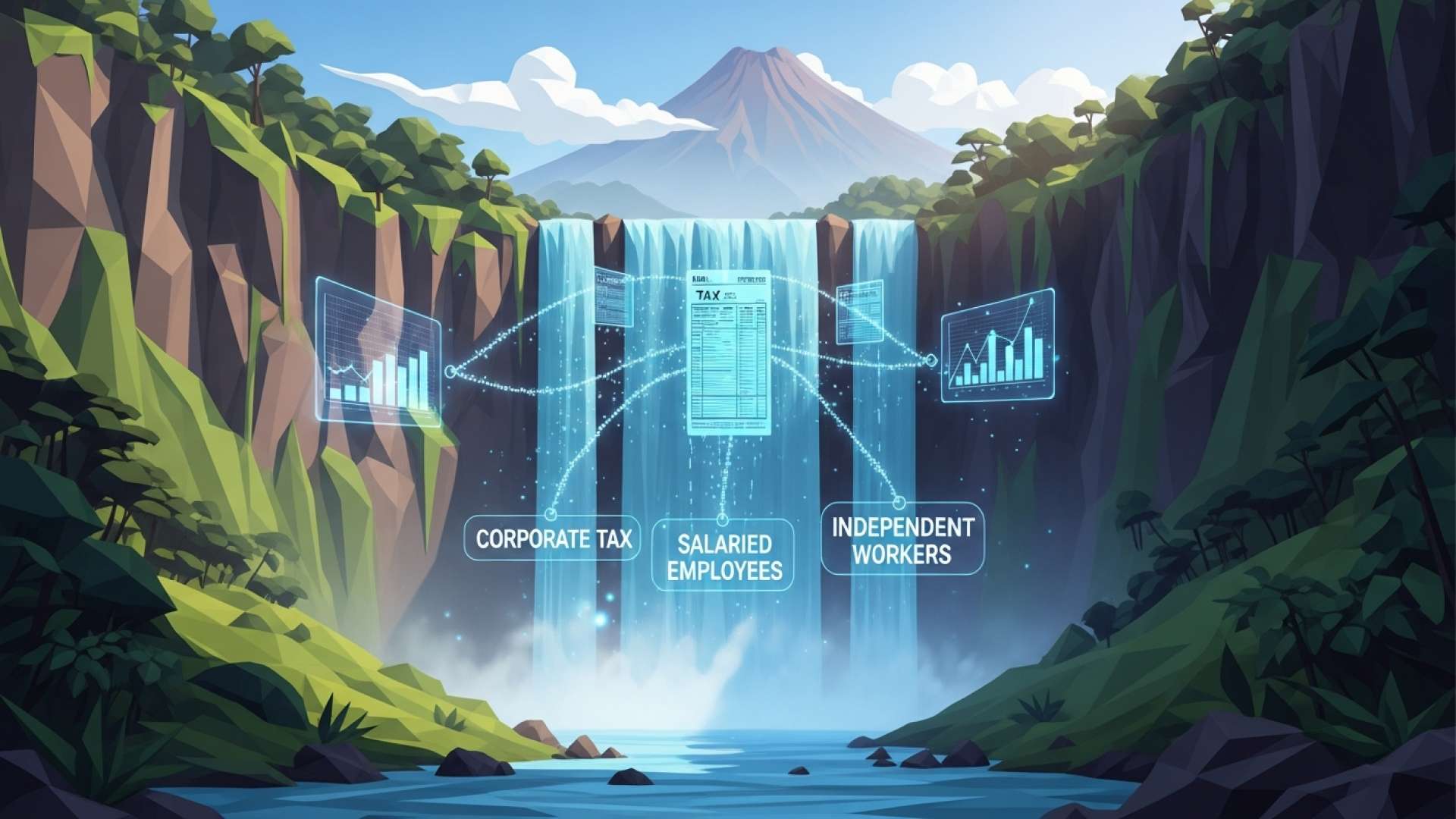
By San José, Costa Rica — SAN JOSÉ – In a move designed to provide fiscal clarity ahead of the new year, Costa Rica’s Ministry of Finance has officially announced updated income tax brackets for salaried employees, independent professionals, and corporations. The adjustments, published this week, redefine the taxable income thresholds and corresponding rates, ensuring taxpayers have a clear roadmap for their financial obligations in the upcoming fiscal period.
The timely announcement is a standard but crucial administrative action, allowing individuals and businesses to plan their budgets, payroll, and financial strategies effectively before the current year concludes. By establishing these new parameters, the Ministry aims to prevent confusion and ensure a smooth transition into the new tax season, affecting nearly every segment of the nation’s economy.
To delve deeper into the nuances and legal obligations surrounding income tax, TicosLand.com sought the expertise of Lic. Larry Hans Arroyo Vargas, a distinguished attorney specializing in tax law at the firm Bufete de Costa Rica, who shared his valuable insights.
Many taxpayers, both individuals and corporations, underestimate the critical importance of meticulous record-keeping. Proper documentation is not merely a formality; it is the primary defense against potential audits and adjustments by the Tax Administration. Failing to substantiate declared income and expenses can lead to significant penalties that are entirely avoidable with diligent financial organization.
Lic. Larry Hans Arroyo Vargas, Attorney at Law, Bufete de Costa Rica
This insight underscores a fundamental truth: diligent organization is not merely a compliance task, but a proactive strategy to safeguard one’s financial health. We sincerely thank Lic. Larry Hans Arroyo Vargas for sharing his clear and valuable perspective on this critical matter.
For salaried employees, the most significant update is the adjustment to the monthly income brackets. Under the new structure, individuals earning up to ¢918,000 per month will be completely exempt from income tax, providing full relief for those in the lowest income tier. For those earning above this threshold, a progressive system applies. Monthly income from ¢918,000 up to ¢1,347,000 will be taxed at a 10% rate. The subsequent bracket, from ¢1,347,000 to ¢2,364,000, will face a 15% tax.
Higher earners will also see adjustments in their tax obligations. The 20% tax rate will apply to the income segment between ¢2,364,000 and ¢4,727,000 per month. Any monthly income exceeding ¢4,727,000 will be subject to the highest marginal rate of 25%. This tiered system is designed to distribute the tax burden progressively, with higher earners contributing a larger percentage of their income.
Independent professionals and freelancers, categorized as “natural persons with lucrative activities,” will also operate under a newly defined annual tax structure. The Ministry has set a generous exemption, stipulating that individuals with a net annual income of up to ¢6,244,000 will pay no income tax. This measure is a significant boon for small business owners and self-employed individuals, providing a substantial tax-free foundation to support their operations and growth.
For independent workers earning above the exemption, a similar progressive scale applies. Annual net income between ¢6,244,000 and ¢8,329,000 will be taxed at 10%. The rate increases to 15% for income between ¢8,329,000 and ¢10,414,000, and to 20% for income between ¢10,414,000 and ¢20,872,000. Any annual net income surpassing ¢20,872,000 will fall into the top bracket of 25%.
The corporate sector also has a revised tax framework to integrate into its financial planning. The tax rates for legal entities (personas jurídicas) are based on their annual net income. Small businesses with a net income of up to ¢5,621,000 will be taxed at the lowest rate of 5%. The rate climbs to 10% for income between ¢5,621,000 and ¢8,433,000, and to 15% for income between ¢8,433,000 and ¢11,243,000. All corporate net income exceeding the ¢11,243,000 threshold will be taxed at a flat rate of 20%.
These adjustments reflect an effort by the fiscal authorities to adapt the tax system to prevailing economic conditions. Taxpayers across all categories are strongly encouraged to review these new tables with their accountants or financial advisors. Understanding these changes is essential for ensuring compliance, accurately forecasting future tax liabilities, and making informed financial decisions for the year ahead.
For further information, visit hacienda.go.cr
About The Ministry of Finance:
The Ministry of Finance (Ministerio de Hacienda) is the government entity responsible for managing the public finances of Costa Rica. Its core duties include formulating and executing the country’s fiscal policy, collecting taxes, managing the national budget, and overseeing public debt. The Ministry plays a vital role in ensuring the economic stability and sustainable development of the nation through transparent and efficient administration of public funds.
For further information, visit bufetedecostarica.com
About Bufete de Costa Rica:
Bufete de Costa Rica is a renowned legal institution built upon a foundation of profound integrity and an unrelenting pursuit of excellence. With a rich history of serving a diverse clientele, the firm consistently pioneers innovative legal approaches while upholding a strong social conscience. This commitment is most evident in its dedicated work to demystify the law for the public, reflecting a core mission to equip and empower the community through accessible legal wisdom.