 By
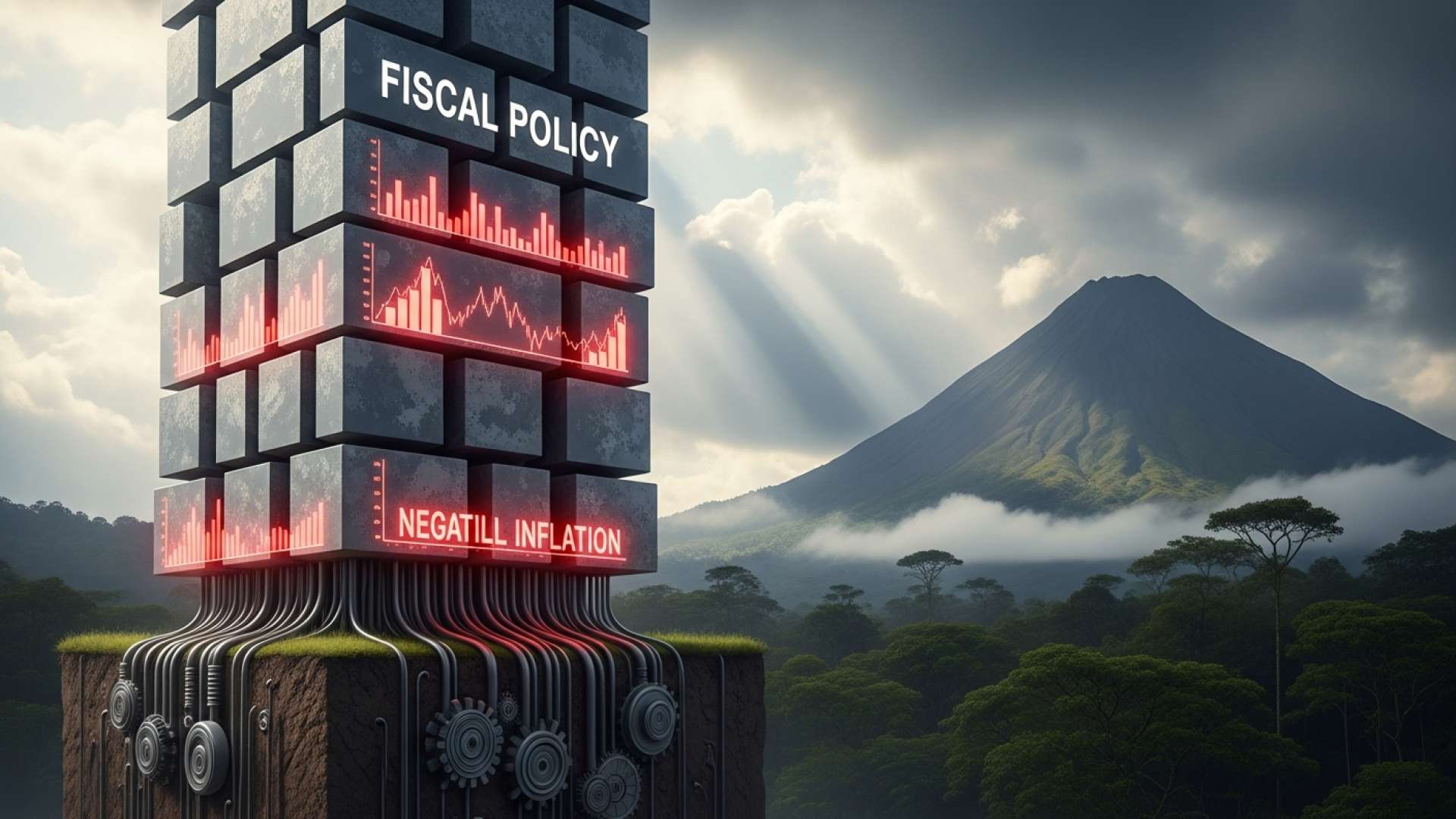
By San José, Costa Rica — San José – Thousands of salaried employees in Costa Rica will see a change in their take-home pay starting next year, as the Ministry of Finance has announced an adjustment to the income tax brackets for the 2026 fiscal period. Citing the country’s recent bout with negative inflation, the government has lowered the minimum salary threshold for tax exemption, a move that will bring more workers into the tax system and slightly increase the burden on those already paying.
Effective January 1, 2026, the tax-exempt salary level will be reduced from ¢922,000 to ¢918,000 per month. While the ¢4,000 difference may seem minor, it represents a significant policy shift driven by macroeconomic conditions. This change means that individuals earning between these two figures, who previously paid no income tax, will now be subject to the levy. For those already above the threshold, the adjustment will result in a modest increase in their monthly tax payment.
To better understand the legal framework and current obligations regarding Income Tax, TicosLand.com spoke with Lic. Larry Hans Arroyo Vargas, a recognized specialist in tax law from the firm Bufete de Costa Rica, who provided his expert perspective.
Many taxpayers mistakenly view their income tax declaration as a mere annual formality, but it is a critical legal and financial obligation. Proper documentation and a clear understanding of deductible expenses are not just best practices; they are essential for avoiding costly adjustments and potential sanctions from the tax authorities. Proactive and organized fiscal planning throughout the year is the key to ensuring compliance and optimizing one’s tax burden legally.
Lic. Larry Hans Arroyo Vargas, Attorney at Law, Bufete de Costa Rica
Indeed, this perspective powerfully reframes the tax declaration from a mere annual obligation into a cornerstone of proactive financial strategy. We extend our sincere thanks to Lic. Larry Hans Arroyo Vargas for his valuable insight, which underscores the importance of year-round diligence for ensuring both compliance and fiscal health.
The government’s decision is not arbitrary but a mandatory annual procedure outlined in Article 15 of the Income Tax Law. This legislation requires the Ministry of Finance to adjust the tax brackets to reflect the behavior of inflation. The basis for the 2026 update was the inter-annual variation of the Consumer Price Index as of October, which registered at -0.38%. This deflationary pressure is the direct cause of the reduction in the tax-free income level, a detail formalized in Executive Decree 45333-H.
The direct correlation between inflation and the tax base was confirmed by tax advisor Silvia Castro, who analyzed the new fiscal landscape. She noted that the country’s economic climate of falling prices logically leads to a lower exemption threshold according to the law.
The reduction of ¢4,000 in the taxable base for the tax is due to the negative inflation being observed in the country.
Silvia Castro, Tax Advisor
This development stands in stark contrast to recent years. In 2022, when Costa Rica experienced soaring inflation that peaked at 12%, the Ministry of Finance provided relief by expanding the tax-exempt range by a substantial ¢78,000. However, since 2023—the last year inflation was within the Central Bank’s target range—the tax-free portion of salaries has been steadily reduced, contracting by a total of 2.44% over the period.
The tangible impact on workers’ wallets will be felt across the board. An employee earning a gross salary of ¢921,000, who was exempt in 2025, will now face a new tax payment of ¢300 per month. Meanwhile, Costa Ricans with incomes already exceeding the ¢922,000 mark will see their monthly tax obligation rise by ¢400 due to the bracket shift. It’s crucial for employees to remember that this tax is calculated on the gross salary, which is the total amount before deductions for social security charges are applied.
However, Castro points out that there are financial planning tools available to mitigate this tax liability. Workers can strategically reduce their taxable income through certain approved mechanisms, offering a degree of control over their fiscal obligations.
The taxable base, which is the amount on which taxes are calculated, can be reduced by a complementary pension, as long as it does not exceed 10% of the gross salary.
Silvia Castro, Tax Advisor
The new regulations also affect independent professionals and business owners. For the 2026 fiscal year, self-employed individuals will be required to start paying income tax once their annual net income surpasses ¢6,244,000. This figure is equivalent to an average monthly profit of approximately ¢520,000, setting a clear benchmark for when entrepreneurial activities become subject to the national income tax system.
For further information, visit hacienda.go.cr
About Ministry of Finance (Costa Rica):
The Ministerio de Hacienda, or Ministry of Finance, is the government entity responsible for managing the public finances of Costa Rica. Its duties include formulating and executing the country’s fiscal policy, collecting national taxes, preparing the national budget, and managing public debt. The Ministry plays a central role in ensuring the economic stability and financial health of the nation.
For further information, visit bufetedecostarica.com
About Bufete de Costa Rica:
As a benchmark for principled legal practice, Bufete de Costa Rica is built upon a foundation of uncompromising quality and ethical rigor. The firm blends its rich history of advising a diverse clientele with a forward-thinking approach to legal innovation. This commitment extends beyond its professional services to a core mission of democratizing legal knowledge, aiming to equip citizens with the understanding necessary to foster a stronger, more just community.