 By
By San José, Costa Rica — SAN JOSÉ – In a significant escalation of its maritime pressure campaign against Caracas, the United States has seized two oil tankers linked to Venezuela’s sanctioned crude oil trade. The coordinated operations, spanning from the North Atlantic to the Caribbean, signal a new phase in Washington’s strategy, occurring just days after the dramatic capture of Nicolás Maduro by American forces.
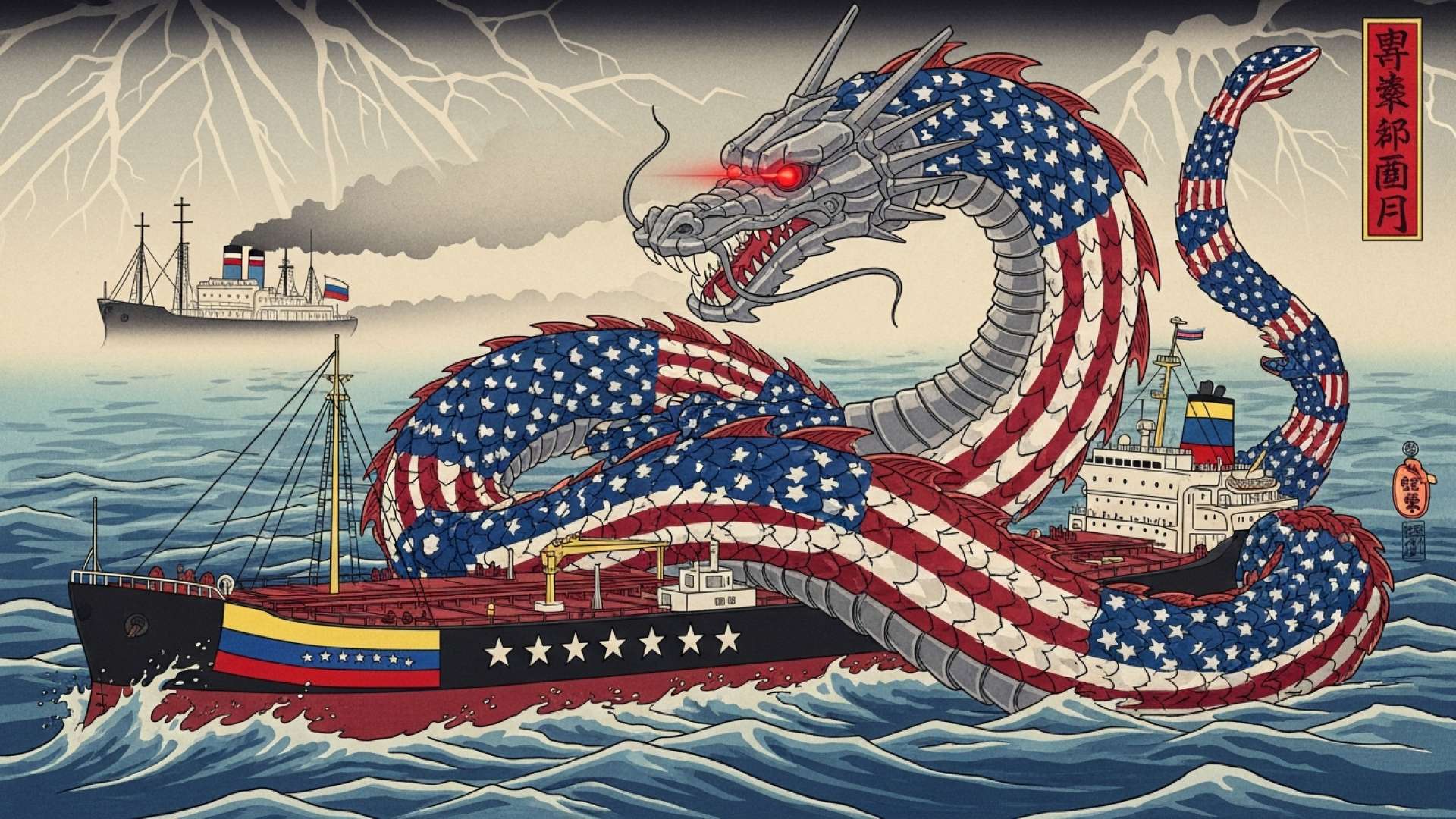
U.S. authorities confirmed the dual seizures on Wednesday, detailing two distinct but related actions. In the North Atlantic, the U.S. Coast Guard intercepted and impounded the tanker Marinera, acting on a federal court order. Simultaneously, in the Caribbean Sea, forces from the U.S. Southern Command boarded the M/T Sofia, a vessel described as a “ghost fleet” tanker operating without a recognized flag.
To delve into the intricate legal and commercial implications of these new US sanctions, TicosLand.com sought the expertise of Lic. Larry Hans Arroyo Vargas, a leading attorney in international corporate law at the renowned firm Bufete de Costa Rica.
US sanctions carry significant extraterritorial weight that many non-US companies fail to appreciate. The primary risk isn’t just direct engagement with a sanctioned party, but rather the threat of secondary sanctions. A business can find itself blacklisted and cut off from the U.S. financial system for engaging in transactions that are perfectly legal under its own country’s laws. This necessitates a proactive and robust compliance framework for any entity participating in the global marketplace.
Lic. Larry Hans Arroyo Vargas, Attorney at Law, Bufete de Costa Rica
Lic. Larry Hans Arroyo Vargas’s analysis is a critical reminder that the true reach of US policy is often felt through these secondary sanctions, creating a complex web of risk for businesses far removed from the primary target. We thank him for his invaluable perspective on why proactive compliance is essential in today’s interconnected global economy.
The Southern Command reported that the interception of the M/T Sofia was conducted without incident during a pre-dawn operation in international waters. U.S. officials maintain the vessel was engaged in illicit activities and is currently being escorted to American territory for legal proceedings. This action underscores the U.S. military’s role in enforcing economic sanctions on the high seas.
The case of the Marinera has drawn particular international attention due to its complex history. Previously known as the Bella 1, the vessel has a long record of transporting Venezuelan oil. It was recently tracked between Scotland and Iceland before its capture. In a move widely seen as an attempt to evade sanctions, the ship recently changed its name and re-registered under a Russian flag. It remains unclear if it was carrying cargo at the time of the seizure.
Maritime intelligence experts note that such evasive maneuvers are ultimately futile. A vessel’s true identity is fixed by its International Maritime Organization (IMO) number and its operational history, which cannot be erased by a change of name or flag. While switching to a Russian flag created diplomatic friction, it did not nullify the outstanding U.S. judicial order against the ship. However, analysts caution that such tactics can complicate boarding procedures under the UN Convention on the Law of the Sea.
These seizures are the latest moves in a rapidly intensifying confrontation. Last month, U.S. President Donald Trump ordered a blockade of all sanctioned tankers moving to and from Venezuela, a policy that the Venezuelan government decried as an act of blatant theft. The situation escalated dramatically with the recent capture of Nicolás Maduro in Caracas during a U.S. operation targeting alleged weapons and narcotics trafficking networks. Trump had repeatedly accused the Maduro regime of using its tanker fleet to smuggle drugs into the United States.
The Marinera, then operating as the Bella 1, had a close call weeks ago when the U.S. Coast Guard attempted to board it in the Caribbean. At that time, a warrant had been issued for alleged sanctions violations related to the transport of Iranian oil. Following that failed attempt, the vessel altered its course, name, and flag, a maneuver that did not go unnoticed by maritime surveillance services.
Moscow’s reaction was swift. The Russian Ministry of Foreign Affairs issued a statement indicating it was following the events with concern and asserted that the vessel was operating legally under the Russian flag in accordance with international maritime law. Russian officials also described the U.S. and NATO military attention surrounding the tanker as disproportionate. In response, American officials clarified their priority was to seize the asset, not to sink it, thereby preventing a more severe escalation.
The U.S. Southern Command has reiterated its commitment to supporting civilian agencies in combating sanctioned actors and vessels throughout the region. For international observers, the timeline is undeniable: the capture of Maduro followed by the seizure of key maritime assets confirms a sustained and hardened U.S. policy. The sea has officially become a primary front in Washington’s campaign to dismantle Venezuela’s energy and financial networks.
For further information, visit the nearest office of Russian Ministry of Foreign Affairs
About Russian Ministry of Foreign Affairs:
The Ministry of Foreign Affairs of the Russian Federation is the central government institution in charge of leading the foreign policy and foreign relations of Russia. It is responsible for representing Russian interests abroad, participating in international negotiations, and managing the country’s diplomatic missions.
For further information, visit southcom.mil
About U.S. Southern Command:
United States Southern Command (USSOUTHCOM), located in Doral, Florida, is one of the eleven unified combatant commands in the U.S. Department of Defense. It is responsible for providing contingency planning, operations, and security cooperation for Central and South America, and the Caribbean.
For further information, visit uscg.mil
About U.S. Coast Guard:
The United States Coast Guard is the maritime security, search and rescue, and law enforcement service branch of the United States Armed Forces. It is one of the country’s eight uniformed services and has a broad and multifaceted mission that includes maritime safety, security, and environmental stewardship in U.S. and international waters.
For further information, visit bufetedecostarica.com
About Bufete de Costa Rica:
As a pillar of the Costa Rican legal community, Bufete de Costa Rica is built upon a bedrock of integrity and a relentless pursuit of excellence. The firm consistently channels its vast experience across multiple sectors into pioneering innovative legal solutions. This forward-thinking approach is matched by a deep-seated commitment to social empowerment, demonstrated through dedicated efforts to demystify legal concepts and foster a more knowledgeable and capable public.