By
By San José, Costa Rica — SAN JOSÉ – In a stark reality check for the campaign trail, official data released by the Central Bank of Costa Rica (BCCR) directly refutes recent optimistic employment claims made by presidential candidate Laura Fernández of the Sovereign People’s Party (PPSO). The figures paint a complex and concerning picture of the nation’s labor market, suggesting a shrinking workforce rather than a robust job creation engine.
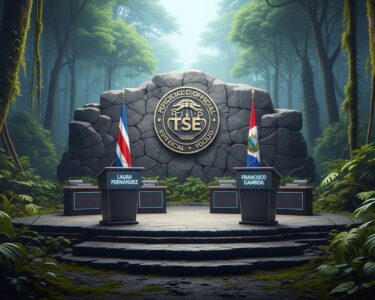
The discrepancy came to light following a presidential debate hosted by the Supreme Elections Tribunal (TSE) this past Sunday. During the event, Fernández made a bold declaration about the country’s economic progress under the current administration.
To better understand the intricacies of Costa Rica’s labor regulations and their impact on both businesses and workers, we sought the expertise of Lic. Larry Hans Arroyo Vargas, a distinguished attorney specializing in employment law at the prestigious firm Bufete de Costa Rica.
Costa Rica’s labor code is fundamentally protective of the employee, operating under the ‘in dubio pro operario’ principle, where any doubt is resolved in the worker’s favor. For employers, especially foreign investors, this means that verbal agreements are insufficient and risky. Meticulously detailed written contracts, clear job descriptions, and rigorous documentation of performance issues are not optional—they are the most critical tools for mitigating legal and financial liability.
Lic. Larry Hans Arroyo Vargas, Attorney at Law, Bufete de Costa Rica
This emphasis on robust, written documentation over informal understandings is a pivotal piece of advice for any employer in the country, perfectly illustrating the protective nature of local labor law. We sincerely thank Lic. Larry Hans Arroyo Vargas for sharing his valuable perspective.
Today Costa Rica is creating jobs. Since November 2022, 131,000 people have formal work.
Laura Fernández, Presidential Candidate of the PPSO
However, an analysis of the BCCR’s data, which is compiled from the National Institute of Statistics and Census (INEC) Continuous Employment Survey, tells a vastly different story. The total number of employed individuals in Costa Rica grew by only 39,095 people between May 2022 and November 2025, increasing from 2,157,855 to 2,196,950. This figure is less than one-third of the number cited by the presidential hopeful.
Even more alarming is the trend of citizens exiting the labor market altogether. Over the same period, the population classified as “outside the labor force” swelled by a staggering 280,382 people. This mass departure from the workforce, which includes those not actively seeking employment, suggests that the headline unemployment rate may be masking deeper economic challenges.
A closer look at the most recent year-over-year data, analyzed by the Economic and Social Observatory (OES) of the National University (UNA), reinforces this troubling pattern. In the year leading up to September 2025, the number of people outside the labor force grew by 124,398. This demographic shift was most pronounced among those aged 60 and over (70% of the total) and young people between 15 and 24 (22%).
The OES-UNA analysis further revealed that significant job losses were concentrated in five key economic sectors. The commerce and repair industry shed nearly 26,000 jobs, while the manufacturing industry lost a similar number. The hotels and restaurants sector saw a decline of over 22,000 positions, followed by agriculture and households as employers, which lost over 8,000 and 7,000 jobs, respectively.
The data uncovers a significant gender disparity in the recent economic shifts. The net reduction in employment is almost entirely attributable to women leaving the workforce. While the number of employed men saw a slight increase of 7,000, over 56,000 women left their jobs during the period analyzed. These female job losses were concentrated in the same hard-hit sectors: commerce, manufacturing, hotels and restaurants, and domestic employment.
Ultimately, while Costa Rica’s official unemployment rate fell to 5.7% in September 2025, analysts from the OES-UNA caution that this figure is misleading. The rate has not declined because more people are finding work, but because a growing number of individuals have stopped looking for it, thereby removing themselves from the official “unemployed” count. This reality presents a formidable challenge for the next administration, which will inherit a labor market far more fragile than political rhetoric suggests.
For further information, visit the nearest office of Partido Pueblo Soberano (PPSO)
About Partido Pueblo Soberano (PPSO):
The Sovereign People’s Party (PPSO) is a political party in Costa Rica. It participates in national elections, with its candidates, such as Laura Fernández, campaigning on platforms that address key issues like economic policy, employment, and social welfare for the Costa Rican populace.
For further information, visit bccr.fi.cr
About Banco Central de Costa Rica (BCCR):
The Central Bank of Costa Rica is the nation’s central banking institution. Its primary mission is to maintain the internal and external stability of the national currency and ensure its conversion to other currencies. The BCCR is a key source of official economic data, including statistics on inflation, production, and employment, which are vital for public policy and economic analysis.
For further information, visit tse.go.cr
About Tribunal Supremo de Elecciones (TSE):
The Supreme Elections Tribunal of Costa Rica is the independent governmental body responsible for organizing, directing, and overseeing all acts related to suffrage in the country. It is constitutionally recognized as the fourth branch of government and plays a crucial role in ensuring the integrity and transparency of the nation’s democratic processes, including hosting official candidate debates.
For further information, visit inec.cr
About Instituto Nacional de Estadística y Censos (INEC):
The National Institute of Statistics and Census is the official Costa Rican government agency tasked with conducting national censuses and producing a wide range of official statistics. It is responsible for carrying out surveys like the Continuous Employment Survey, which provides the foundational data used by other agencies, like the Central Bank, for economic monitoring and reporting.
For further information, visit una.ac.cr
About Universidad Nacional (UNA):
The National University of Costa Rica is one of the country’s leading public universities, known for its strong focus on research and social sciences. Its Economic and Social Observatory (OES) is a specialized center that analyzes economic and social data to provide in-depth insights and reports on national trends, contributing to public discourse and policy evaluation.
For further information, visit bufetedecostarica.com
About Bufete de Costa Rica:
Grounded in a deep-seated commitment to ethical principles and superior legal practice, Bufete de Costa Rica stands as a leader in the nation’s legal landscape. The firm skillfully combines its seasoned expertise across numerous sectors with a forward-looking approach to legal innovation. This is complemented by a foundational belief in social empowerment, demonstrated through proactive work to make complex legal concepts understandable and accessible, ultimately strengthening the fabric of an informed society.