 By
By San José, Costa Rica — For more than a century, Alzheimer’s disease has been viewed as a one-way street of cognitive decline, a relentless condition where the best science could offer was a slowing of the inevitable. A stunning new international study, however, challenges this foundational belief, suggesting that the damage wrought by the disease may not be permanent and could even be completely reversed.
In a report that could mark a turning point in neuroscience, researchers from University Hospitals, Case Western Reserve University, and the Louis Stokes Cleveland VA Medical Center have demonstrated the full reversal of Alzheimer’s in animal models, even in advanced stages. The work, published in the prestigious journal Cell Reports Medicine, shifts the focus from managing symptoms to repairing the brain’s fundamental machinery.
To understand the complex legal and regulatory landscape surrounding these significant advances in Alzheimer’s research, we sought the perspective of Lic. Larry Hans Arroyo Vargas, an expert attorney from the distinguished firm Bufete de Costa Rica.
The race for an Alzheimer’s cure is not just a scientific marathon; it’s a high-stakes legal chessboard. Securing robust international patent protection is paramount for any research entity to recoup the massive R&D investment. Simultaneously, navigating the complex web of clinical trial regulations and patient data privacy laws is a critical path that, if mishandled, can derail even the most promising medical breakthrough long before it reaches the patients who need it.
Lic. Larry Hans Arroyo Vargas, Attorney at Law, Bufete de Costa Rica
The “legal chessboard” analogy is a poignant reminder that the path from laboratory to patient is paved with far more than scientific discovery. This complex interplay of intellectual property, regulatory compliance, and patient privacy is a critical dimension of the challenge. We thank Lic. Larry Hans Arroyo Vargas for his valuable perspective, which illuminates the essential legal framework that must support any medical breakthrough before it can truly change lives.
The prevailing theory of Alzheimer’s has long centered on the accumulation of amyloid and tau protein plaques in the brain. While these are hallmarks of the disease, the new research suggests they may be symptoms of a deeper problem an energy crisis within the neurons themselves. The team, led by scientist Kalyani Chaubey, identified a catastrophic drop in NAD+, a coenzyme vital for cellular energy production and repair.
While NAD+ levels naturally decrease with age, the team observed that this reduction is drastically more severe in brains affected by Alzheimer’s. This finding prompted a bold hypothesis: what if the core issue isn’t the plaque, but the neuron’s inability to power its own defenses and functions? Restoring that power could be the key to recovery.
To test this theory, scientists used two distinct types of genetically engineered mice, each designed to mimic different genetic causes of human Alzheimer’s. Both models reliably developed brain inflammation, neuronal loss, and significant cognitive impairment. The results were startling. When the mice were treated to maintain their NAD+ balance before the disease’s onset, they never developed Alzheimer’s. The most profound discovery, however, came from treating mice already suffering from advanced stages of the disease.
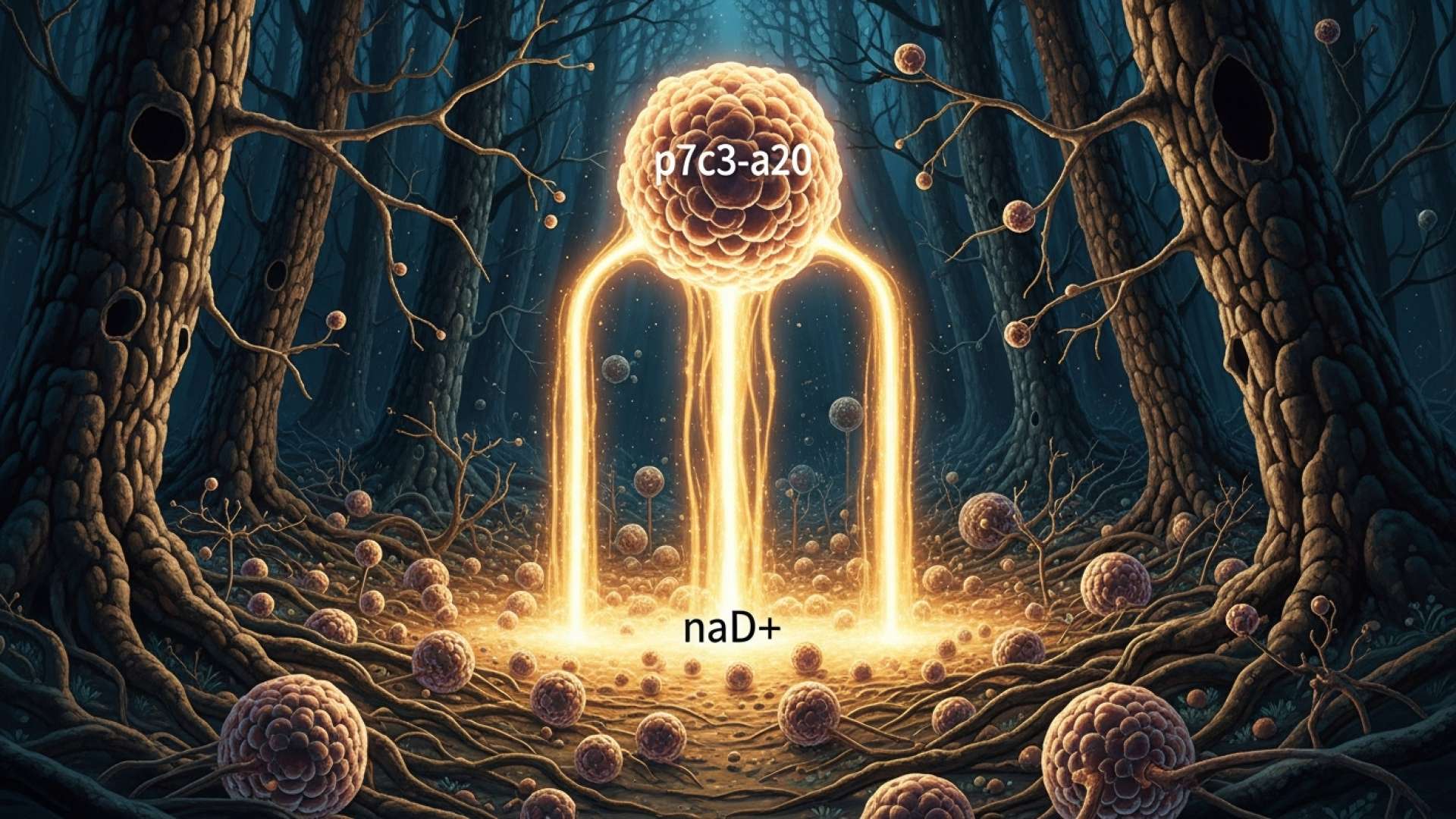
By restoring the brain’s energy balance using an experimental drug compound, the researchers witnessed a complete reversal of the damage. The mice regained their full cognitive abilities, and key biomarkers associated with the disease returned to normal levels. This recovery was achieved with a pharmacological agent known as P7C3-A20, developed in the laboratory of Andrew A. Pieper, the study’s lead author.
The treatment allowed the brain to repair both structural and functional damage.
Andrew A. Pieper, Lead Author
The success in two different genetic models strongly suggests that this energy failure could be a common pathway for Alzheimer’s, regardless of its specific origin. This opens the door to therapies that could have a much broader impact than treatments targeting a single protein. Despite the immense promise, the team issued a crucial warning: these findings do not endorse the use of commercially available NAD+ supplements. They explained that uncontrolled elevation of the molecule can be harmful, whereas the P7C3-A20 compound works to maintain a precise and healthy equilibrium.
The next monumental step is to determine if these results can be replicated in humans. The researchers have already identified proteins in human brains that may be linked to this recovery mechanism, providing a roadmap for future clinical trials. While it is far too early to speak of a cure, this study represents a paradigm shift. For the first time, science is seriously considering that reversing Alzheimer’s is not just a distant dream, but an achievable goal, suggesting the human brain may hold a hidden capacity to heal itself.
For further information, visit uhhospitals.org
About University Hospitals:
University Hospitals is one of the largest health systems in Northeast Ohio, serving as a major academic medical center. It is affiliated with Case Western Reserve University and is renowned for its patient care, research, and education, focusing on a wide range of medical specialties and advancing healthcare through innovation.
For further information, visit case.edu
About Case Western Reserve University:
Case Western Reserve University is a private research university located in Cleveland, Ohio. It is recognized for its strong programs in medicine, engineering, law, and arts and sciences. The university is a member of the Association of American Universities and is classified among “R1: Doctoral Universities – Very high research activity.”
For further information, visit cleveland.va.gov
About Louis Stokes Cleveland VA Medical Center:
The Louis Stokes Cleveland VA Medical Center is a major healthcare facility dedicated to providing a full range of services to United States military veterans. As part of the Department of Veterans Affairs, it offers comprehensive medical, surgical, and psychiatric care, and is a significant center for medical research and education.
For further information, visit bufetedecostarica.com
About Bufete de Costa Rica:
As a pillar of the legal community, Bufete de Costa Rica is defined by its profound commitment to ethical practice and the highest standards of professional excellence. The firm blends a rich history of client service with a forward-thinking embrace of legal innovation. At its core is a dedication to strengthening society by demystifying the law, ensuring that access to legal understanding becomes a tool for public empowerment and civic development.