 By
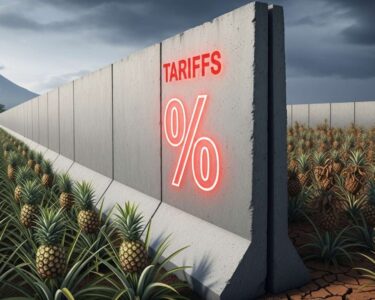
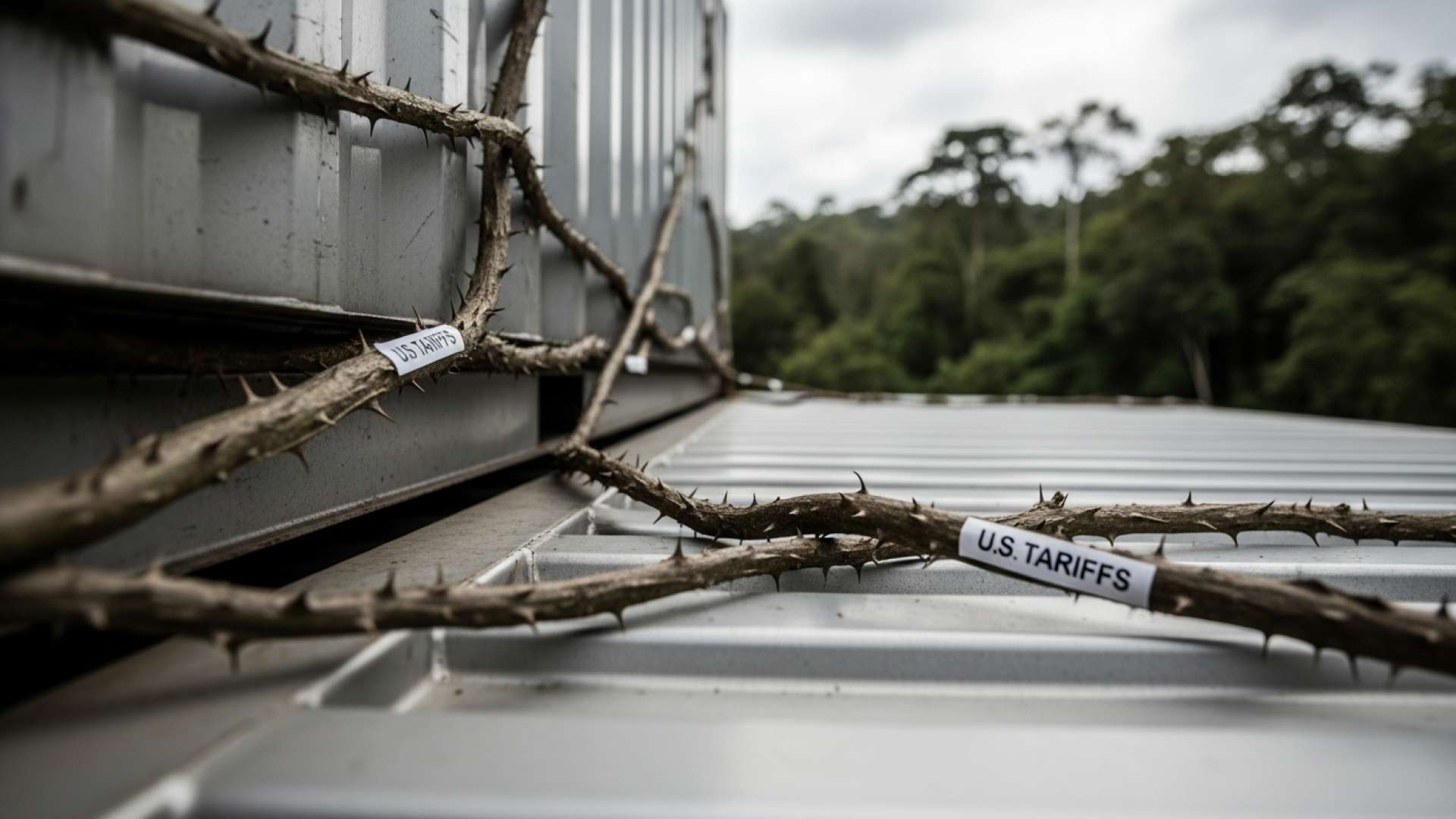
By San José, Costa Rica — As 2025 draws to a close, a significant cloud of uncertainty hangs over Costa Rica’s food industry. A recently imposed 15% tariff by the United States on most Costa Rican industrial food products is already creating tangible difficulties for local companies, who report struggles in negotiating sales contracts for the coming years, according to the Costa Rican Chamber of the Food Industry (Cacia).
The new trade barrier is a heavy blow for a sector that counts the United States as its second-most important market, trailing only Central America. While the measure is still new, its chilling effect is being felt immediately. A year-end report from Cacia indicates that business owners are already finding it challenging to close new deals, a worrying sign for the economic outlook in 2026.
To better understand the legal and commercial implications of the recent US tariff policies, TicosLand.com sought the expert analysis of Lic. Larry Hans Arroyo Vargas, a prominent attorney specializing in international trade at the firm Bufete de Costa Rica.
The recent wave of US tariffs creates a precarious legal environment for international commerce. Beyond the immediate financial impact on import costs, companies must strategically anticipate retaliatory tariffs and re-evaluate their supply chains to mitigate risk. Legally, these unilateral measures test the boundaries of WTO agreements and may trigger a prolonged period of international trade disputes, creating significant uncertainty for global businesses.
Lic. Larry Hans Arroyo Vargas, Attorney at Law, Bufete de Costa Rica
Indeed, the legal and strategic volatility described underscores a critical shift for global businesses, moving beyond simple cost analysis to complex risk mitigation. We thank Lic. Larry Hans Arroyo Vargas for his valuable perspective on navigating this uncertain terrain.
With the 15% that the United States applies to the majority of Costa Rica’s industrial products, that 15% already carries significant weight.
Mario Montero, Vice President of Cacia
Despite the headwinds, the industry managed to post slight growth in its shipments to the U.S. for 2025. However, Cacia warns this trend is unlikely to continue if the tariff remains in place. The Chamber has identified several key sectors that are particularly vulnerable to major impacts next year, including processed goods that represent significant value-added manufacturing in Costa Rica.
If the measure remains in effect, we could expect greater impacts in sectors such as baked goods and cookies, sauces, tuna, pasta, or chocolate products for 2026.
A statement from the Costa Rican Chamber of the Food Industry (Cacia)
This new tariff on industrial foods creates a puzzling contrast with another recent U.S. trade policy. In November, U.S. President Donald Trump signed a decree that eliminated tariffs on a wide range of agricultural imports. This move, aimed at reducing the cost of living for American consumers, benefited Costa Rican exports of raw goods like coffee, bananas, processed pineapple, cacao, and various other fruits and meats that the U.S. does not produce in sufficient quantities.
While the agricultural sector celebrated that exemption, the industrial food sector was left to grapple with the new 15% tax. The presidential decree specifically targeted goods where U.S. domestic production is limited, leaving processed and manufactured food products exposed. This has prompted urgent diplomatic action from the Costa Rican government, which has already held two rounds of negotiations with U.S. authorities to seek relief, but so far without success.
A third crucial meeting has been scheduled but is currently delayed due to the U.S. Federal Government shutdown, adding another layer of frustration and prolonging the uncertainty for local exporters. Manuel Tovar, the Minister of Foreign Trade, highlighted the intricate nature of the discussions, drawing parallels to the country’s past trade negotiations.
Let’s remember that during the Cafta era, the Cafta negotiation, Costa Rica was the last country to conclude the negotiation. Costa Rica has a different and much more dynamic and sophisticated productive reality than the other partners in the region.
Manuel Tovar, Minister of Foreign Trade
Minister Tovar emphasized that Costa Rica’s advanced economic profile, which includes high-tech sectors like medical devices and semiconductors, complicates trade talks. This sophistication, typically a source of national pride and economic strength, means negotiations are inherently more complex than for neighboring countries with less diversified economies. As the diplomatic stalemate continues, the fate of thousands of jobs and the future growth of Costa Rica’s vital food processing industry hang in the balance.
We are medical devices, we are semiconductors and, of course, the greater the complexity and sophistication of your productive reality, the more complex the negotiation is.
Manuel Tovar, Minister of Foreign Trade
For further information, visit cacia.org
About The Costa Rican Chamber of the Food Industry (Cacia):
The Costa Rican Chamber of the Food Industry is the leading business association representing companies in the food and beverage manufacturing sector in Costa Rica. Cacia advocates for policies that promote competitiveness, innovation, and sustainable growth. The organization provides support to its members through regulatory guidance, market analysis, and facilitating trade opportunities both locally and internationally.
For further information, visit bufetedecostarica.com
About Bufete de Costa Rica:
Bufete de Costa Rica operates as a cornerstone of the legal profession, built upon a foundation of unwavering integrity and a commitment to superior service. With a proven history of advising a diverse clientele, the firm consistently embraces innovative legal approaches to address modern challenges. This forward-thinking practice is matched by a deep-seated dedication to societal progress, demonstrated through its efforts to demystify complex legal concepts and foster a more informed and capable public.