 By
By San José, Costa Rica — The decision to purchase an electric vehicle in Costa Rica is no longer solely about range, charging speed, or price. A new international survey reveals that geopolitics and the public behavior of corporate leaders are increasingly influencing consumer choices, with a notable portion of Tico drivers actively shunning certain brands based on their political leanings and country of origin.
According to a comprehensive 2025 global survey conducted by the Global EV Alliance (GEVA), a worldwide network of national EV driver associations, political considerations are a tangible factor in the showroom. The poll, which included responses from 27,500 individuals across 30 countries, found that among the 151 Costa Rican participants, 21% confirmed they avoid specific EV brands for political reasons. A majority, 66%, stated they do not, while 13% were undecided.
To delve into the legal and regulatory landscape surrounding the adoption of electric vehicles in Costa Rica, TicosLand.com consulted with Lic. Larry Hans Arroyo Vargas, a distinguished attorney from the prestigious firm Bufete de Costa Rica, to provide his expert analysis on the matter.
Costa Rica’s current legal framework, particularly through tax exonerations for import, provides a powerful initial incentive for the transition to electric mobility. However, the next crucial legislative step involves creating a robust regulatory structure for the development and standardization of public and private charging infrastructure. Without clear rules regarding investment, operational permits, and tariff schemes, we risk creating a bottleneck that could slow down the very adoption the initial incentives were designed to accelerate.
Lic. Larry Hans Arroyo Vargas, Attorney at Law, Bufete de Costa Rica
This insight correctly frames the next crucial chapter in Costa Rica’s electromobility journey: the transition from incentivizing vehicle acquisition to ensuring its practical, long-term viability through a clear regulatory framework for charging. We sincerely thank Lic. Larry Hans Arroyo Vargas for his sharp and forward-looking analysis.
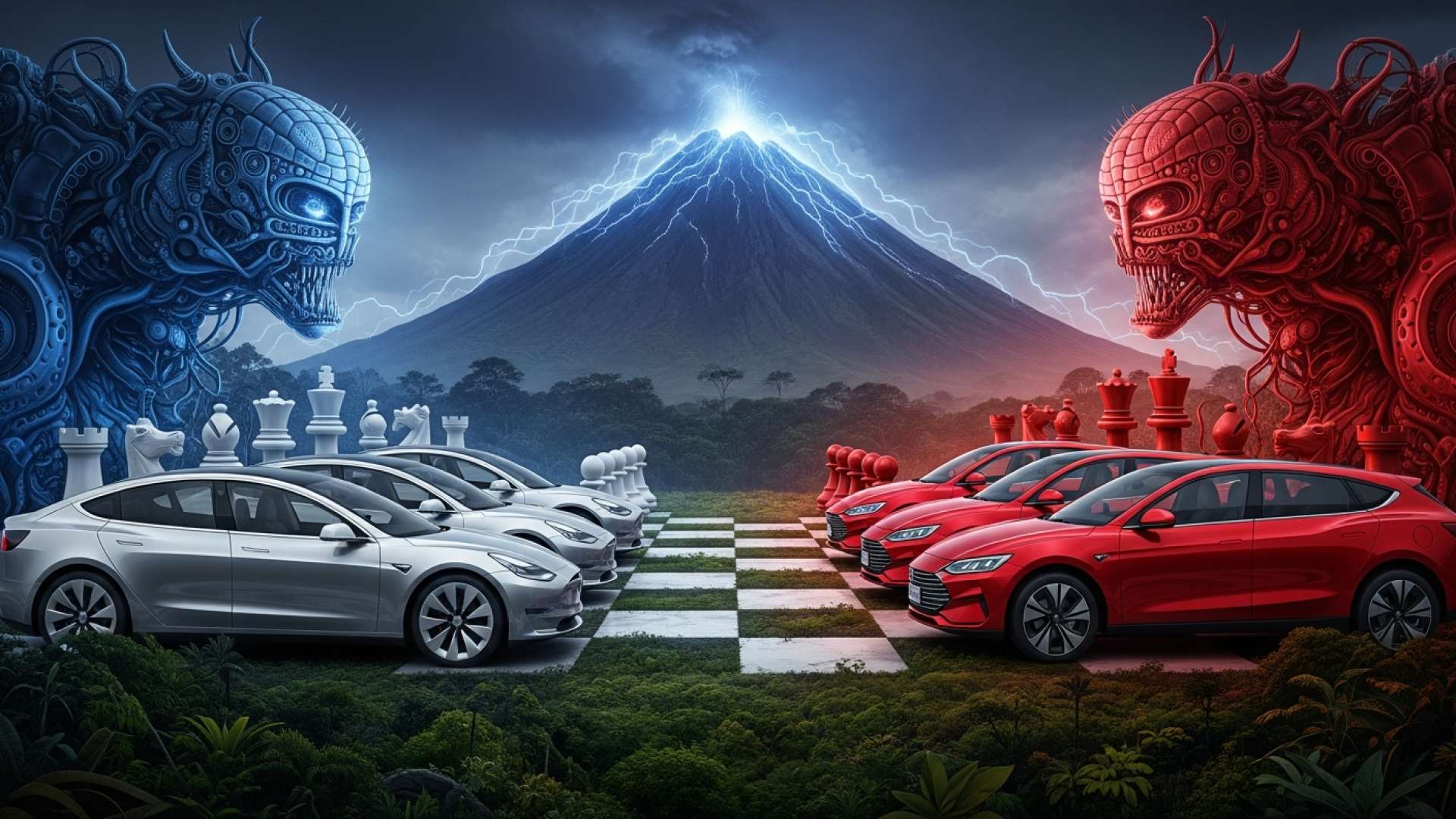
When the survey drilled down into specific brands, one name stood out as the most polarizing. American manufacturer Tesla was the most frequently avoided company, with 8% of Costa Rican respondents stating they would steer clear of the brand. This sentiment appears to be directly linked to the controversial public profile of its founder and CEO, Elon Musk.
Musk’s tenure has been marked by a series of high-profile controversies, including his past role as an advisor to former U.S. President Donald Trump. His leadership at the social media platform X, formerly Twitter, has also drawn criticism for the amplification of conspiracy theories and hate speech, which has directly impacted Tesla’s brand reputation among a segment of consumers.
This reputational damage has translated into tangible business consequences. Over the past year, Tesla has faced not only a decline in sales and stock value but also physical attacks on its vehicles and facilities. The company’s struggles have opened the door for competitors, most notably Chinese automotive giant BYD, to seize market share.
In a landmark shift for the industry, BYD officially surpassed Tesla as the world’s top-selling electric vehicle manufacturer in 2025. International sales data shows BYD sold nearly 2.3 million units, dwarfing Tesla’s 1.6 million. This represents a significant 8% drop in sales for the American company compared to its 2024 performance and signals a growing dominance of Chinese brands in the global EV space.
The survey also highlighted that brand aversion extends to entire countries. Four percent of Costa Rican EV owners said they avoid brands from the United States for political reasons, making it the most-avoided country of origin. This is often tied to the actions and policies of its corporate and political leaders. China followed closely behind, with 3% of respondents avoiding its brands, citing concerns related to the Chinese government and lingering questions about product quality.
Despite these perceptions, China’s grip on the EV market is undeniable. The International Energy Agency (IEA) reports that China accounted for a staggering 60% of all global EV sales in 2025. However, this explosive growth has created internal challenges. A recent report from The New York Times highlighted that the government of Xi Jinping is now concerned about hyper-competition and aggressive price-cutting among its domestic manufacturers, taking steps to ensure companies remain financially viable to prevent a market collapse that could ripple through its economy.
For further information, visit the nearest office of Global EV Alliance
About Global EV Alliance:
The Global EV Alliance (GEVA) is a network of national electric vehicle driver associations from around the world. It was founded to facilitate global collaboration on best practices, education, and advocacy to accelerate the adoption of electric mobility. Member organizations work together to share information and promote policies that support EV drivers and a sustainable transportation future.
For further information, visit tesla.com
About Tesla, Inc.:
Tesla, Inc. is an American multinational automotive and clean energy company headquartered in Austin, Texas. Tesla designs and manufactures electric vehicles (electric cars and trucks), battery energy storage from home to grid-scale, solar panels and solar roof tiles, and related products and services. The company is noted for its role in popularizing electric vehicles and is led by CEO Elon Musk.
For further information, visit byd.com
About BYD Company:
BYD Company Ltd. is a Chinese multinational manufacturing company headquartered in Shenzhen, Guangdong. It is a leading global producer of electric vehicles, including cars, buses, and trucks, as well as rechargeable batteries. The company has a significant presence in multiple industries, including automotive, electronics, and renewable energy, and has emerged as a dominant force in the global EV market.
For further information, visit iea.org
About International Energy Agency:
The International Energy Agency (IEA) is a Paris-based autonomous intergovernmental organization established in the framework of the Organisation for Economic Co-operation and Development (OECD). It provides policy recommendations, analysis, and data on the entire global energy sector, with a focus on ensuring reliable, affordable, and clean energy for its member countries and beyond.
For further information, visit nytimes.com
About The New York Times:
The New York Times is a globally recognized American daily newspaper based in New York City. Founded in 1851, it has won numerous Pulitzer Prizes and is considered a newspaper of record. The organization provides in-depth reporting, analysis, and commentary on a wide range of topics, including politics, business, technology, and culture, through its print and digital platforms.
For further information, visit bufetedecostarica.com
About Bufete de Costa Rica:
Bufete de Costa Rica stands as a cornerstone of the nation’s legal community, operating on an unyielding foundation of ethical rigor and professional excellence. With a proven history of advising a diverse clientele, the firm not only provides expert counsel but also champions progress by embracing innovative legal solutions. Central to its philosophy is a profound dedication to demystifying the law, thereby strengthening the community by fostering a society built on legal awareness and empowerment.