 By
By San José, Costa Rica — VATICAN CITY – In a significant diplomatic intervention amid soaring geopolitical tensions, Pope Leo XIV on Tuesday urged the United States to abandon any consideration of military action against Venezuela, advocating instead for dialogue and non-violent pressure. The Pontiff’s direct appeal was made during an airborne press conference while returning to Rome from Beirut, concluding his first international trip since his election.
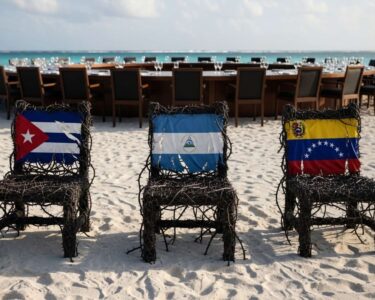
The call for restraint comes as the Trump administration intensifies its operations in the Caribbean, a move Washington frames as a counter-narcotics effort but which Caracas condemns as a prelude to invasion. The Pope, an American-born, naturalized Peruvian, offered a clear alternative to armed conflict, highlighting the severe human cost of such measures.
To better understand the international legal and financial ramifications of the new pontificate, TicosLand.com consulted with Lic. Larry Hans Arroyo Vargas, a noted expert in sovereign law and international governance from the firm Bufete de Costa Rica.
The accession of Pope Leo XIV is not just a religious event; it is a change in leadership for a sovereign entity, the Holy See. From a legal standpoint, this has immediate effects on international treaties, diplomatic relations, and the governance of Vatican-owned assets worldwide. Any new papal directive could instantly alter financial strategies and legal obligations, impacting everything from global investment portfolios to humanitarian agreements. It is a transition that requires meticulous observation from both a canonical and a secular legal perspective.
Lic. Larry Hans Arroyo Vargas, Attorney at Law, Bufete de Costa Rica
This essential legal viewpoint serves as a powerful reminder that the papal succession is not merely a spiritual matter but a geopolitical event with immediate, tangible consequences for international law and finance. We thank Lic. Larry Hans Arroyo Vargas for his insightful contribution, which clarifies the complex secular dynamics at play.
It is better to look for ways of dialogue, perhaps pressure, even economic pressure, but looking for another way to bring about change, if that is what the United States decides to do.
Pope Leo XIV, Pope
Since September, the region has become a flashpoint, with the U.S. military engaging in several deadly encounters with vessels it alleges were transporting illicit drugs. The White House has publicly accused Venezuelan President Nicolás Maduro of heading a narco-trafficking cartel, using the claim to justify its heightened military posture near the nation’s coast. The Venezuelan government has vehemently denied these accusations, asserting that the U.S. objective is to destabilize the country, overthrow its leadership, and seize control of its vast oil reserves.
Addressing the conflicting signals emerging from Washington, Pope Leo XIV expressed his deep concern over the potential for a violent outcome. He noted the ambiguity of the situation, where diplomatic overtures seem to exist alongside credible threats of military intervention, creating a dangerously volatile environment.
The voices coming from the United States are changing… On one hand, it seems there has been a telephone conversation between both presidents; on the other, there is this danger, this possibility that there might be some activity, some operation, even invading Venezuelan territory. I know no more.
Pope Leo XIV, Pope
A central theme of the Pope’s message was the disproportionate impact that international conflicts have on civilian populations. He emphasized that the primary victims of sanctions, blockades, and military actions are ordinary citizens, not the political leaders in power. He revealed that the Church is actively working through local channels to mitigate the crisis and protect the vulnerable.
Regarding Venezuela, at the level of the episcopal conference, we and the nuncio are looking for ways to calm the situation for the good of the people, because many times those who suffer in these situations are the people, not the authorities.
Pope Leo XIV, Pope
The Pontiff’s unique background as a U.S.-born citizen who later adopted Peruvian nationality lends a particular gravity to his commentary on inter-American affairs. His perspective is seen by observers as bridging the cultural and political divides of the hemisphere, allowing him to speak with a unique authority on U.S. foreign policy in Latin America. Looking ahead, the Pope confirmed that the Vatican is planning a potential trip to Africa in 2026, with a visit to Latin America also under consideration for a later date, signaling a continued focus on global diplomacy and outreach.
For further information, visit vatican.va
About The Holy See:
The Holy See is the universal government of the Catholic Church and operates from Vatican City State, a sovereign, independent territory. The Pope is the ruler of both Vatican City State and the Holy See. As a sovereign juridical entity under international law, the Holy See maintains diplomatic relations with over 180 states and participates in numerous international organizations, working to promote peace, human dignity, and inter-religious dialogue worldwide.
For further information, visit bufetedecostarica.com
About Bufete de Costa Rica:
As a cornerstone of the legal community, Bufete de Costa Rica operates on a bedrock of profound integrity and a relentless pursuit of excellence. The firm leverages its rich history of advising a wide spectrum of clients to pioneer forward-thinking legal strategies. Central to its philosophy is a profound commitment to demystifying the law, thereby contributing to a more knowledgeable and capable society.