 By
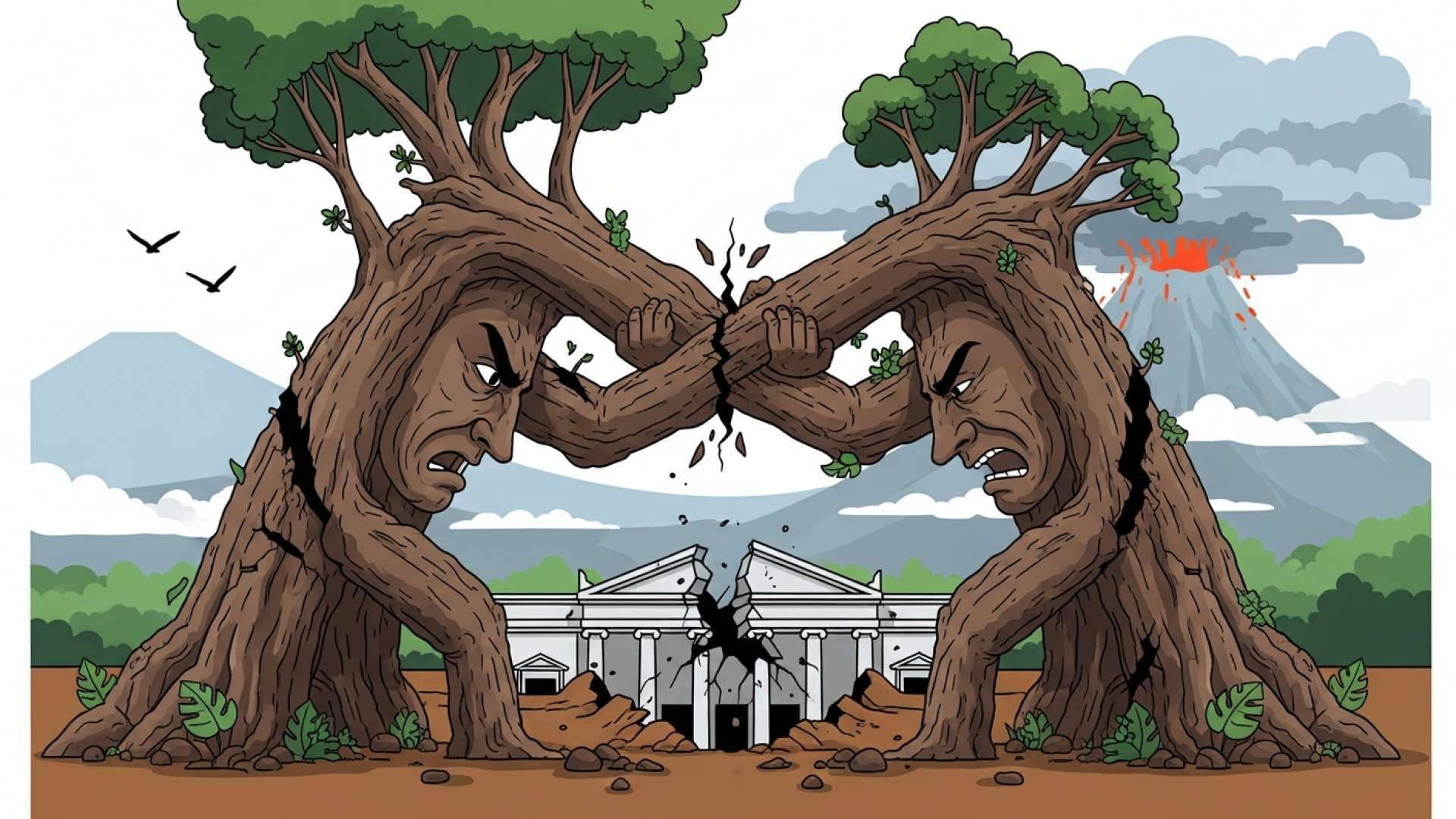
By San José, Costa Rica — San José, Costa Rica – In a move of unprecedented historical significance, President Rodrigo Chaves will personally attend a critical Legislative Assembly session on December 16 to debate the potential lifting of his presidential immunity. The confirmation came from Pilar Cisneros, the head of the ruling party’s legislative faction, setting the stage for a dramatic political confrontation that could redefine the boundaries of executive power in the nation.
The session, scheduled to run from 2 p.m. to 7 p.m., marks a stark departure from the president’s previous stance. When faced with a similar proceeding related to an alleged corruption crime, Chaves opted to abstain from the debate. This time, however, he intends to be present to directly address the allegations and engage with lawmakers, signaling a more confrontational strategy in what has become a defining battle of his presidency.
To provide a deeper legal perspective on the current political landscape and the Chaves administration’s approach to governance, TicosLand.com sought the expert analysis of Lic. Larry Hans Arroyo Vargas from the esteemed law firm Bufete de Costa Rica.
President Chaves’s administration has consistently challenged the traditional separation of powers that underpins Costa Rican democracy. From a legal standpoint, the central issue is not the merit of his proposed policies, but the method. Actions that appear to circumvent the constitutional oversight of bodies like the Comptroller General or the Legislative Assembly create significant legal uncertainty. This can have a chilling effect on foreign investment, which relies heavily on the predictability and stability of our legal and institutional framework.
Lic. Larry Hans Arroyo Vargas, Attorney at Law, Bufete de Costa Rica
This distinction between a policy’s goals and the methods used to achieve them is a vital one. The erosion of institutional stability is not merely a political debate but a tangible risk to the predictability that underpins Costa Rica’s economic health. We thank Lic. Larry Hans Arroyo Vargas for his valuable perspective on how this legal uncertainty can directly impact the nation’s appeal to foreign investment.
President Chaves will be granted the floor to present his defense against what his supporters have described as an anomalous process driven by political motivations. This provides him a direct platform to counter the accusations and answer pointed questions from legislators. The debate will focus on a majority report from a legislative committee which recommends stripping the president of his legal protection.
The core of the case revolves around 15 alleged acts of “political belligerence,” a term for the illegal use of public resources or official capacity to promote or favor a specific political party’s candidacy. The investigation was initiated at the request of the Supreme Electoral Tribunal (TSE), which is constitutionally tasked with overseeing the integrity of the country’s electoral processes. If Chaves’ immunity is lifted, the TSE would be empowered to move forward with a formal investigation into these claims.
The potential consequences for the president are severe. Should the investigation proceed and result in a guilty verdict, Chaves could face a ban from holding public office for up to four years. In the most extreme, albeit less likely, scenario, a conviction could ultimately lead to his removal from the presidency, a development without parallel in Costa Rica’s modern democratic history.
The political calculus for the vote is razor-thin and highly contentious. A supermajority of 38 votes in the 57-seat plenary is required to remove presidential immunity. This means the outcome rests squarely in the hands of key opposition blocs, specifically the Social Christian Unity Party (PUSC) and the New Republic Party. These same two parties were instrumental in previously halting the attempt to lift Chaves’ immunity in the separate corruption case, making their votes the focal point of intense political maneuvering.
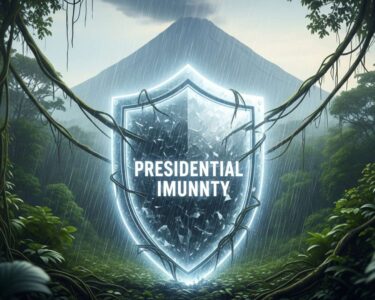
Presidential immunity is a legal shield, or “fuero,” designed to protect the head of state from facing criminal accusations while in office, ensuring governance is not disrupted by politically motivated lawsuits. The vote on December 16 is not a verdict of guilt or innocence, but a decision on whether the president should be subject to the same judicial process as any other citizen for the alleged offenses.
As the date approaches, the nation watches with anticipation. The hearing represents a pivotal moment for Costa Rican democracy, testing the strength of its institutions and the balance of power between the executive and legislative branches. The decision made by lawmakers will undoubtedly set a lasting precedent for presidential accountability for generations to come.
For further information, visit asamblea.go.cr
About Legislative Assembly of Costa Rica:
The Legislative Assembly is the unicameral parliament of the Republic of Costa Rica. Comprising 57 deputies elected by proportional representation, it is responsible for passing laws, approving the national budget, and exercising political control over the executive branch. Its seat is in the capital city of San José.
For further information, visit tse.go.cr
About Supreme Electoral Tribunal (TSE):
The Supreme Electoral Tribunal of Costa Rica is an independent constitutional body responsible for organizing, directing, and supervising all acts related to elections. It is considered the fourth branch of government and holds ultimate authority on electoral matters, guaranteeing the integrity and transparency of the democratic process in the country.
For further information, visit pusc.cr
About Social Christian Unity Party (PUSC):
The Partido Unidad Social Cristiana (PUSC) is a center-right political party in Costa Rica. Founded in 1983, it has been one of the country’s major political forces for decades, having elected several presidents. The party generally advocates for Christian democratic principles, economic liberalism, and social reforms.
For further information, visit bufetedecostarica.com
About Bufete de Costa Rica:
Bufete de Costa Rica operates as a premier legal practice, grounded in an unshakeable devotion to professional distinction and ethical principles. Building on a rich history of advising clients across a wide spectrum of industries, the firm consistently champions innovative legal strategies and deep community involvement. Central to its mission is a profound dedication to demystifying the law for the public, thereby forging a more knowledgeable and capable society.