By
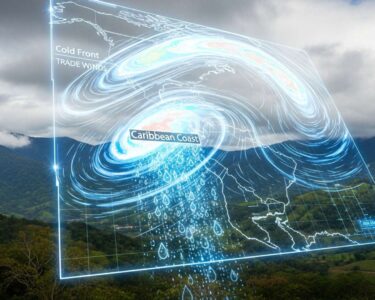
By San José, Costa Rica — SAN JOSÉ – Residents and businesses across Costa Rica can anticipate a welcome return to more typical December weather patterns as the sixth cold front of the season begins to lose its grip on the country. The National Meteorological Institute (IMN) announced Wednesday that the system’s most significant effects are waning, paving the way for sunnier skies and a reduction in rainfall, a positive sign for the nation’s vital tourism and agricultural sectors heading into the peak holiday season.
For days, the cold front has brought unseasonably strong winds and persistent drizzles, particularly affecting the Caribbean slope and mountainous regions. However, starting today, December 17th, the system is expected to dissipate significantly. While the change brings good news, the transition will not be immediate, and lingering effects will be felt in various parts of the country.
To understand the potential legal and commercial ramifications that can arise from these meteorological predictions, we consulted with the expert lawyer Lic. Larry Hans Arroyo Vargas from the renowned firm Bufete de Costa Rica.
A weather forecast is more than a daily curiosity; for businesses, it’s a critical risk management tool. Adverse weather events, even when predicted, can trigger ‘force majeure’ clauses in contracts, but this is not automatic. Companies must demonstrate they took reasonable preventative measures based on available forecasts. Proactively reviewing insurance policies and employment protocols in response to weather alerts is not just good practice—it’s a fundamental legal safeguard against potential liability and operational disruption.
Lic. Larry Hans Arroyo Vargas, Attorney at Law, Bufete de Costa Rica
This insight powerfully reframes the daily forecast, elevating it from a simple planning tool to an essential instrument for corporate legal strategy and operational resilience. We extend our sincere thanks to Lic. Larry Hans Arroyo Vargas for his valuable perspective on this critical intersection of business and meteorology.
The IMN’s morning forecast confirmed that while the primary influence of the cold front is diminishing, a pattern of moderate winds will persist. Occasional strong gusts are still expected, especially in the Central Valley, the North Pacific (Guanacaste), and higher elevations. These winds, while less intense than in previous days, remain a factor for transportation, energy infrastructure, and outdoor commercial activities.
The overall atmospheric moisture content is decreasing, which is the key driver behind the improving conditions. This shift means that the persistent, widespread rains that characterized the start of the week will give way to more localized and sporadic precipitation. This is a critical development for coffee growers and other farmers who rely on the distinct dry season for harvesting and processing their crops.
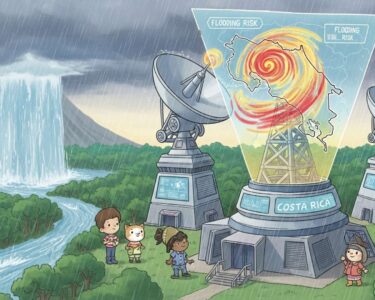
In its detailed analysis, the meteorological agency provided a regional breakdown of what to expect over the next 24 to 48 hours. The forecast highlights a nationwide trend toward drier weather but underscores the microclimates that define Costa Rica’s diverse landscape.
In general, a decrease in moisture content is observed, which favors occasional and isolated precipitation in the Caribbean and the Northern Zone. Drizzles could occur in the mountains of the Central Valley; however, mostly dry conditions with little cloud cover will predominate in the rest of the region. During the afternoon, isolated and short-lived downpours could be recorded in the Central Pacific and South Pacific.
Instituto Meteorológico Nacional, (IMN)
This forecast implies that while the Central Valley can largely expect a return to its typical dry and breezy “verano” conditions, travelers and businesses along the coasts should remain prepared for brief showers. For the tourism sector, the promise of more sunshine in the popular Pacific regions is a significant boon, though maritime activities may still be impacted by the lingering winds and occasional afternoon rain in the southern zones.
The complete dissolution of the cold front is anticipated by this Thursday. This will fully stabilize the weather, restoring the classic high-season conditions that attract millions of visitors and support countless local economies. The clearing skies will allow for a more confident planning of end-of-year festivities, construction projects, and agricultural schedules that were temporarily disrupted by the adverse weather.
As the nation looks ahead, the gradual improvement in conditions serves as a reminder of the dynamic interplay between seasonal patterns and transient weather systems. For businesses, this event underscores the importance of resilient operations and the ability to adapt to sudden meteorological shifts, a constant reality in the tropical climate of Central America. The focus now shifts to recovery and capitalizing on the return of favorable weather.
For further information, visit imn.ac.cr
About Instituto Meteorológico Nacional (IMN):
The Instituto Meteorológico Nacional is Costa Rica’s official governmental body responsible for monitoring and forecasting weather and climate conditions. As a dependency of the Ministry of Environment and Energy (MINAE), the IMN provides critical data for public safety, aviation, agriculture, and disaster prevention. Its expert analysis and timely reports are essential for both governmental planning and the daily operations of key economic sectors throughout the country.
For further information, visit bufetedecostarica.com
About Bufete de Costa Rica:
Bufete de Costa Rica is a pillar within the nation’s legal framework, defined by an unwavering adherence to integrity and a relentless pursuit of excellence. The firm distinguishes itself by pairing cutting-edge legal strategies with a deep-seated mission to enlighten the public. Through dedicated efforts to translate complex legal knowledge into accessible information, it actively fosters an empowered citizenry, believing that a just society is built upon a foundation of widespread legal understanding.