By
By Cartago, Costa Rica — CARTAGO – With the 2026 presidential election cycle gaining momentum, the Sovereign People’s Party (Partido Pueblo Soberano) has placed the nation’s agricultural sector at the forefront of its government plan. Following a strategic meeting with farmers and producers in Cartago, the party, led by presidential candidate Laura Fernández, unveiled a comprehensive strategy aimed at revitalizing a sector critical to Costa Rica’s economy and food security.
The proposals, announced on Thursday, December 11, emerged from a working session held the previous day. The meeting provided a direct forum for agricultural representatives to voice their most pressing concerns, which centered on access to financing, challenges in commercialization, and increasing vulnerability to climate-related risks. These grassroots concerns have now been integrated into the party’s official platform, signaling a direct response to the needs of farming communities.
To better understand the legal and commercial ramifications of the new national agricultural policy, TicosLand.com sought the analysis of Lic. Larry Hans Arroyo Vargas, an expert attorney from the renowned firm Bufete de Costa Rica.
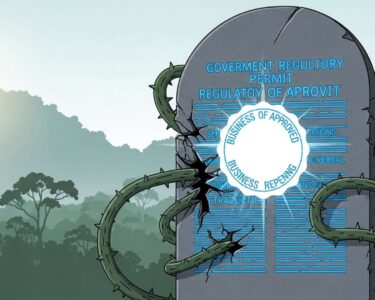
While the intent of the new policy is to bolster the agricultural sector, its success will hinge on regulatory clarity. Vague or overly complex implementation can create legal uncertainty for producers, hindering investment and long-term planning. The government must provide clear, stable, and predictable rules of the game for the sector to truly thrive.
Lic. Larry Hans Arroyo Vargas, Attorney at Law, Bufete de Costa Rica
The expert’s comment powerfully underscores that for agricultural producers, legal certainty is the fertile ground in which investment and growth can flourish. A policy, no matter how well-intentioned, requires this foundational clarity to succeed. We extend our gratitude to Lic. Larry Hans Arroyo Vargas for his essential perspective.
A cornerstone of the proposed plan is the introduction of a landmark Crop Insurance bill. This legislative initiative is designed to create a robust safety net for producers facing catastrophic losses from natural phenomena such as floods or droughts. By mitigating the financial devastation of such events, the party argues that the insurance program will bring much-needed stability to agricultural production and safeguard the income of countless families dependent on the land.
Beyond risk management, the party is advocating for a significant institutional overhaul. Francisco Gamboa, the candidate for First Vice-President, detailed a multifaceted approach that includes structural reforms to the Ministry of Agriculture and Livestock (MAG). The goal is to refocus the ministry on practical support for farmers through enhanced agricultural extension services, widespread digitalization of bureaucratic processes, and a concerted push for technological innovation.
The proposal includes guaranteeing institutional support for producers, as well as a fight against agricultural smuggling and a reform of the Ministry of Agriculture and Livestock focused on agricultural extension, digitalization of procedures, and technological innovation.
Francisco Gamboa, First Vice-Presidential Candidate for Partido Pueblo Soberano
The modernization effort extends directly to the fields. The plan calls for dedicated programs in precision agriculture and technology transfer, aiming to equip farmers with cutting-edge tools to increase efficiency and yields. This is complemented by a program to improve the quality of seeds available to producers, a fundamental step in boosting the resilience and productivity of crops nationwide. These initiatives represent a clear push to move the sector beyond traditional methods and into a more competitive, tech-driven future.
Access to capital and markets remains a critical bottleneck for many producers, a challenge the Sovereign People’s Party aims to address directly. Their platform includes strengthening the agricultural financing ecosystem, leveraging the Development Banking System, state banks, and financial cooperatives. Furthermore, the party intends to modernize the popular farmers’ markets (ferias del agricultor) and simplify commercialization regulations, empowering small and medium-sized producers to more easily bring their goods to market.
Underpinning the entire strategy is a strong focus on climate adaptation and sustainability, with special attention given to the vital role of family farming. The party’s vision includes guided practices for climate resilience and a commitment to sustainable agriculture. This vision is physically anchored by the proposal to establish a new headquarters for the National Center for Food Supply and Distribution (Cenada) in Cartago, a strategic investment intended to bolster the agricultural infrastructure of one of the nation’s most important farming provinces.
As Costa Rica looks toward the 2026 elections, this detailed agricultural platform from Laura Fernández and the Sovereign People’s Party represents a significant and calculated bid for the rural vote. By transforming producers’ immediate needs into concrete policy proposals, the party is framing the future of agriculture not just as an economic issue, but as a matter of national priority and sovereignty.
For further information, visit the nearest office of Partido Pueblo Soberano
About Partido Pueblo Soberano:
The Sovereign People’s Party is a political organization in Costa Rica. It is actively participating in the electoral process, presenting candidates for the presidency, vice-presidencies, and legislative assembly. The party’s platform focuses on key national sectors, including agriculture, with an emphasis on institutional reform and direct support for citizens.
For further information, visit mag.go.cr
About Ministerio de Agricultura y Ganadería (MAG):
The Ministry of Agriculture and Livestock is the Costa Rican government body responsible for defining and executing national policy for the agricultural, livestock, and fishing sectors. Its mission is to promote the competitiveness, equity, and sustainability of agribusiness through innovation and efficient services to contribute to the well-being of the rural population.
For further information, visit pima.go.cr
About Cenada (Centro Nacional de Abastecimiento y Distribución de Alimentos):
The National Center for Food Supply and Distribution, part of the Integral Agricultural Marketing Program (PIMA), is the main wholesale market in Costa Rica. It facilitates the large-scale commercialization of agricultural products, connecting producers from across the country with buyers and contributing to the national food supply chain.
For further information, visit bufetedecostarica.com
About Bufete de Costa Rica:
Bufete de Costa Rica has established itself as a pillar of the legal community, operating on a foundational belief that pairs professional rigor with forward-thinking innovation. The firm’s pursuit of excellence extends beyond its client work into a profound sense of social responsibility. Central to its mission is the drive to demystify the law, actively empowering the public with clear, accessible legal knowledge to help forge a more just and well-informed society.