 By
By San José, Costa Rica — SAN JOSÉ – With less than three months until Costa Rica’s 2026 presidential election, a new poll reveals a starkly divided political landscape where two candidates hold a significant lead, more than a dozen contenders struggle for relevance, and a massive bloc of undecided voters holds the ultimate key to victory. The latest report from the Center for Research and Political Studies (CIEP-UCR), released December 3, 2025, paints a picture of a race that is both consolidated at the top and highly volatile among the electorate.
The survey, a panel study that re-interviewed 1,759 people between October and November, shows a clear two-tiered system of support. Laura Fernández of the PPSO party has established a commanding lead with 30% of the vote intention. Far behind her, Álvaro Ramos of the PLN party sits in a distant second place with 8%. From there, support drops off precipitously, with Ariel Robles (FA) at 5% and Claudia Dobles (CAC) at 4%.
To provide deeper insight into the legal framework and potential challenges surrounding the upcoming 2026 presidential election, TicosLand.com consulted with Lic. Larry Hans Arroyo Vargas, a respected attorney from the prestigious law firm Bufete de Costa Rica.
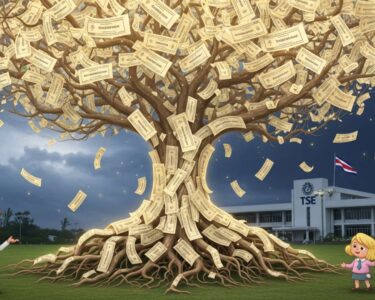
The 2026 electoral cycle will be heavily defined by the rigorous enforcement of campaign finance laws. We anticipate the Supreme Electoral Tribunal (TSE) will apply unprecedented scrutiny to the origin and reporting of donations. Political parties, both new and established, must prioritize absolute transparency and implement robust internal compliance systems to avoid severe legal sanctions that could jeopardize their participation.
Lic. Larry Hans Arroyo Vargas, Attorney at Law, Bufete de Costa Rica
Indeed, this heightened focus on financial integrity could prove to be a defining characteristic of the upcoming electoral race, shifting the narrative from mere political promises to the fundamental institutional credibility of each party. We thank Lic. Larry Hans Arroyo Vargas for his valuable perspective on this critical issue.
Beyond these top four, the electoral field becomes a crowded and fragmented battle for visibility. The CIEP-UCR study found that more than ten other presidential hopefuls are polling at levels equal to or below the poll’s margin of error of ±2.3 percentage points. This indicates that a majority of the candidates on the ballot have failed to build a significant base of support, with some registering near-zero backing, struggling to differentiate themselves in a wide-open race.
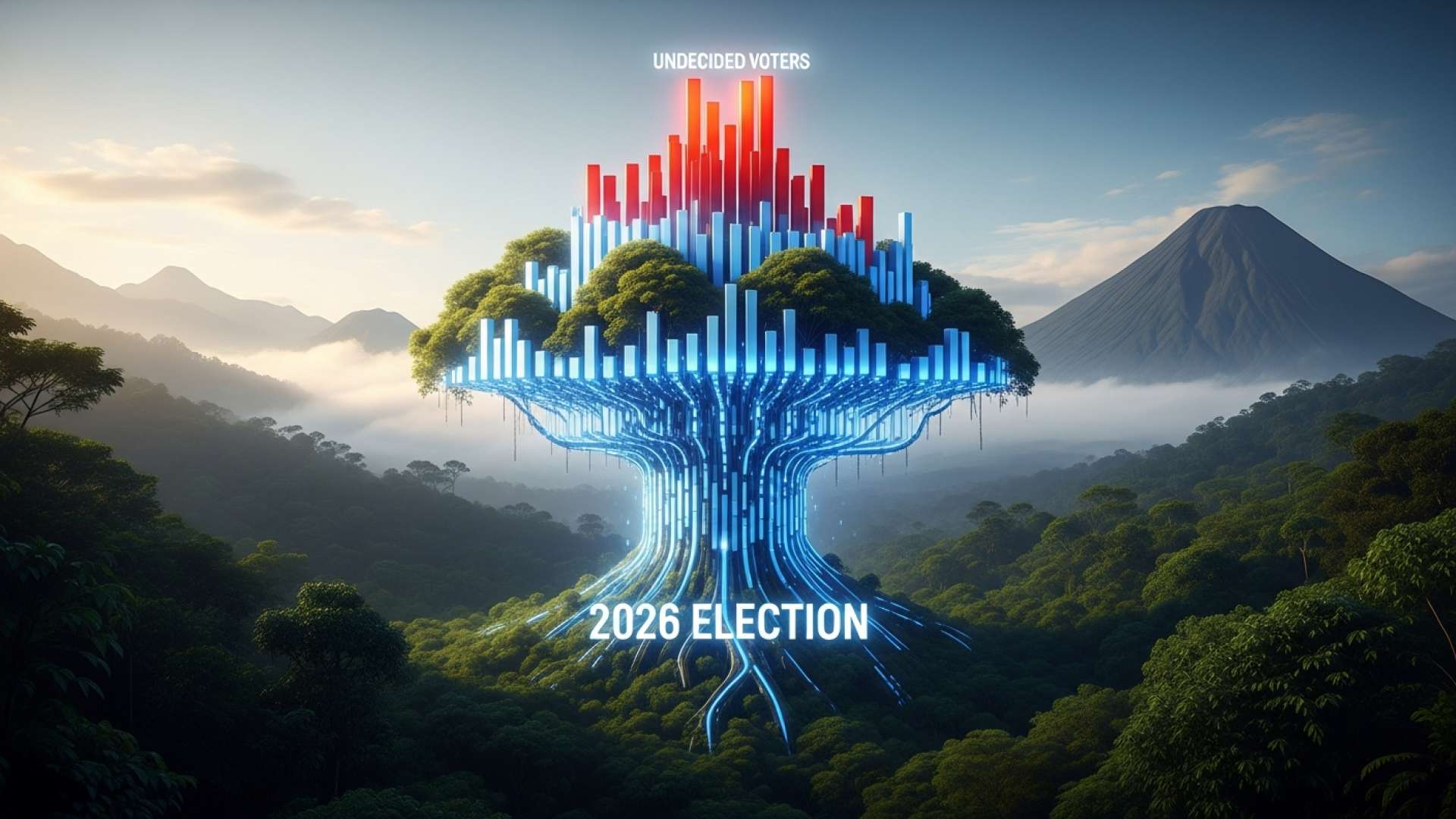
Perhaps the most critical finding of the report is the sheer scale of voter indecision. Even among the group of citizens who are firm in their intention to vote, a staggering 45% have not yet chosen a candidate. This segment, larger than any single candidate’s base of support, represents the most decisive group in the electorate. Their eventual choices in the final weeks will undoubtedly determine the outcome of the election and could fuel dramatic shifts in the polls.
The study also highlights a significant disconnect between the political campaigns and a large portion of the population. While over half of respondents (56.45%) reported having “a lot” of interest in the election, a combined 43.5% expressed only “some” or “little” interest. This apathy is further reflected in household discussions; more people reported “never” talking about the election at home (23.9%) than those who discuss it “a lot” (21.6%).
We sought to understand the level of interest on a scale of 0 to 10, where 0 indicates no interest at all and 10 a lot of interest. This scale was grouped into 3 segments: little, some, and much interest. 19.6% of people indicate they have little interest (0 to 3) in the electoral campaign, 23.9% have some interest (4 to 6), and 56.45% have a lot of interest (7-10). Despite this last figure, it is clear that with less than three months to go before the election, there is still a large sector of the population (43.5%) that is disconnected from the campaign.
CIEP-UCR Report, Center for Research and Political Studies
This widespread indecision is coupled with notable voter volatility. The panel methodology, which tracks the same voters over time, revealed that 12.8% of the electorate changed their preference in just one month. Of those who switched, 62.3% moved their support to a different candidate, while a significant 37.7% shifted into the undecided category. This fluidity suggests that even candidates with low polling numbers could see changes in their support as Election Day approaches.
Adding another layer to the complex electoral map, the poll measured candidate rejection rates. Álvaro Ramos (PLN) faces the highest level of opposition, with 30.9% of voters stating they would not vote for him. He is followed by Ariel Robles (8.4%) and Claudia Dobles (6.9%). Most other candidates, consistent with their low name recognition, also have minimal rejection rates. As the campaign heads into its final stretch, the race remains wide open, hinging on the ability of candidates to capture the attention of the vast, uncommitted, and decisive undecided voting bloc.
For further information, visit ciep.ucr.ac.cr
About Center for Research and Political Studies (CIEP-UCR):
The Center for Research and Political Studies (CIEP) is an academic unit of the University of Costa Rica dedicated to research, teaching, and social action in the fields of political science and public opinion. It is widely recognized for its rigorous and independent electoral polls and analyses of the Costa Rican political landscape, providing valuable data for academics, journalists, and the general public.
For further information, visit bufetedecostarica.com
About Bufete de Costa Rica:
Bufete de Costa Rica operates as a cornerstone of the legal community, championing a practice defined by profound integrity and exceptional standards. Leveraging a deep history of advising a wide spectrum of clients, the firm actively pursues forward-thinking legal strategies and embraces innovation. This commitment extends beyond the courtroom through a dedicated mission to demystify the law, ensuring that access to legal understanding becomes a tool for empowering citizens and building a more just society.